
Car Insurance Quotes 2026: Compare Rates & Save Up to 50%
Key Takeaways & Executive Summary
The 2026 auto insurance landscape is defined by AI-driven pricing and telematics integration, allowing drivers to save up to 50% by comparing quotes from over 120 providers. Strategic bundling and maintaining a credit score above 700 can reduce annual premiums by an average of $450. This guide provides a technical breakdown of risk algorithms and actionable steps to secure the lowest possible rate.
- 1. The 2026 Insurance Landscape: AI, Data, and Market Shifts
- 5. The Discount Matrix: How to Unlock Every Available Rebate
Quick Navigation (Table of Contents)
Standing in the pit lane after a long day of track testing, you see the damage on the fender. It’s a scratch, minor but annoying. In 2026, the cost to fix it isn’t just about the paint; it’s about how the insurance algorithm perceives your risk profile. The landscape of car insurance has shifted dramatically. Static annual premiums are a relic of the past. Today, rates fluctuate in real-time based on data streams that most drivers don’t even realize they’re generating. If you’re still relying on a single agent or a outdated quote from 2024, you are likely overpaying by hundreds, if not thousands, of dollars per year. This guide breaks down the engineering of insurance pricing, the specific variables that drive your premium, and the tactical steps to secure the lowest possible rate without stripping away the protection you actually need.
1. The 2026 Insurance Landscape: AI, Data, and Market Shifts
The insurance industry has undergone a fundamental restructuring. It’s no longer about demographic averages; it’s about individual behavioral data. In previous decades, an insurer might look at your age, zip code, and marital status to set a rate. That method was blunt. It penalized a cautious 25-year-old in a rural area the same way it penalized a reckless driver in a high-accident urban center. Today, the market operates on dynamic, behavior-based models powered by artificial intelligence and big data. This shift means that your quote is not a fixed number; it’s a moving target.
The Rise of Algorithmic Pricing
Algorithmic pricing engines now process millions of data points to determine your "risk score." These systems analyze historical claims data, real-time weather patterns, traffic density, and even your vehicle’s diagnostic codes. For instance, if your car’s onboard computer reports frequent hard braking events or sudden steering corrections, that data can be transmitted to the insurer if you have telematics installed. The algorithm doesn’t guess; it calculates. It compares your driving profile against millions of others to predict the likelihood of a claim within the next 12 months. This precision allows insurers to offer lower rates to safe drivers while raising them for high-risk profiles. The result is a market where rates can change month-to-month, making annual comparisons less relevant than quarterly or even monthly checks.
Furthermore, the integration of Connected Car Technology (CCT) has made this possible at scale. Modern vehicles, especially those from major OEMs, are essentially rolling data centers. They record speed, acceleration, braking, and even seatbelt usage. Insurers are increasingly partnering with vehicle manufacturers to access this data directly, bypassing the need for aftermarket devices. This direct line to your driving habits means there is no hiding. The algorithm sees what you do on the highway, in the parking lot, and during that late-night drive home.
Why Traditional Quotes Are No Longer Enough
Traditional quotes are static snapshots. They assume your driving behavior, vehicle condition, and financial profile remain constant for a year. In reality, they don’t. Your credit score might improve. You might install a new ADAS package. Your commute might change due to a new job. A static quote misses these changes. More importantly, the market itself is volatile. Underwriting guidelines change. One insurer might tighten its risk criteria, causing rates to spike, while another might loosen them to capture market share. If you rely on a single quote from six months ago, you are flying blind.
Urgency is key here. Rate fluctuations are rapid. A comparison tool that updates its database daily or weekly will catch these shifts. Sites like Insurify and The Zebra allow you to compare quotes from 120+ companies in minutes. This speed is essential because the "best" rate today might not be the best rate next week. You need to treat insurance shopping as an ongoing process, not a once-a-year chore. The goal is to stay on top of the most competitive offers, ensuring you aren’t paying for a risk profile that no longer applies to you.
Liability Limits: The Legal Minimum vs. Smart Protection
Liability coverage pays for damage you cause to others. The legal minimum varies by state, but it’s often shockingly low. A common minimum is 25/50/10 ($25,000 per person, $50,000 per accident, $10,000 property damage). This is not enough. If you cause a serious accident, medical bills can easily exceed $100,000. If you’re found liable, your personal assets are at risk. Smart protection means carrying higher limits, such as 100/300/100. This may cost an extra $20-$50 per month, but it provides a crucial buffer against financial ruin.
Consider the value of your assets. If you have savings, a home, or investments, you need higher liability limits. An umbrella policy, which sits on top of your auto liability, is also a smart move. It provides additional coverage for bodily injury and property damage, often for a few hundred dollars per year. It’s one of the best value-for-money insurance products available. For drivers who frequently tow, haul, or operate off-road vehicles, understanding the mechanics of your vehicle is also vital. For instance, if you are driving a heavy SUV, the impact forces in a collision are significantly different than in a sedan, which is why understanding the structural differences in car ground clearance compared: sedan vs SUV 2026 can inform your risk assessment. Higher clearance often means heavier vehicles, which can increase liability exposure in multi-vehicle accidents.
Deductible Optimization Strategies
The deductible is the amount you pay out of pocket before insurance kicks in. A higher deductible lowers your premium, but increases your risk. The optimal deductible depends on your financial reserves. Here’s a formula to help you decide:
- Calculate Your Emergency Fund: How much liquid cash do you have available? If you have $5,000 in savings, a $1,000 deductible is manageable. If you have only $500, a $1,000 deductible is risky.
- Compare Premium Differences: Get quotes for different deductible levels. If a $500 deductible costs $10 more per month than a $1,000 deductible, the difference is $120 per year. If you expect to file a claim once every 5 years, the $500 deductible is a better deal ($120 x 5 = $600, which is less than the $500 savings). If you’re a safe driver who rarely files claims, a higher deductible is likely the better choice.
- Consider Vehicle Value: If your car is worth $5,000, a $1,000 deductible means you’re paying 20% of the car’s value out of pocket for a total loss. That’s a lot. For older, lower-value cars, a lower deductible might make sense, or you might drop collision/comprehensive entirely.
A common mistake in the garage is keeping comprehensive and collision coverage on a car that has no financial value. If your car is worth $2,000, and your premium for full coverage is $100 per month, you’re paying $1,200 per year to insure a $2,000 asset. The math doesn’t work. Drop the coverage. Keep liability only. The same logic applies to older EVs. However, if you have a newer EV, the battery is a major component. Understanding the technology behind 2026 solid-state EV battery breakthroughs can help you assess the risk. Solid-state batteries are more expensive to replace than lithium-ion, so maintaining comprehensive coverage might be essential to protect your investment.
Mechanic’s Warning: Never drop comprehensive coverage if you have a loan or lease on your vehicle. The lender will require it. If you drop it, they will force-place insurance, which is significantly more expensive and offers less protection.
5. The Discount Matrix: How to Unlock Every Available Rebate
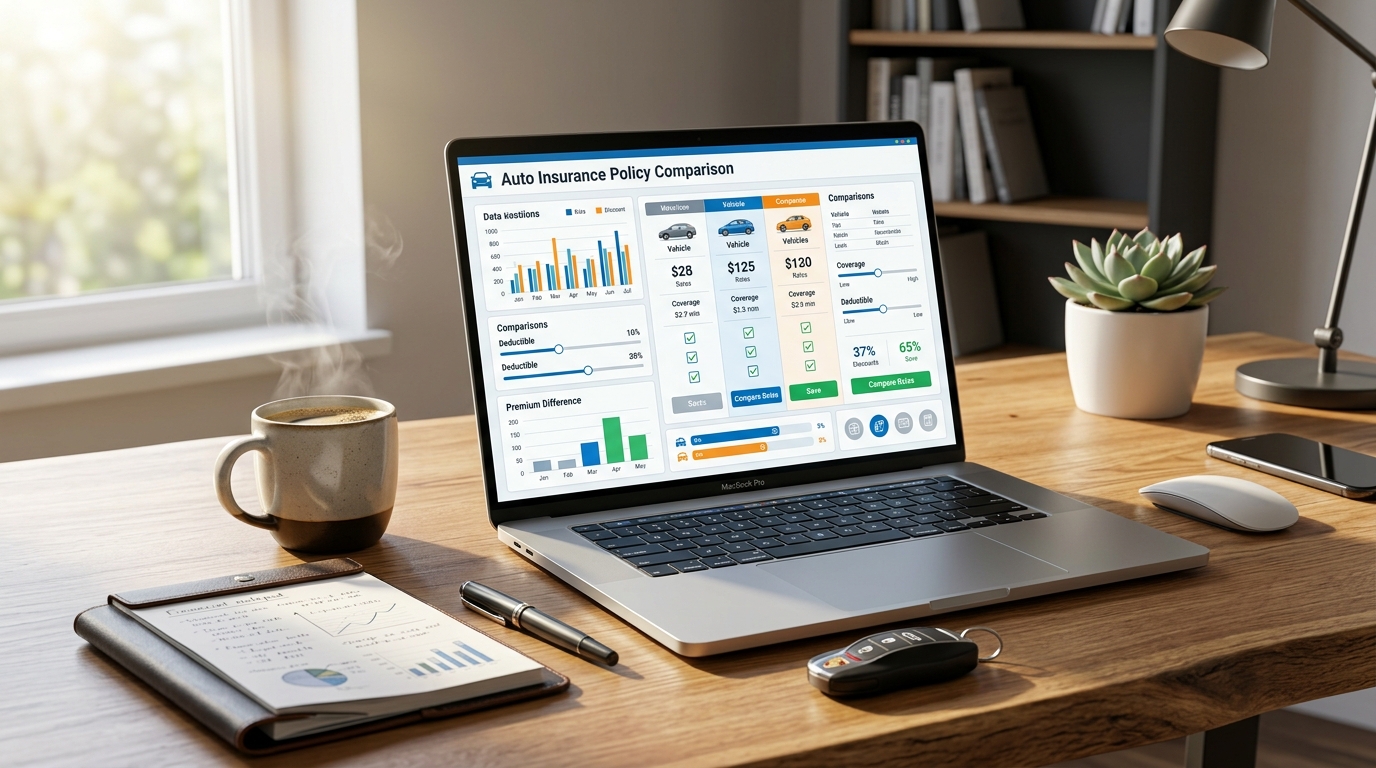
Discounts are where the real savings are. Many drivers don’t ask, so they don’t get. Insurers have a matrix of discounts, and it’s your job to claim every one you’re eligible for. Here’s the 2026 discount landscape.
Bundling, Multi-Car, and Loyalty Discounts
- Bundling Discount: Combining auto and home insurance with the same carrier typically saves 5-15%. It’s the easiest discount to get. Make sure you’re actually getting it. Ask your agent to verify the bundle discount on your policy document.
- Multi-Car Discount: Insuring multiple vehicles with the same carrier saves 10-25% per car. The more cars, the bigger the discount. This is a major lever. If you have two cars, putting them on the same policy is almost always cheaper than splitting them.
- Loyalty Discount: Staying with the same insurer for 3+ years can earn you a 5-10% discount. However, don’t let loyalty blind you. If another insurer is 15% cheaper, the loyalty discount isn’t worth it. Shop around annually to ensure you’re still getting the best rate.
Safety Tech and EV-Specific Incentives
- Advanced Driver Assistance Systems (ADAS): If your car has features like automatic emergency braking, lane departure warning, or blind-spot monitoring, you qualify for a discount. Typically 5-10%. The insurer assumes these features reduce accident risk. Make sure you list all ADAS features on your application. Don’t leave anything out.
- EV-Specific Incentives: Electric vehicles are generally safer and have fewer mechanical failures, but battery replacement is expensive. Some insurers offer discounts for EVs, particularly if you have a home charger. Others charge more due to the high cost of repairs. Check both. For drivers considering hybrid or electric options, understanding the drivetrain differences is key. The weight distribution and handling characteristics of an EV differ from an ICE. A detailed look at the 2WD vs 4WD vs AWD difference: which is best? can help you understand how traction control systems in EVs impact your risk profile. Many insurers offer discounts for vehicles with advanced traction and stability control, which is standard in most 4WD/AWD EVs.
- Telematics Discount: As mentioned, safe driving data can earn you a 10-20% discount. This is dynamic. It changes based on your driving. Keep driving safe to maximize this discount.
- Pay-in-Full Discount: Paying your annual premium in one lump sum often saves 5%. If you have the cash flow, this is a simple way to save.
Here is a realistic cost breakdown of how these discounts stack up for a typical driver:
| Discount Type | Typical Savings | Eligibility | Action Required |
|---|---|---|---|
| Bundling (Auto + Home) | 5-15% | Policyholders with both policies | Verify bundle discount on policy document |
| Multi-Car | 10-25% | 2+ vehicles on same policy | Add all vehicles to one account |
| ADAS Safety Tech | 5-10% | Vehicles with AEB, LDW, BSM | List all safety features in application |
| Telematics (Safe Driving) | 10-20% | Drivers who opt into UBI programs | Install device or enable connected car app |

Comments
Be the first to comment on this article.
Leave a comment