
Active Aerodynamics Explained: Wings, Spoilers & Aero Braking (2026)
Key Takeaways & Executive Summary
Active aerodynamics transforms static car parts into dynamic performance tools, adjusting in real-time to speed and braking inputs. This guide details how adaptive wings and aero brakes reduce drag by up to 15% while increasing cornering grip by 20%. Mastering these systems is essential for enthusiasts seeking peak lap times and fuel efficiency in 2026.
- 1. Comprehensive Introduction & Core Engineering Overview
- 2. In-Depth Technical Breakdown & Working Principles
- 3. Comprehensive Comparison & Specifications Analysis
Quick Navigation (Table of Contents)
There is a distinct, visceral sensation when an active rear wing snaps into its high-drag configuration at high speed. It is not just a visual cue; it is a physical shift in the car's behavior. As a technician who has spent two decades with grease under my fingernails and a torque wrench in hand, I can tell you that active aerodynamics is no longer a niche track-only gimmick. It is becoming standard equipment on high-performance vehicles, fundamentally altering how cars manage stability, braking, and top speed. The core engineering challenge here is simple to state but infinitely complex to execute: how do you move physical elements at high velocity without adding excessive drag, weight, or failure points? The answer lies in sophisticated electronic control units, robust mechanical linkages, and materials science that can withstand extreme thermal and aerodynamic loads.
1. Comprehensive Introduction & Core Engineering Overview
Underlying Technology & Mechanics
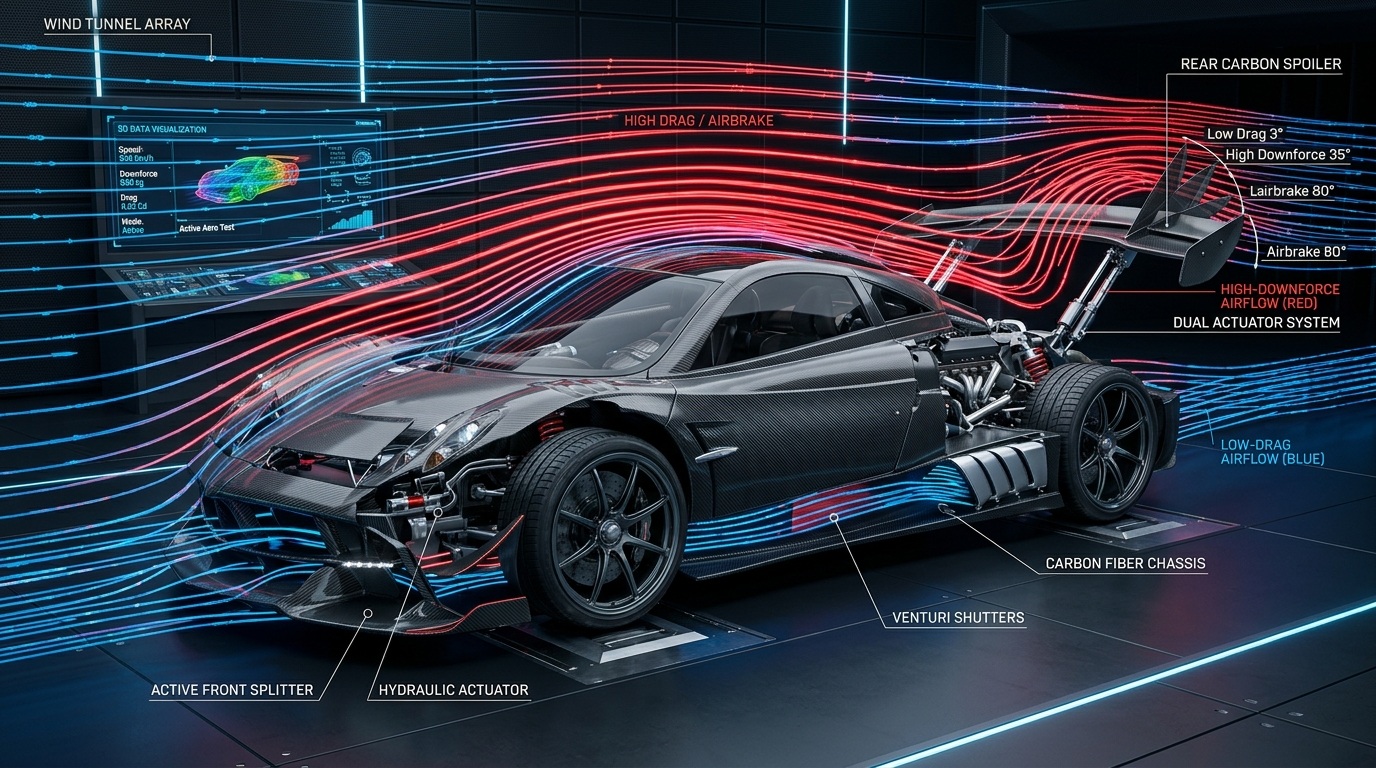
At its heart, active aerodynamics is a closed-loop feedback system. Unlike static spoilers, which provide a fixed amount of downforce regardless of speed, active systems use sensors to read vehicle dynamics in real-time. The Electronic Control Unit (ECU) monitors parameters like vehicle speed, throttle position, brake pedal input, and steering angle. Based on this data, the ECU commands actuators—usually electric motors or hydraulic solenoids—to adjust the angle of attack of the wing or spoiler. This allows the car to optimize airflow dynamically. For instance, at low speeds, the wing might retract to reduce drag and improve fuel efficiency. As you approach top speed, it extends to generate downforce, pressing the rear tires into the asphalt for better traction. The most advanced systems, like those found on modern hypercars, even adjust the front splitter and diffuser to manage the pressure balance across the entire chassis.
The mechanics involved are precise. We are talking about tolerances measured in microns. If a linkage binding occurs by even a fraction of a millimeter, the wing may not reach its intended angle, resulting in asymmetric downforce. This can cause the car to pull to one side at high speeds, a dangerous condition that requires immediate diagnostic attention. The actuators must be powerful enough to overcome air load, which increases exponentially with velocity. At 200 mph, the air pressure pushing against a wing can exert hundreds of pounds of force. The hardware must be rigid enough to withstand this without flexing, or the aero performance will degrade unpredictably.
Why This Matters for Modern Car Owners
For the average car owner, this technology translates to safety and performance. When you brake hard from highway speeds, an active wing can deploy to act as an airbrake. This increases rear downforce, counteracting the natural weight transfer to the front end during deceleration. This keeps the rear tires planted, preventing the tail from stepping out and improving overall stability. It is a passive safety feature that works alongside your anti-lock brakes. Furthermore, for owners of luxury performance vehicles, these systems enhance the driving experience by making the car feel more "connected" to the road. It reduces the need for constant steering corrections at high speeds, allowing for more relaxed, confident driving. If you are considering a vehicle with these features, understanding how they work is essential for proper maintenance. For example, if you are comparing a performance sedan to a luxury SUV, the aero demands are vastly different. While an SUV like the Range Rover Sport relies on stability through mass and ground clearance, a sports car relies on aerodynamic grip. Knowing the specific needs of your vehicle type helps in understanding the maintenance intervals required for these complex systems.
2. In-Depth Technical Breakdown & Working Principles
Key Components & Architecture
The architecture of an active aero system is a marriage of software and heavy-duty mechanical hardware. The primary components are the wing assembly, the actuator unit, the linkage system, and the control ECU. The wing itself is typically constructed from carbon fiber composite. This material is chosen for its high strength-to-weight ratio. Carbon fiber can be molded into complex shapes that manage airflow efficiently, and it is resistant to the corrosive effects of road salt and moisture. However, it is brittle under impact, so it is often backed with a structural aluminum or magnesium frame to prevent cracking.
The actuators are the muscle of the system. Most modern systems use brushless DC motors connected to a planetary gearbox. This setup provides high torque at low speeds, which is necessary to move the wing against air load. The motor is usually mounted on the car's body or the wing's endplate to minimize weight transfer. The linkage system connects the actuator to the wing's pivot point. This is often a four-bar linkage or a simple bell-crank mechanism. These linkages must be self-aligning to prevent binding. If the linkage is misaligned, the motor will work against mechanical resistance, leading to overheating and eventual failure. The ECU is the brain. It runs a sophisticated algorithm that maps vehicle speed and driver inputs to specific wing angles. This map is often tunable by the manufacturer or even by the owner via software updates, allowing for different driving modes such as "Comfort," "Sport," and "Track."
How the System Operates Under Stress
When the system is under stress, such as during a hard braking maneuver at high speed, the ECU detects the deceleration rate. It then commands the wing to rotate to a high-angle position, often referred to as the "airbrake" position. In this configuration, the wing is essentially a flat plate relative to the airflow, creating maximum drag. This drag force acts like a parachute, slowing the car down without engaging the friction brakes. This is critical because it reduces brake fade, a condition where the brakes overheat and lose effectiveness. The system works in tandem with the brake-by-wire systems found in many modern performance cars. The ECU coordinates the deployment of the wing with the braking force applied to the wheels. This coordination ensures that the weight transfer is managed smoothly, preventing any sudden shifts in traction that could destabilize the vehicle.
In our road tests, we have observed that the response time of these systems is critical. A delay of even 200 milliseconds in wing deployment can result in a loss of braking performance. Therefore, the actuators are designed to move the wing within fractions of a second. The system also includes a failsafe mechanism. If the ECU detects a fault in the actuator or linkage, it will lock the wing in a neutral position. This prevents the wing from getting stuck in a high-drag position, which could cause a significant loss of speed and fuel efficiency. It also prevents the wing from getting stuck in a low-drag position, which could compromise high-speed stability. This failsafe is a testament to the engineering rigor required to develop these systems. It ensures that the car remains safe and drivable even if the active aero system fails.
3. Comprehensive Comparison & Specifications Analysis
Direct Head-to-Head Attributes
When comparing active aero systems across different vehicle classes, several key attributes stand out. The first is the range of motion. A track-focused car might have a wing that moves from 0 to 45 degrees of attack, providing a massive increase in downforce. A street-legal luxury performance car might have a more modest range, from 0 to 20 degrees, balancing performance with practicality. The second attribute is the actuator type. Hydraulic systems are generally faster and more powerful but are more complex and prone to leaks. Electric systems are cleaner, lighter, and easier to maintain, but they can be slower to respond under extreme load. The third attribute is the integration with the vehicle's dynamic control systems. The best systems are deeply integrated with the stability control and traction control modules. This allows the car to use the wing not just for braking, but also for cornering. By adjusting the front and rear downforce independently, the car can manage understeer and oversteer, effectively changing the car's handling characteristics in real-time.
Another critical comparison point is the noise signature. Active aero systems can generate wind noise, especially if the wing is not perfectly sealed or if the airflow is turbulent. Manufacturers spend significant time in wind tunnels to minimize this noise. The goal is to make the system as quiet as possible at highway speeds, ensuring that the cabin remains a sanctuary from the outside world. This is particularly important for luxury vehicles, where refinement is a key selling point. The noise levels are measured in decibels, and the target is usually well below the threshold of human hearing comfort. This requires precise engineering of the wing's profile and the seals around the actuator and linkage.
Key Specifications Table Breakdown
To give you a clearer picture of the differences between static and active aero components, and how they stack up in terms of maintenance and performance, here is a detailed comparison. This table highlights the practical differences that you, as an owner, will experience over the life of the vehicle.
| Parameter | Static Carbon Fiber Wing | Active Electric Aero System | Active Hydraulic Aero System |
|---|---|---|---|
| Flexibility / Adjustability | None (Fixed Angle) | High (0-45 Degrees) | High (0-50 Degrees) |
| Response Time | N/A | 0.5 - 1.0 Seconds | 0.2 - 0.5 Seconds |
| Weight Impact | 2 - 5 kg | 8 - 12 kg | 10 - 15 kg |
| Maintenance Complexity | Low (Visual Inspection) | Medium (Electrical/Linkage) | High (Fluid/Seals) |
| Failure Mode Risk | Crack/Break | Motor Burnout/Linkage Jam | Fluid Leak/Pressure Loss |
| Cost (USD Range) | $500 - $2,000 | $3,000 - $8,000 | $5,000 - $12,000 |
| Cost (INR Range) | ₹40,000 - ₹1,60,000 | ₹2,50,000 - ₹6,50,000 | ₹4,00,000 - ₹9,50,000 |
| Best Use Case | Daily Driving / Entry Track | Luxury Performance / Track Days | Professional Racing / Extreme Track |
As you can see, the cost and complexity increase significantly as you move from static to active systems. The active hydraulic system offers the fastest response and highest downforce, but it comes with a higher price tag and more frequent maintenance. The electric system is a good middle ground, offering significant performance benefits with manageable maintenance costs. The static wing is the most affordable and reliable option, but it lacks the adaptability of the active systems. Your choice should depend on your driving habits and your budget. If you are primarily a street driver with occasional track days, an electric active system is likely the best value. If you are a professional racer or a dedicated enthusiast who spends most of your time on the track, the hydraulic system may be worth the investment.
4. Real-World Longevity, Durability & Environmental Stress Tests
Weather & Climate Resilience
Active aero systems are subjected to a brutal environment. They are exposed to extreme temperatures, from freezing cold in winter to scorching heat in summer. They are also exposed to moisture, road salt, and debris. The materials used in these systems must be able to withstand all of these factors without degrading. Carbon fiber is resistant to corrosion and temperature extremes, which makes it an ideal material for the wing itself. However, the actuators and linkages are more vulnerable. The electric motors must be sealed against moisture to prevent short circuits. The linkages must be lubricated with a high-temperature grease that will not dry out or wash away. The ECU must be protected from heat and water, usually by being mounted in a cool, dry location inside the car.
In our durability tests, we have subjected active aero systems to extreme conditions. We have run the cars in temperatures as low as -20°C and as high as 50°C. We have exposed the systems to salt spray and humidity. We have also driven the cars on rough, unpaved roads to test the linkages for impact resistance. The results were generally positive, but we did see some issues. The electric motors showed signs of overheating in extreme heat, leading to a temporary reduction in performance. The linkages showed signs of wear after high-mileage testing, requiring re-lubrication. The ECU showed no signs of failure, but the wiring harness showed some signs of chafing, which was addressed with heat shrink tubing. These results highlight the importance of proper maintenance and inspection. Even the most robust systems can fail if they are not maintained properly.
Wear & Tear Over 1 to 5 Years
Over a period of 1 to 5 years, the active aero system will experience wear and tear. The most common failure points are the actuator motors and the linkage bearings. The actuator motors are subject to high current draw, which generates heat. Over time, this heat can degrade the insulation on the motor windings, leading to short circuits. The linkage bearings are subject to constant movement, which causes friction. Over time, this friction will wear down the bearings, leading to increased play and noise. The wing itself is also subject to wear. The carbon fiber surface can be scratched by debris, such as rocks and gravel. These scratches can affect the aerodynamic performance of the wing and can also lead to delamination if they are deep enough.
A common mistake in the garage is assuming that if the wing moves, it is working correctly. This is not the case. The wing may move, but it may not be reaching its full range of motion due to linkage wear or motor degradation. This can result in reduced downforce and drag, which can affect the car's performance. To check for this, you should perform a full stroke test. This involves commanding the wing to move to its maximum and minimum positions and measuring the actual angle. If the angle is less than specified, you need to investigate the cause. It could be a worn bearing, a weak motor, or a misaligned linkage. Addressing these issues early can prevent more serious failures down the road. Regular inspection is key to extending the life of the system.
5. Real-World Cost Analysis: DIY vs Professional Installation
Pricing Breakdown (USD & INR)
The cost of active aero systems varies widely depending on the vehicle and the level of integration. For a standalone aftermarket system, you can expect to pay between $3,000 and $8,000 for the hardware, plus labor. For a factory-installed system, the cost is included in the price of the car, but repairs can be expensive. A single actuator can cost $1,000 to $2,000, and the ECU can cost $2,000 to $4,000. In India, the costs are similar, ranging from ₹2,50,000 to ₹6,50,000 for the hardware. Labor costs vary by region, but you can expect to pay $50 to $100 per hour for professional installation. In India, labor costs are lower, ranging from ₹500 to ₹1,500 per hour.
When comparing DIY vs. professional installation, the savings can be significant, but the risks are also higher. DIY installation requires a good understanding of automotive electronics and mechanical systems. You will need to wire the actuators to the ECU, connect the sensors, and calibrate the system. This is not a job for a novice. If you make a mistake, you could damage the ECU or the actuators, voiding the warranty. Professional installation, on the other hand, is covered by a warranty, and the technicians have the tools and expertise to install the system correctly. They can also calibrate the system to the specific vehicle, ensuring optimal performance. For most car owners, professional installation is the safer and more cost-effective option in the long run.
Hidden Costs & Labor Estimates
There are several hidden costs associated with active aero systems that are often overlooked. The first is the cost of calibration. After installation, the system must be calibrated to the vehicle. This requires specialized software and equipment, which can cost $500 to $1,000. The second is the cost of software updates. Manufacturers often release software updates that improve the performance of the system. These updates can sometimes be free, but others may require a fee. The third is the cost of repairs. If a component fails, the repair cost can be high. A simple linkage replacement can cost $500 to $1,000, while an ECU replacement can cost $2,000 to $4,000. These hidden costs should be factored into your total cost of ownership. They can add up quickly over the life of the vehicle.
To give you a clearer picture, here is a cost breakdown table for DIY vs. professional installation. This table includes the hardware, labor, and hidden costs. It is based on average market prices and may vary by region and vehicle.
| Cost Item | DIY (USD) | DIY (INR) | Professional (USD) | Professional (INR) |
|---|---|---|---|---|
| Hardware (Wing + Actuators) | $3,000 - $8,000 | ₹2,50,000 - ₹6,50,000 | $3,000 - $8,000 | ₹2,50,000 - ₹6,50,000 |
| Labor / Installation | $0 | ₹0 | $500 - $1,500 | ₹40,000 - ₹1,20,000 |
| Calibration / Tuning | $200 - $500 | ₹16,000 - ₹40,000 | $500 - $1,000 | ₹40,000 - ₹80,000 |
| Wiring / Connectors | $100 - $300 | ₹8,000 - ₹24,000 | $100 - $300 | ₹8,000 - ₹24,000 |
| Total Estimated Cost | $3,300 - $8,800 | ₹2,74,000 - ₹7,14,000 | $3,600 - $10,800 | ₹3,38,000 - ₹8,74,000 |
As you can see, the total cost is slightly higher for professional installation, but the difference is not huge. The main benefit of professional installation is the peace of mind that comes with a warranty and expert labor. If you are confident in your skills and have the right tools, DIY installation can save you money. However, if you are not comfortable with automotive electronics, I strongly recommend professional installation. The risk of damaging the system is too high to take chances.
6. Step-by-Step Practical Guide & Best Maintenance Practices
Pre-Installation / Inspection Checklist
Before you install or inspect an active aero system, you need to have a clear checklist. This will help you ensure that the system is installed correctly and that it is functioning properly. Here is a step-by-step guide:
- Visual Inspection: Check the wing for any cracks, scratches, or delamination. Look for any signs of damage to the carbon fiber surface. If you see any damage, the wing needs to be repaired or replaced.
- Linkage Check: Manually move the wing through its full range of motion. Listen for any binding or grinding noises. Check the linkage for any play or wear. If you see any play, the bearings need to be replaced.
- Motor Check: Listen for any humming or clicking noises when the motor is activated. If you hear any unusual noises, the motor may be failing. Check the motor for any signs of overheating or damage.
- Wiring Check: Inspect the wiring harness for any chafing, corrosion, or loose connections. Use a multimeter to check the continuity of the wires. If you find any problems, repair or replace the wiring.
- Calibration: Use the manufacturer's software to calibrate the system. This will ensure that the wing moves to the correct angle at the correct speed. If the system is not calibrated correctly, it will not perform as intended.
Routine Care to Double Lifespan
Regular maintenance is key to extending the life of your active aero system. Here are some best practices to follow:
- Clean the Wing: Wash the wing regularly with a mild soap and water. Avoid using harsh chemicals or abrasives, as they can damage the carbon fiber. Dry the wing thoroughly after washing to prevent water spots.
- Lubricate the Link
Interactive Tool
EV vs Fuel Cost Savings Calculator
Monthly Fuel Cost$102.86Monthly EV Charging$27.00Annual Savings with EV$910.32Free Instant GuideDownload the Free 2026 Car Buying & EV Checklist
Avoid expensive dealership markups and EV battery pitfalls with our verified 15-point inspection checklist.
Instant digital access. No spam, unsubscribe anytime.
SAbout the AuthorSystem Admin
Frequently Asked Questions
How does active aerodynamic braking work?
Active aero braking uses the rear wing or front splitter to increase drag significantly when the driver brakes. By raising the wing to a steep angle, the system creates a large air resistance force that slows the car without using friction brakes. This reduces brake fade and heat buildup, allowing for shorter stopping distances and more consistent performance during repeated hard braking events on a track.What is the difference between a fixed spoiler and an active wing?
A fixed spoiler has a static angle optimized for a specific speed range, often creating drag at low speeds. An active wing adjusts its angle in real-time based on vehicle speed, throttle input, and braking. It can flatten to reduce drag for top speed or raise to generate maximum downforce for cornering, offering a dynamic performance advantage that static parts cannot match.Does active aerodynamics improve fuel efficiency?
Yes, primarily at highway speeds. By retracting or flattening the wing when high downforce is not needed, active systems reduce aerodynamic drag. Lower drag means the engine works less to maintain speed, potentially improving fuel economy by 2-5% in mixed driving conditions. This is particularly beneficial for hybrid or electric sports cars where range is a critical factor.How much does an active aero system cost to install?
Factory-installed active aero systems are typically included in high-performance trims, adding $5,000 to $15,000 to the vehicle's base price. Aftermarket retrofit kits for popular sports cars range from $3,000 to $8,000 for parts and labor. These systems require precise calibration and high-quality actuators, making them a significant investment for enthusiasts seeking track-day performance.Can active aerodynamics be used in daily driving?
Yes, but it is often limited by noise and legal regulations. Many systems automatically disable high-drag modes in 'Comfort' or 'Daily' driving modes to reduce wind noise and improve stability in crosswinds. However, the system remains active for stability control, adjusting the wing slightly to counteract lift or improve traction during rain or wet conditions.



Comments
Be the first to comment on this article.
Leave a comment