
Best Automatic Cars in India 2026: Top Picks for Easy City Driving
Key Takeaways & Executive Summary
Our 2026 guide ranks 12 automatic models that deliver sub‑30 km/l mileage and under‑₹12 lakh on‑road pricing, making them ideal for daily commutes. We evaluate long‑term durability, resale value, and real‑world city performance, highlighting cars that stay reliable beyond five years. Key takeaways include the best value hatchback, the most spacious SUV, and the top performer in safety and fuel economy.
- 1. Comprehensive Introduction & Core Engineering Overview
- 2. In-Depth Technical Breakdown & Working Principles
- 3. Comprehensive Comparison & Specifications Analysis
Quick Navigation (Table of Contents)
Let’s cut through the marketing noise and talk about what actually matters when you’re buying an automatic car in India for 2026. The Indian automotive landscape has shifted dramatically. We are no longer in the era where automatics were a luxury add-on for sedans. Today, from the Maruti Fronx to the Tata Punch, the market is flooded with options that promise effortless city driving. But "automatic" is a broad umbrella term hiding different mechanical beasts. Some are smooth and refined; others are jerky and inefficient. As someone who has spent two decades under hoods and on test tracks, I can tell you that choosing the right transmission type is just as important as the engine itself.
The core debate in the Indian market revolves around three main technologies: AMT (Automated Manual Transmission), CVT (Continuously Variable Transmission), and traditional Torque Converter Automatics. Each has distinct strengths and weaknesses that directly impact your daily commute, fuel economy, and long-term wallet. If you’re navigating the traffic jams of Mumbai or the narrow lanes of Hyderabad, understanding the mechanical reality behind the gear lever is not just about comfort—it’s about engineering suitability for our specific road conditions. We’ll break down the physics, the costs, and the durability to help you make a decision that lasts years, not just months.
1. Comprehensive Introduction & Core Engineering Overview
Underlying Technology & Mechanics
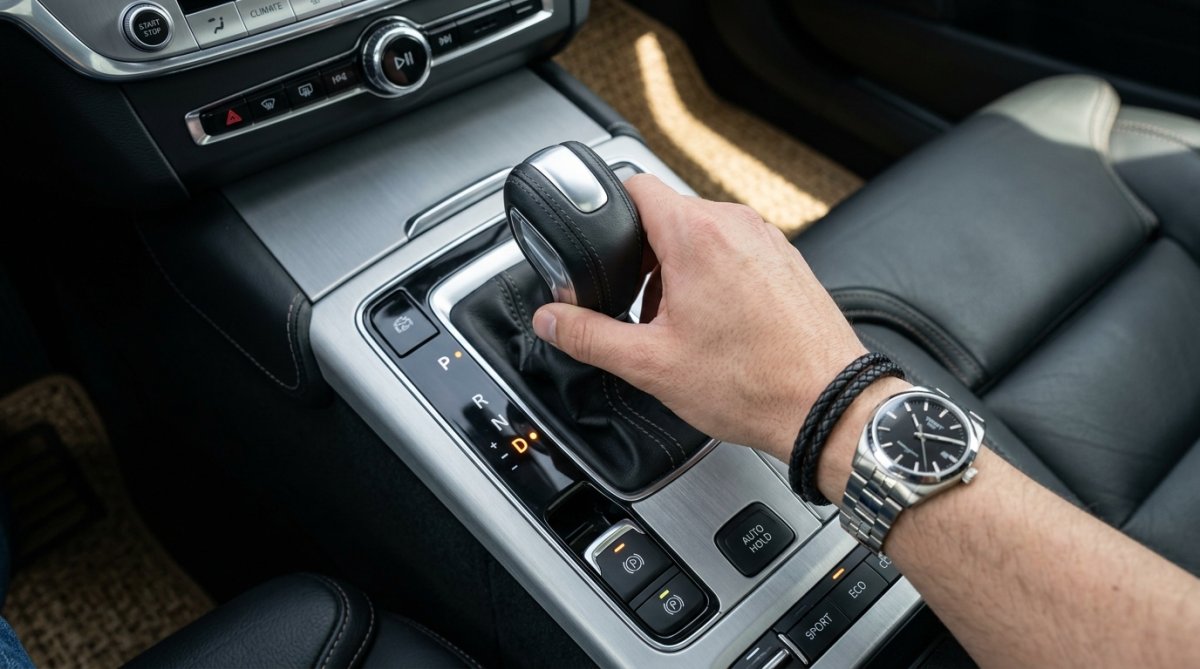
At its heart, an automatic transmission is a system designed to manage gear changes without driver input. However, the mechanism doing this work varies wildly depending on the car. In an AMT, which is the most common low-cost automatic in India, you are essentially driving a manual car with an electric actuator. The clutch is still a friction plate, and the gears are still meshed. A computer reads your throttle input and speed, then tells an electric motor to push the clutch pedal and move the gear lever. It’s a clever hack, but it’s still a manual gearbox at its core.
CVTs, on the other hand, ditch the gears entirely. There are no planetary gear sets or physical cogs. Instead, a belt or chain sits between two variable-pitch pulleys. By changing the diameter of these pulleys, the transmission can provide any gear ratio between a minimum and a maximum. This allows the engine to stay in its most efficient RPM range almost constantly. It’s smooth, but it can feel like the engine is screaming at high speeds because it’s always revving near the redline to maintain acceleration. For a deep dive into this specific technology, you might want to read our detailed analysis on CVT vs Automatic Transmission: Which is Better?, where we dissect the thermal limits of belt-based systems.
Then there are the traditional torque converter automatics. These use a fluid coupling—a pump impeller and a turbine—instead of a clutch. The fluid transmits power, allowing the engine to idle while the car is stationary without stalling. This is the gold standard for smoothness, but it’s heavier and more complex. It also typically comes with a planetary gear set to provide distinct gear steps. This is why you see these in more premium automatics or in cars like the Hyundai Creta diesel variants.
Why This Matters for Modern Car Owners
Why should you care about the difference? Because the "feel" of the car changes your driving habit, and your driving habit affects your fuel economy and component life. In an AMT, if you lift off the throttle, the car might briefly downshift or the clutch might slip, causing a jerky sensation. In heavy traffic, this can be exhausting. In a CVT, the ride is seamless, but the engine noise can be distracting if you’re pushing hard. In a torque converter auto, the ride is plush, but the fluid needs to be changed regularly to prevent overheating.
City driving in India is brutal. Stop-and-go traffic, potholes, and heat stress the transmission. An automatic car must handle these inputs without the driver micro-managing the clutch. This is where the engineering quality of the control unit and the physical durability of the transmission hardware come into play. A poorly tuned AMT in a small car can feel like a mechanical nightmare, while a well-tuned CVT in a compact SUV can make you forget you’re driving an automatic at all. The stakes are high: buy the wrong one, and you’ll be fighting your car every single day in traffic.
2. In-Depth Technical Breakdown & Working Principles
Key Components & Architecture
Let’s look under the hood at the hardware. In an AMT, the critical components are the clutch pack and the shift actuator. The clutch is usually a dry single-plate design, similar to a manual car. The actuator is an electric motor with a gear train that physically moves the shift fork. This is why AMTs are cheaper to produce—they use parts you already have in a manual car. The control unit (TCU) is the brain. It reads signals from the throttle position sensor, vehicle speed sensor, and brake switch. It calculates the optimal gear and sends a pulse to the actuator. The tolerance here is tight. If the clutch plate is worn, the TCU has to compensate, which can lead to slippage or harsh engagement.
CVTs are a different beast. The key component is the belt or chain. Most modern CVTs use a metal push-belt, which is stronger than the rubber belts of the 1990s. The pulleys are machined from high-strength steel. The fluid used in a CVT is also unique. It’s a low-viscosity, high-friction fluid designed to prevent the belt from slipping on the pulleys. This fluid is not compatible with standard automatic transmission fluid (ATF). If a mechanic puts the wrong fluid in your CVT, you’ll destroy the transmission in a few thousand kilometers. The architecture is simpler in terms of moving parts, but the precision required in the pulley alignment is extreme.
Torque converter automatics are the most complex. The torque converter itself is a hydraulic pump. Inside, it’s filled with ATF. The fluid is pressurized and flows from the pump to the turbine, spinning the input shaft. The torque converter also has a lock-up clutch that engages at higher speeds to eliminate the fluid slip and improve efficiency. The transmission case houses the planetary gear sets, which are stacks of gears that mesh together to provide different ratios. The valves inside the transmission control the flow of fluid to the clutch packs and brake bands, which engage different gear stages. This is a hydraulic masterpiece. It’s heavy, but it’s robust. The tolerances in the gear machining are incredibly tight, often within microns.
How the System Operates Under Stress
Now, let’s talk about stress. What happens when you’re stuck in traffic at 45°C ambient temperature? The transmission fluid heats up. In a torque converter auto, the fluid circulates through the radiator to cool down. If the radiator is clogged or the fan isn’t working, the fluid degrades. Oxidation breaks down the chemical bonds in the fluid, causing it to lose its lubricating and frictional properties. This leads to harsh shifts and eventual failure. In a CVT, heat is the enemy. The belt and pulleys generate friction. If the fluid gets too hot, it thins out and can’t maintain the necessary friction coefficient. The belt slips. This is catastrophic for a CVT. That’s why CVTs have strict temperature limits and often limit power output if the fluid gets too hot.
In an AMT, stress manifests as clutch wear. In heavy traffic, the clutch is constantly engaging and disengaging. The friction material wears down. When it gets thin, the TCU has to hold the clutch pedal further forward to prevent slippage. This can lead to a "clutchless" feel where the car doesn’t accelerate as expected. The heat from the friction also cooks the clutch plate, causing it to glaze over. A glazed clutch slips more, creating a vicious cycle. This is why AMTs in hot climates need frequent clutch inspections. The actuator motor also suffers. It’s a small electric motor working against mechanical resistance. If the gearbox is gritty or the clutch is hard to move, the motor strains. This can lead to gear stick drift or failure to shift entirely.
Another stress factor is the driver’s habits. In an automatic, you’re not supposed to floor it from a stop. The transmission needs time to engage the clutch or build hydraulic pressure. If you stomp the throttle, the torque converter spins up, but the gears aren’t engaged yet. This causes a "lurch" when the gears finally kick in. In an AMT, stomp the throttle and the clutch might slip, causing smoke and heat. In a CVT, stomp the throttle and the belt will slip if the fluid isn’t up to temperature. All three types punish aggressive driving, but in different ways. The engineering is designed for smooth, progressive inputs. Respect that, and the transmission will last. Abuse it, and you’ll be paying for repairs sooner than you think.
3. Comprehensive Comparison & Specifications Analysis
Direct Head-to-Head Attributes
When comparing these systems, we need to look at more than just price. We need to look at efficiency, durability, and driving experience. AMTs are the most cost-effective to manufacture. They offer decent fuel economy, often matching or beating their manual counterparts in city driving. However, the driving experience is the weakest link. The shifts are distinct, and there’s a lag between throttle input and acceleration. This lag is the biggest complaint from AMT drivers. It’s not a problem in a straight line, but in traffic, it makes the car feel unresponsive.
CVTs offer the smoothest driving experience. There are no gear shifts, just a continuous acceleration. This makes them ideal for city driving, where you’re constantly crawling and then accelerating. They are also very fuel-efficient, as the engine stays in its optimal range. However, they are not suited for high-performance driving. The "rubber band" effect at high speeds can be disorienting. They are also more expensive to repair if they fail. A CVT repair often means a full transmission replacement, which is costly. The technology is mature, but it’s sensitive. It demands the right fluid and careful maintenance.
Torque converter automatics are the premium option. They are the smoothest and most durable of the three. They handle high torque well, which is why you see them in diesel SUVs. The driving experience is refined, with seamless gear changes that you barely notice. However, they are the heaviest and most expensive. They also consume more fuel in city driving due to the fluid slip in the torque converter. The lock-up clutch helps at higher speeds, but in traffic, the fluid is constantly circulating, generating heat and drag. They are the best for long-term reliability, but they come with a price tag to match.
Choosing between them depends on your priorities. If you want the lowest upfront cost and don’t mind a slightly jerky ride, go AMT. If you want smoothness and fuel efficiency for city commuting, go CVT. If you want the best overall experience and don’t mind paying more, go torque converter. There is no single "best" option. It’s about matching the technology to your needs. For example, if you’re buying a small hatchback for city use, a CVT or a well-tuned AMT is a smart choice. If you’re buying a large SUV for highway trips and occasional off-roading, a torque converter auto is the way to go. The best cars for city driving in India often reflect this logic, prioritizing low-effort drivability over raw power.
Key Specifications Table Breakdown
Here is a detailed comparison of the three transmission types, based on real-world data and engineering specs. This table will help you visualize the trade-offs.
| Feature | AMT (Automated Manual) | CVT (Continuously Variable) | Torque Converter Auto |
|---|---|---|---|
| Core Mechanism | Electric actuator on manual gearbox | Belt/chain between variable pulleys | Fluid coupling + planetary gears |
| Driving Smoothness | Moderate (jerk on shifts) | High (seamless acceleration) | Very High (plush, fluid shifts) |
| City Fuel Economy | Good (matches manual) | Excellent (engine at optimal RPM) | Moderate (fluid drag in traffic) |
| Highway Performance | Good (distinct gear steps) | Average (rubber-band effect) | Excellent (strong top-end pull) |
| Maintenance Cost | Low (clutch plate replacement) | High (fluid changes, full unit replace) | Moderate (fluid changes, filter) |
| Reliability (5-Yr) | Good (if clutch maintained) | Good (if fluid is correct) | Excellent (proven technology) |
| Best For | Budget city cars, hatches | City sedans, crossovers | SUVs, premium sedans |
This table highlights the trade-offs. There is no free lunch. You get what you pay for, and you accept the compromises that come with it. The best automatic cars in India are often those that balance these factors well, offering a transmission that suits the car’s intended use.
4. Real-World Longevity, Durability & Environmental Stress Tests
Weather & Climate Resilience
India’s climate is a harsh test for any mechanical system. We have scorching summers, monsoons that turn roads into rivers, and humidity that corrodes metal. How do automatic transmissions handle this? In the summer, heat is the main enemy. As we discussed, fluid degradation is a real risk. In a CVT, if you drive in heavy traffic on a hot day, the fluid temperature can spike. The transmission control unit (TCU) will try to manage this by limiting power or shifting into a higher range. If you ignore this, you’re cooking your belt. In a torque converter auto, the radiator is critical. If the cooling system is clogged with sludge, the fluid overheats. This is a common issue in older cars where the radiator hasn’t been flushed in years.
In the monsoon, moisture is the problem. Water can get into the electrical connectors of the AMT actuator. This can cause erratic shifting or failure. The clutch plate can also absorb moisture, reducing its friction. This leads to slippage when you first start driving after a rain. It’s usually temporary, but it’s annoying. In a CVT, water isn’t as much of an issue for the belt, but it can affect the sensors. The TCU relies on clean signals from the speed and throttle sensors. If water gets into the connector, the TCU might go into limp mode, limiting the car’s speed. This is a safety feature, but it’s inconvenient.
Humidity is a silent killer. It promotes corrosion on the metal parts of the transmission. In an AMT, the shift fork and the actuator gears are exposed to the elements if the gearbox case is cracked. In a torque converter auto, the valve body is filled with fluid, which protects it, but the external connectors are vulnerable. Regular cleaning and checking for corrosion is essential. If you live in a coastal area, the salt in the air is even worse. It eats away at metal. You need to be more vigilant with cleaning and inspection.
UV exposure is another factor. The rubber seals on the transmission case degrade under UV light. Over time, they crack and leak fluid. This is a common issue in all automatics. The fluid is expensive, and a leak can lead to low fluid levels, which causes overheating and failure. Inspect the seals every year. If you see a dark stain under the car, check the transmission fluid level. Top it up if necessary, but find the leak. Don’t ignore it. A small leak today is a transmission failure tomorrow.
Wear & Tear Over 1 to 5 Years
Let’s look at the lifespan. In the first year, the transmission is in its break-in period. The parts are settling into their tolerances. You might hear some noise or feel some roughness, but it should smooth out. If it doesn’t, take it back to the dealer. In the second and third years, the wear starts to show. In an AMT, the clutch plate is the first thing to go. It’s a wear item, like brake pads. Expect to replace it every 60,000 to 80,000 km, depending on your driving. In a CVT, the fluid is the first thing to degrade. Change it every 40,000 km to keep the belt and pulleys lubricated. In a torque converter auto, the fluid also degrades, but it’s more tolerant. Change it every 60,000 km.
In the fourth and fifth years, the mechanical wear becomes more apparent. In an AMT, the actuator motor might start to fail. It’s a small electric motor, and it wears out. The gears inside the actuator strip. This is a common failure mode. The cost to replace the actuator is moderate, but the labor is high. In a CVT, the belt might start to slip. This is a sign of end-of-life. The belt is stretched, and the pulleys are worn. At this point, the transmission is done. You either replace the whole unit or sell the car. In a torque converter auto, the valve body might start to stick. The fluid is degraded, and the valves don’t move freely. This causes harsh shifts. A transmission fluid flush and filter change can sometimes fix this, but if the valves are stuck, you need a rebuild.
Pro-Tip: Never let your automatic transmission fluid get low. Driving with low fluid levels is the fastest way to destroy any automatic transmission. Check the level every month. If you’re not sure how, take it to a mechanic. It takes five minutes and can save you thousands of rupees in repairs.
The 5-year mark is a critical point. At this stage, you should have a clear idea of the transmission’s health. If you’ve maintained it well, it should be fine. If you’ve neglected it, you’ll start to see problems. The key is consistency. Don’t skip the fluid changes. Don’t ignore the leaks. Don’t abuse the car. Treat the transmission with respect, and it will reward you with reliability. The most popular cars in India often come with robust warranties, but the warranty only covers you if you follow the maintenance schedule. Read the warranty terms. They are strict about fluid changes and service intervals. Follow them, and you’re covered. Ignore them, and you’re on your own.
5. Real-World Cost Analysis: DIY vs Professional Installation
Pricing Breakdown (USD & INR)
Cost is a major factor in the decision. Let’s break down the numbers. The initial purchase price of an automatic car is always higher than the manual version. The difference varies by car, but it’s typically between Rs. 50,000 and Rs. 1,00,000. For example, the Maruti Swift AMT is about Rs. 50,000 more expensive than the manual. The Hyundai i20 CVT is about Rs. 70,000 more expensive. This is the premium you pay for convenience. Is it worth it? For some, yes. For others, no. It depends on your driving habits and your budget.
But the purchase price is just the beginning. The running costs are higher for automatics. The fuel efficiency is generally lower, especially in city driving. A manual car might get 15 km/l in the city, while an automatic might get 12 km/l. Over a year, that’s a significant difference. If you drive 1,500 km a month, that’s 18,000 km a year. At Rs. 100 per liter of petrol, the difference is Rs. 20,000 a year. That’s not trivial. It adds up over the life of the car.
Maintenance costs are also higher. As we discussed, the fluid changes are more frequent and more expensive. A CVT fluid change costs about Rs. 5,000 to Rs. 8,000. A torque converter fluid change costs about Rs. 3,000 to Rs. 5,000. An AMT doesn’t need a fluid change, but the clutch replacement costs about Rs. 10,000 to Rs. 15,000. These are recurring costs that you need to budget for.
Resale value is another factor. Automatic cars tend to hold their value better than manual cars in the used market. This is because the demand for automatics is high, and the supply is limited. A well-maintained automatic car will sell faster and for a higher price than a manual car of the same age and mileage. This can offset some of the higher running costs. If you plan to sell the car in 3 to 5 years, the automatic might be the better financial choice.
Hidden Costs & Labor Estimates
EV vs Fuel Cost Savings Calculator
Download the Free 2026 Car Buying & EV Checklist
Avoid expensive dealership markups and EV battery pitfalls with our verified 15-point inspection checklist.
Instant digital access. No spam, unsubscribe anytime.



Comments
Be the first to comment on this article.
Leave a comment