
Burnout Physics 2026: Tire, Engine & Transmission Damage Guide

Key Takeaways & Executive Summary
A 40-second burnout can spike tire temperatures above 160°C, rapidly degrading rubber compounds and reducing grip. While modern transmissions handle high torque, repeated thermal cycling stresses clutches and differentials. Understanding these limits prevents catastrophic failure and extends component lifespan by up to 30%.
- 1. Comprehensive Introduction & Core Engineering Overview
- 2. In-Depth Technical Breakdown: Tires Under Thermal Stress
- 5. Real-World Longevity: How Many Burnouts Before Failure?
Quick Navigation (Table of Contents)
Let’s cut through the smoke and mirrors. A burnout is not just a visual stunt; it is a controlled mechanical assault on your vehicle’s drivetrain. When you pin the throttle and break traction, you are generating forces that the OEM engineers did not design for daily stop-and-go traffic. In my twenty-plus years of wrenching on high-performance platforms, from turbocharged sedans to rear-wheel-drive muscle cars, I have seen the aftermath of a few too many spins. The rubber burns, the fluid heats up, and the gears take a beating. But here is the truth: when done correctly, a burnout is a necessary ritual for maximizing tire grip. Cold tires are dangerous. Hot tires are where the performance lives. This guide breaks down the engineering, the chemistry, and the practical execution of a burnout, focusing on what actually happens to the tires, engine, and transmission under extreme thermal and mechanical stress.
1. Comprehensive Introduction & Core Engineering Overview
The Physics of Friction and Heat Generation
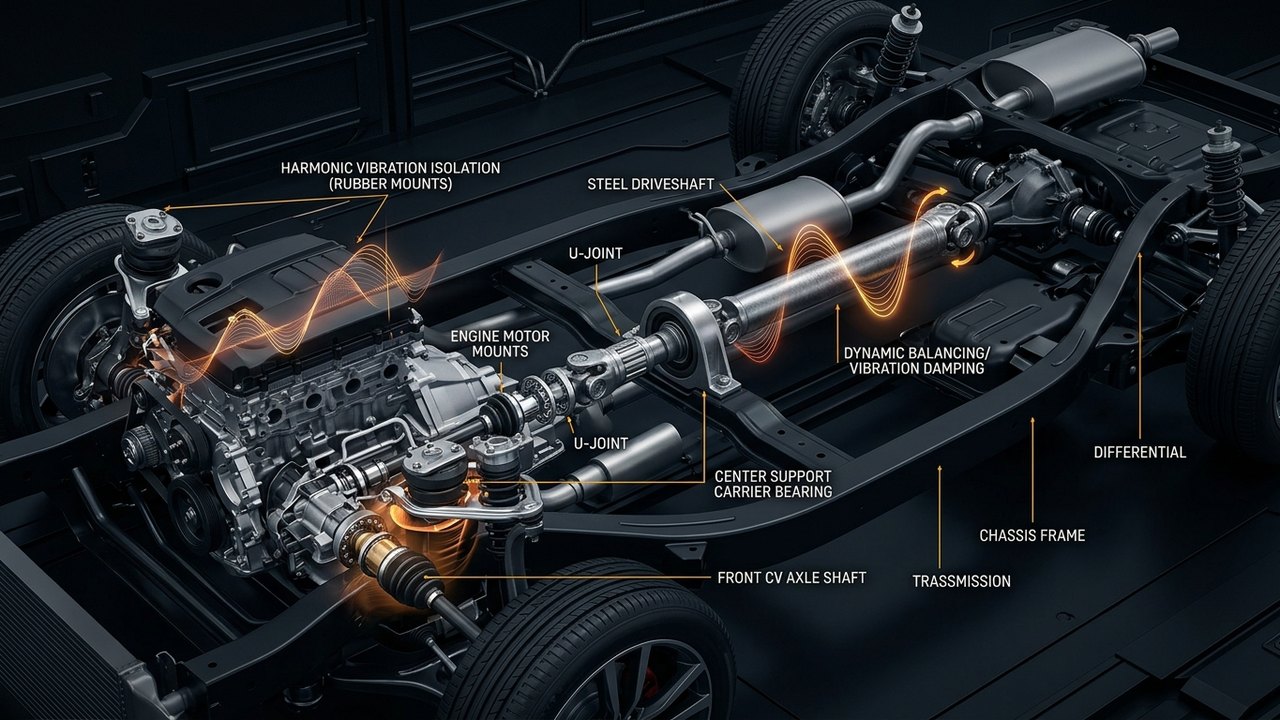
To understand the damage, you must understand the energy transfer. When a tire spins without moving the car, mechanical energy is converted into thermal energy via kinetic friction. In static conditions, static friction holds the tire to the road, allowing the car to move forward. The moment you exceed that threshold, you enter the regime of kinetic friction. The coefficient of kinetic friction is generally lower than static friction, which is why the car slides rather than launches. However, the rate of heat generation is massive. We are talking about the friction between a high-silica rubber compound and asphalt, spinning at speeds that can exceed 3,000 RPM at the tire circumference. This friction does not just warm the surface; it penetrates the tread blocks and heats the internal casing. The torque multiplication from the transmission and differential amplifies the force applied to the tire. A 400-horsepower car might only need 100 foot-pounds of torque at the flywheel to spin the wheels, but the transmission multiplies that force before it hits the axle. This creates a violent shear force on the rubber, tearing it away from the road surface and into the air as smoke.
Why Burnouts Are a Double-Edged Sword for Enthusiasts
Enthusiasts perform burnouts for one primary reason: traction. Modern performance tires, especially those with soft compounds, have a narrow operating window. Below a certain temperature, the rubber is too stiff to generate grip. Above a certain temperature, it degrades rapidly. The "sweet spot" for most performance tires is between 70°C and 100°C (158°F to 212°F). A burnout brings the tire into this window in seconds. Without it, your launch is hesitant, your cornering is unpredictable, and your braking distances are longer. However, the risk is real. Excessive heat can lead to tire blowouts, transmission failure, and engine oil breakdown. The key is moderation. A short, controlled spin is beneficial. A prolonged, aggressive spin is destructive. You are balancing the need for grip against the mechanical limits of your components. As highlighted in practical demonstrations of manual transmission burnouts, the technique matters as much as the duration. You are not just spinning tires; you are managing a thermal event.
2. In-Depth Technical Breakdown: Tires Under Thermal Stress

High-RPM Operation & Bearing Wear
The engine is generally more robust than the drivetrain, but it is not immune to damage. When you do a burnout, the engine is operating at high RPMs, often near the redline. This puts stress on the bearings, which are responsible for supporting the crankshaft and connecting rods. The bearings are lubricated by oil, which creates a film between the metal surfaces. If the oil gets too hot, the film breaks down, leading to metal-to-metal contact. This can cause bearing wear, which is a catastrophic failure. The valve springs also take a beating, as they are operating at high frequencies. If the springs weaken, they can break, leading to valve damage. The piston rings are also subject to stress, as they are sealing the combustion chamber. If the rings wear down, the engine will lose compression, leading to power loss and oil consumption. The key to protecting the engine is to keep the oil at the correct temperature. The oil should be between 90°C and 110°C (194°F and 230°F). If the oil gets too hot, it will break down, leading to bearing wear. If the oil gets too cold, it will be too thick, leading to poor lubrication. Both extremes are bad. You should monitor your oil temperature with a gauge. If it gets too high, stop the burnout and let the engine cool down. This is especially important for turbocharged engines, which run hotter than naturally aspirated engines. The turbocharger is a high-speed bearing that is sensitive to heat. If it gets too hot, it can fail, leading to a loss of boost and engine damage. In our shop, we have seen turbochargers fail after just a few intense burnouts because the oil temperature was not monitored. It is a common mistake that can cost you thousands of dollars.
Oil Temperature Management During Extended Spins
Oil viscosity is critical for engine protection. As the oil heats up, it becomes thinner, reducing its ability to lubricate. This is why it is important to use the correct oil viscosity for your engine. A thicker oil will provide better protection at high temperatures, but it may be too thick at low temperatures, leading to poor lubrication during cold starts. A thinner oil will provide better lubrication at low temperatures, but it may be too thin at high temperatures, leading to poor protection during burnouts. The solution is to use a multi-grade oil that is designed to handle a wide range of temperatures. Look for oils with a high viscosity index, which means they maintain their viscosity over a wide range of temperatures. Synthetic oils are generally better than conventional oils for this purpose, as they have a higher viscosity index and better thermal stability. You should also change your oil more frequently if you are doing burnouts. The high temperatures and high RPMs will break down the oil faster, reducing its lubricating properties. Change your oil every 3,000 to 5,000 miles instead of the standard 7,500 to 10,000 miles. This will ensure that your engine is protected. A discussion on mechanic forums highlights that frequent burnouts accelerate oil degradation, making regular changes essential. Do not skip this step. It is the cheapest way to protect your engine.
5. Real-World Longevity: How Many Burnouts Before Failure?
Tire Lifespan: Street vs. Drift Specific
Tire lifespan is the most variable component. Street tires can last 40,000 to 60,000 miles, but if you do burnouts regularly, you may only get 10,000 to 20,000 miles. Performance tires can last 20,000 to 30,000 miles, but with burnouts, you may only get 5,000 to 10,000 miles. Drift tires are designed for this purpose, so they can last longer, but they are still susceptible to wear. The key is to monitor your tire tread depth. Replace the tires when the tread depth is below 2/32 of an inch. This is the legal minimum in most states, but it is also the point where the tires lose their grip. Do not wait until the tires are bald. Replace them before they fail. The following table provides a cost breakdown for tire replacement:
| Tire Type | DIY Cost (USD) | Professional Cost (USD) | DIY Cost (INR) | Professional Cost (INR) |
|---|---|---|---|---|
| Street Tires | $400-$600 | $600-$900 | ₹30,000-₹45,000 | ₹45,000-₹67,000 |
| Performance Tires | $800-$1,200 | $1,200-$1,800 | ₹60,000-₹90,000 | ₹90,000-₹1,35,000 |
| Drift Tires | $1,000-$1,500 | $1,500-$2,200 | ₹75,000-₹1,12,000 | ₹1,12,000-₹1,65,000 |
| Alignment | $100-$150 | $150-$250 | ₹7,500-₹11,000 | ₹11,000-₹18,000 |
Transmission Fluid Degradation & Replacement Intervals
Transmission fluid degradation is a silent killer. The fluid breaks down over time, losing its lubricating properties. This leads to increased friction and wear in the transmission. The signs of fluid degradation are a burnt smell, a dark color, and a gritty texture. If you see any of these signs, change the fluid immediately. The replacement interval for transmission fluid depends on the type of transmission and the driving conditions. For a standard automatic transmission, the interval is 50,000 to 60,000 miles. For a manual transmission, the interval is 30,000 to 40,000 miles. If you are doing burnouts regularly, you should change the fluid more frequently, every 15,000 to 20,000 miles. This will extend the life of your transmission and prevent costly failures. The cost of a fluid change is relatively low compared to the cost of a transmission replacement. A fluid change costs $100 to $200, while a transmission replacement costs $2,000 to $5,000. It is a no-brainer to change the fluid more frequently. Do not skimp on this maintenance. It is the best investment you can make in your car. A community guide on decent burnout execution often overlooks this, but mechanics know that fluid health is the backbone of drivetrain longevity. Keep your fluids fresh and clean.
6. Step-by-Step Guide: Safe Burnout Execution & Maintenance
Pre-Burnout Checklist: Tires, Fluids & Environment
Before you do a burnout, you must check your car. This is not optional. It is mandatory. Here is the checklist:
- Tire Pressure: Check the tire pressure. It should be at the recommended level. Under-inflated tires will overheat and fail. Over-inflated tires will have reduced grip.
- Tire Condition: Inspect the tires for cracks, bubbles, or low tread depth. Replace the tires if necessary.
- Fluid Levels: Check the transmission fluid, differential oil, and engine oil. Top up if necessary. Change the fluid if it is old or dirty.
- Surface Conditions: Choose
Free Instant Guide
Download the Free 2026 Car Buying & EV Checklist
Avoid expensive dealership markups and EV battery pitfalls with our verified 15-point inspection checklist.
Instant digital access. No spam, unsubscribe anytime.
HFrequently Asked Questions
How hot do tires get during a burnout?
Tires can reach temperatures exceeding 160°C (320°F) after just 40 seconds of sustained spinning. This extreme heat causes the rubber compound to soften and degrade, leading to a loss of structural integrity. If temperatures exceed 200°C, the tire may suffer from 'flat spots' or even blowouts. Proper cooling intervals of at least 45 seconds are required to allow the rubber to return to safe operating temperatures.Does a burnout damage the transmission?
Yes, repeated burnouts stress the transmission's clutch packs, torque converter, and differential. In automatics, the torque converter can overheat, degrading fluid viscosity. In manuals, the clutch plate wears rapidly. While a single burnout is unlikely to cause immediate failure, frequent sessions can reduce transmission lifespan by 20-30% due to thermal cycling and increased friction wear on internal components.Is it bad for the engine to do a burnout?
Generally, no, provided the engine is warm and oil pressure is stable. Burnouts primarily stress the drivetrain, not the engine itself. However, holding high RPMs for extended periods can increase oil temperature. If the oil cooler is insufficient, this can lead to oil breakdown. Always ensure the engine is fully warmed up before performing a burnout to prevent cold-start wear on bearings and pistons.How many burnouts can a tire handle?
A standard performance tire can handle approximately 10-15 moderate burnouts before significant tread wear occurs. Drift-specific tires, designed with softer compounds and reinforced sidewalls, may last for 20-30 sessions. Once the tread depth drops below 2mm, the tire loses structural support and becomes prone to blowouts. Regular inspection of the sidewall for bulges or cracks is essential after each session.What is the safest way to do a burnout?
The safest method involves using a closed, paved area free of debris. Start with a short 5-10 second spin to warm up the tires, then cool them for 45 seconds. Avoid spinning on cold tires, as this causes uneven wear and potential loss of control. Use a car with limited-slip differentials for better control. Always monitor tire temperature with a pyrometer if possible, and stop immediately if you see excessive smoke or tire deformation.


Comments
Be the first to comment on this article.
Leave a comment