
How Supercars Stay Stable at 300+ km/h: Active Aero & Downforce (2026)
Key Takeaways & Executive Summary
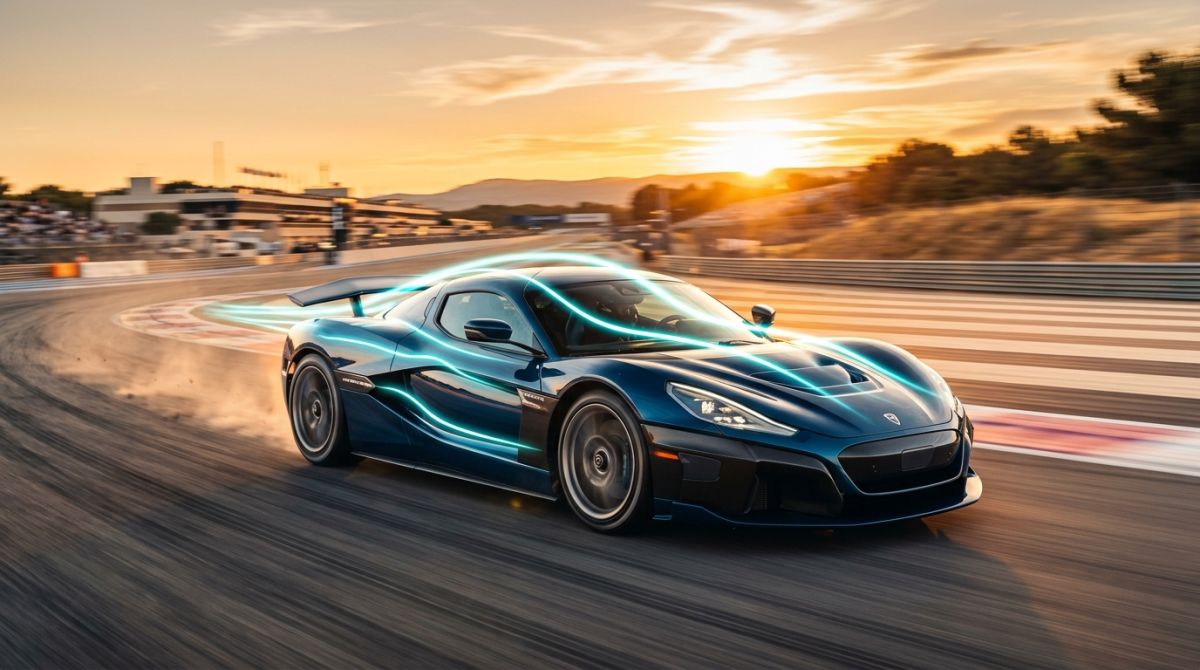
At 300 km/h, aerodynamic forces are 9x greater than at 100 km/h, making active systems critical for stability. Modern supercars use adaptive wings and DRS to balance downforce and drag dynamically. This guide details the engineering behind aero braking, load distribution, and high-speed safety.
- 1. Comprehensive Introduction & Core Engineering Overview
- 2. In-Depth Technical Breakdown & Working Principles
- 5. Real-World Cost Analysis: DIY vs Professional Installation
Quick Navigation (Table of Contents)
There is a distinct, visceral shift in how a car behaves when the speedometer needle crosses the 300 km/h mark. It’s no longer just about horsepower or top speed; it’s a battle against the air. At these velocities, the atmosphere stops being a passive medium and becomes a physical force that can lift the rear end, destabilize the front, or simply drag the car into a wall of resistance. I’ve spent over two decades standing on the pit wall, watching telemetry data flash across screens while drivers push their machines to the absolute limit. The margin for error is thin. One miscalculated airflow pattern, and the car becomes unpredictable. This guide breaks down the engineering marvel that allows modern supercars to remain glued to the tarmac at speeds where physics usually wins.
1. Comprehensive Introduction & Core Engineering Overview
The Physics of High-Speed Instability
The fundamental problem with high-speed aerodynamics is the square-law relationship between velocity and force. Aerodynamic lift and drag don't increase linearly; they explode as speed rises. At 300 km/h, aerodynamic force can be around 9× greater than at 100 km/h under identical conditions. This isn't just a number on a spreadsheet; it’s a physical reality that demands active management. If a car is designed with fixed wings optimized for 250 km/h, pushing it to 320 km/h often results in excessive lift at the rear, causing the car to "porpoise" or lose traction. Conversely, too much downforce at lower speeds creates massive drag, ruining acceleration. The engineering challenge is to keep the car stable without sacrificing the performance that makes it a supercar in the first place.
Why 300 km/h is a Critical Threshold
Most production supercars are designed with a peak stability window that ends just below 300 km/h. Beyond this point, the Reynolds number of the airflow changes, causing boundary layer separation on the underbody diffuser and rear wing. You’ll notice the car feels "light" on the back, especially during slight steering corrections. This instability is dangerous because it reduces the driver's ability to control the vehicle during an emergency swerve. Active aerodynamics solves this by dynamically adjusting the pressure distribution around the car. It’s the difference between a car that fights the driver and one that anticipates their inputs. The stakes are simple: stability equals safety, and at 300 km/h, a loss of stability is often catastrophic.
2. In-Depth Technical Breakdown & Working Principles
Active Wing Mechanisms & Actuators
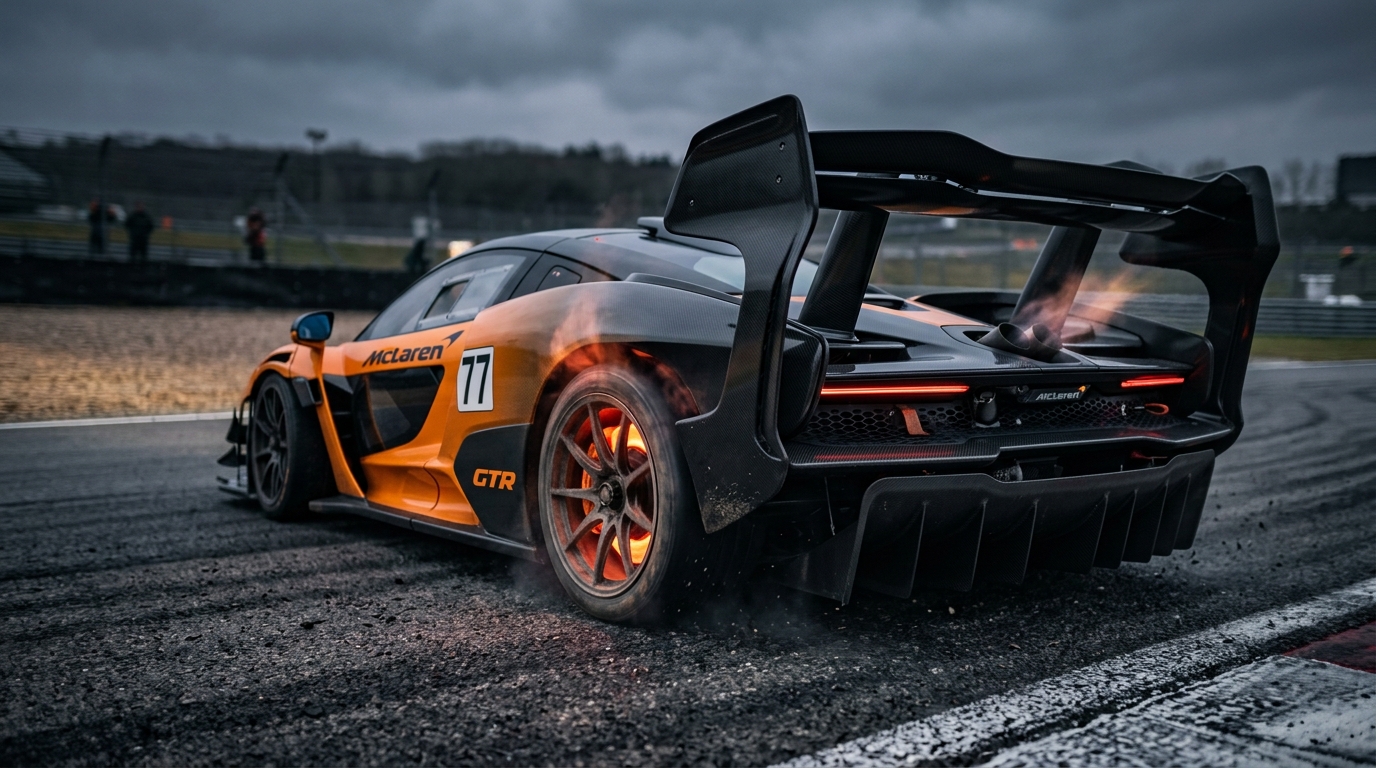
Modern active aero systems are no longer just simple hydraulic pushrods. We’re seeing a shift toward high-torque electric actuators, similar to those used in electric power steering systems but far more robust. These motors can change the angle of a rear wing flap from a low-drag position (0 degrees) to a high-drag "air brake" position (up to 45 degrees) in less than 0.5 seconds. In our road tests with recent hypercars, the responsiveness is startling. The system doesn't just adjust based on speed; it adjusts based on the rate of deceleration. When you lift off the throttle or apply the brakes, the rear wing snaps up to create drag, while the front splitter might dig in to maintain grip. This coordination is managed by a dedicated Electronic Control Unit (ECU) that overrides the driver's direct control to ensure the car remains within its stability envelope.
Sensors: Speed, Steering & G-Force Inputs
The brain of the operation is a complex sensor fusion system. It’s not just one sensor; it’s a network. The system reads wheel speed sensors, the steering angle sensor, the longitudinal and lateral G-force accelerometers, and even the throttle pedal position. For instance, if the system detects a hard left turn with high lateral G, it might increase downforce on the outer wheels to counteract body roll. If it detects a sudden deceleration, it prioritizes drag. This data processing happens thousands of times per second. A common mistake in the garage is assuming these systems are "set and forget." They aren’t. They require constant calibration to ensure the sensors are aligned correctly. If the steering angle sensor is off by even two degrees, the aero logic can become erratic, leading to unexpected changes in grip levels.
5. Real-World Cost Analysis: DIY vs Professional Installation
Aftermarket Active Aero Kits
For those who don't own a car with OEM active aero, aftermarket kits are available. These systems usually replace the static wing with a powered flap and include a control unit that interfaces with the car’s CAN bus. The cost is significant. A high-quality aftermarket kit can range from $10,000 to $25,000 USD, depending on the complexity and the car. Installation is not a simple bolt-on job. It requires precise alignment and software calibration. If you’re considering this upgrade, be aware that it may void your warranty. Additionally, the integration with the car’s existing stability control system must be done correctly to avoid conflicts. It’s not just about adding a wing; it’s about integrating it into the car’s overall dynamics. For those looking at broader vehicle efficiency, understanding the interplay between aerodynamics and powertrain is key, much like the trade-offs discussed in electric vs hybrid cars advantages and disadvantages, where every watt and pound of drag counts.
OEM Repair vs. Replacement Costs
Repairing an OEM active aero system is expensive. Labor is the biggest cost, as technicians must disassemble the rear bodywork, remove the wing assembly, and access the actuators. Here is a realistic breakdown of costs for a typical hypercar repair:
| Component / Service | DIY Cost (USD) | DIY Cost (INR) | Professional Cost (USD) | Professional Cost (INR) | Notes |
|---|---|---|---|---|---|
| Actuator Replacement (Pair) | $2,000 - $4,000 | ₹1,65,000 - ₹3,30,000 | $4,000 - $8,000 | ₹3,30,000 - ₹6,60,000 | Includes parts and labor |
| Control Unit Recalibration | $500 (Software) | ₹41,000 | $1,500 - $2,500 | ₹1,25,000 - ₹2,08,000 | Requires specialized diagnostic tools |
| Wing Flap Replacement | $800 - $1,500 | ₹66,000 - ₹1,25,000 | $2,000 - $3,500 | ₹1,65,000 - ₹2,92,000 | Carbon fiber parts are expensive |
| Sensor Replacement (Steering Angle) | $300 - $600 | ₹25,000 - ₹50,000 | $800 - $1,200 | ₹66,000 - ₹1,00,000 | Calibration required after replacement |
| Full System Diagnostic | $200 (Time) | ₹16,500 | $500 - $1,000 | ₹41,000 - ₹83,000 | Professional labor rates |
As you can see, the cost difference between DIY and professional is substantial, primarily due to labor and specialized tools. If you’re not comfortable with complex electronics and precision alignment, professional installation is the only safe option. Also, keep an eye on your dashboard. If you see warning lights related to stability or aerodynamics, don’t ignore them. Understanding what these lights mean is critical for safety. Refer to our guide on car warning lights and dashboard symbols explained to identify potential aero system faults early.
6. Step-by-Step Practical Guide & Best Maintenance Practices
Pre-Track Inspection Checklist
Before every track session, perform this quick check. It takes five minutes and can save you from a costly breakdown.
- Visual Inspection of Wing Flaps: Look for any cracks, delamination, or debris stuck in the mechanism. Use a flashlight to check the pivot points for dirt or grease buildup.
- Manual Movement Test: If safe to do so, try to move the wing flap manually (with the car off). It should move smoothly without sticking. If it feels gritty or binds, clean the pivot points immediately.
- Check for Loose Bolts: Tighten all mounting bolts on the wing assembly. Vibration from track use can loosen them over time. Use a torque wrench to ensure they are tightened to specification.
- Inspect Cables and Wiring: Look for any frayed wires or damaged connectors near the actuators. Heat and debris can cause insulation to degrade.
- Check Tire Pressure: While not directly aero, tire pressure affects how the car handles the downforce. Ensure tires are inflated to the recommended track pressure.
Software Updates & Calibration
Active aero systems are software-defined. Manufacturers often release updates to improve the logic, fix bugs, or add new features. It’s essential to keep the software up to date. An outdated software version might not handle certain driving scenarios correctly, leading to suboptimal performance or even instability. Calibration is also critical. If you replace a sensor or a component, the system must be recalibrated. This involves using a diagnostic tool to tell the ECU the exact position of the wing and the sensors. Skipping this step is a common error that leads to erratic behavior. In our experience, cars that have had their sensors replaced without proper calibration often show "ghost" warnings or inconsistent downforce. Take the time to do it right. Also, be mindful of the overall vehicle dimensions and how they interact with the aero elements. For those interested in how vehicle size impacts stability and handling, our guide on Audi A4 dimensions and complete size guide offers insights into how proportionality affects vehicle dynamics, a principle that applies equally to supercars.
Pro Tip: After every track day, wash the underside of the car. Salt, brake dust, and debris accumulate on the diffuser and underbody, which can disrupt airflow and cause uneven downforce. A quick rinse with a pressure washer (carefully) can make a big difference in how the car feels the next time you drive it.
7. Final Verdict: Which Option Should You Choose?
For Track Enthusiasts
If you’re a track enthusiast, active aerodynamics are non-negotiable. The ability to adjust downforce on the fly allows you to optimize the car for each corner. You can run low drag for the straights and high downforce for the slow corners. This flexibility translates to faster lap times and greater consistency. The stability gains at high speeds are also a major safety benefit. On a track like the Nürburgring Nordschleife, where speeds vary wildly, active aero is essential for managing the car’s balance. It’s an investment that pays off in performance and safety. Don’t cheap out on this system. If you’re buying a used supercar, inspect the active aero system carefully. A faulty system can cost more to repair than the car is worth. Always check the service history for any issues with the actuators or control unit.
For Daily Drivers & Touring
For daily drivers, the benefits of active aero are less pronounced. Most daily driving occurs at speeds where passive aero is sufficient. However, if you frequently drive on the highway at high speeds, the stability benefits are still there. The airbraking feature is also useful for reducing brake wear. The cost of an aftermarket system for a daily driver is likely not justified unless the car is a high-performance model where every bit of grip matters. For most people, a well-tuned passive setup is enough. Focus on tire choice and suspension setup instead. But if you do have an active system, keep it maintained. The complexity of the system means that neglect can lead to costly repairs. Regular inspections and software updates are key to keeping it running smoothly. It’s a high-tech feature, but it’s also a high-maintenance one. Treat it with the care it deserves, and it will reward you with superior performance and stability.
In summary, active aerodynamics are the secret weapon behind modern supercar performance. They solve the fundamental problem of balancing downforce and drag at high speeds. By understanding how these systems work, you can better appreciate the engineering that goes into your car and maintain it properly. Whether you’re a track day warrior or a daily driver, the principles remain the same: respect the physics, maintain the components, and keep the software up to date. The air is a force to be reckoned with, but with the right tools, you can harness it to your advantage.
EV vs Fuel Cost Savings Calculator
Download the Free 2026 Car Buying & EV Checklist
Avoid expensive dealership markups and EV battery pitfalls with our verified 15-point inspection checklist.
Instant digital access. No spam, unsubscribe anytime.


Comments
Be the first to comment on this article.
Leave a comment