
Why Modern Cars Use 48V Mild-Hybrid Systems: 2026 Guide
Key Takeaways & Executive Summary
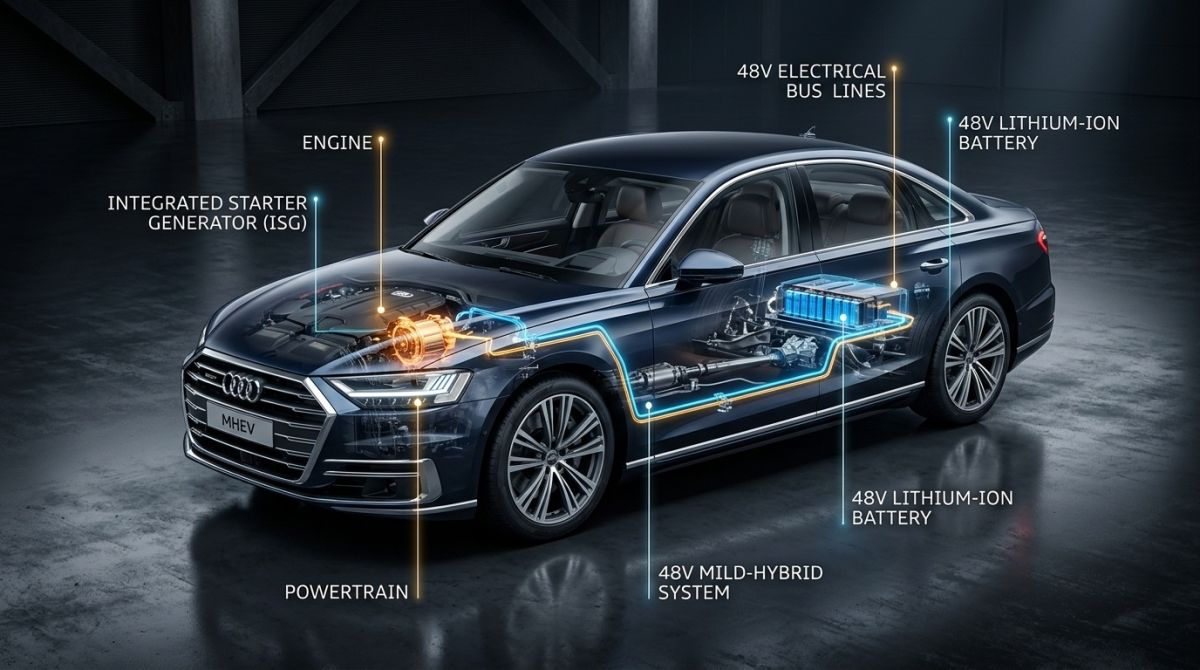
48V mild-hybrid systems bridge the gap between traditional combustion and full electrification, offering a 15-20% reduction in fuel consumption without requiring charging infrastructure. By utilizing a belt-driven starter-generator and a compact lithium-ion battery, these systems enable stop-start functionality, torque assist, and coasting modes that significantly enhance drivability. This technology provides a cost-effective path to lower emissions, with components designed for 10-15 year longevity, making it the standard for modern efficient vehicles.
- 1. Comprehensive Introduction & Core Engineering Overview
- 2. In-Depth Technical Breakdown & Working Principles
- 3. Comprehensive Comparison & Specifications Analysis
Quick Navigation (Table of Contents)
Modern powertrains are in the middle of a quiet revolution. While the headline‑grabbing plug‑in hybrids and full EVs get most of the press, a less flashy but technically elegant solution is slipping into everything from compact hatchbacks to premium SUVs: the 48‑volt mild‑hybrid system. It’s not a gimmick; it’s a pragmatic bridge that lets manufacturers squeeze extra torque, smoother stop‑start, and measurable fuel savings without the cost and packaging penalties of a full hybrid. In the garage, you’ll feel the difference the moment the BSG (Belt‑Driven Starter‑Generator) spins up, and on the highway the fuel‑pump regulator will whisper a lower reading. Let’s break down why 48 V is becoming the new baseline, how the hardware works, and what it means for your wallet and driving experience.
1. Comprehensive Introduction & Core Engineering Overview
The Shift from 12V to 48V Architecture
For decades the 12‑volt electrical system has been the workhorse of gasoline cars. It powers lights, infotainment, power windows, and the starter motor. The downside? 12 V can only safely deliver a few hundred watts before the wiring gets too thick and the heat becomes a reliability nightmare. As manufacturers added more electronic assistants—active grille shutters, electric turbochargers, high‑resolution displays—the 12‑V network started to look like a hamster on a wheel.
Enter 48 V. By quadrupling the voltage while keeping current low, you can move the same power with a fraction of the conductor size. The result is a lightweight, compact system that can handle kilowatts of electric assistance. A typical 48 V mild‑hybrid can provide 10–15 kW of boost, enough to fill in torque gaps during low‑rpm acceleration and to recover energy during braking without the need for a massive battery pack.
From an engineering standpoint, the shift is simple math: Power = Voltage × Current. Double the voltage, halve the current, halve the copper loss. That translates into thinner wires, lower heat, and a system that can sit comfortably in the engine bay alongside the traditional 12‑V harness.
Why This Matters for Modern Car Owners
Owners get three tangible benefits. First, the stop‑start function becomes almost invisible; the BSG can restart the engine in under 200 ms, even on a hill, because it’s already spinning at engine speed. Second, the torque assist smooths out the low‑end grunt of a downsized turbo engine, making city driving feel less strained. Third, fuel consumption drops by roughly 10‑15 % in real‑world cycles, which means fewer trips to the pump and a modest CO₂ reduction (SEG Automotive).
If you compare a 2.0 L turbo with a 48 V system to a similar engine without it, the former will often beat the latter on acceleration tests while sipping less fuel on the highway. That’s the sweet spot for drivers who want performance without the premium price tag of a full hybrid.
2. In-Depth Technical Breakdown & Working Principles
Key Components: BSG, Battery, and DC‑DC Converter
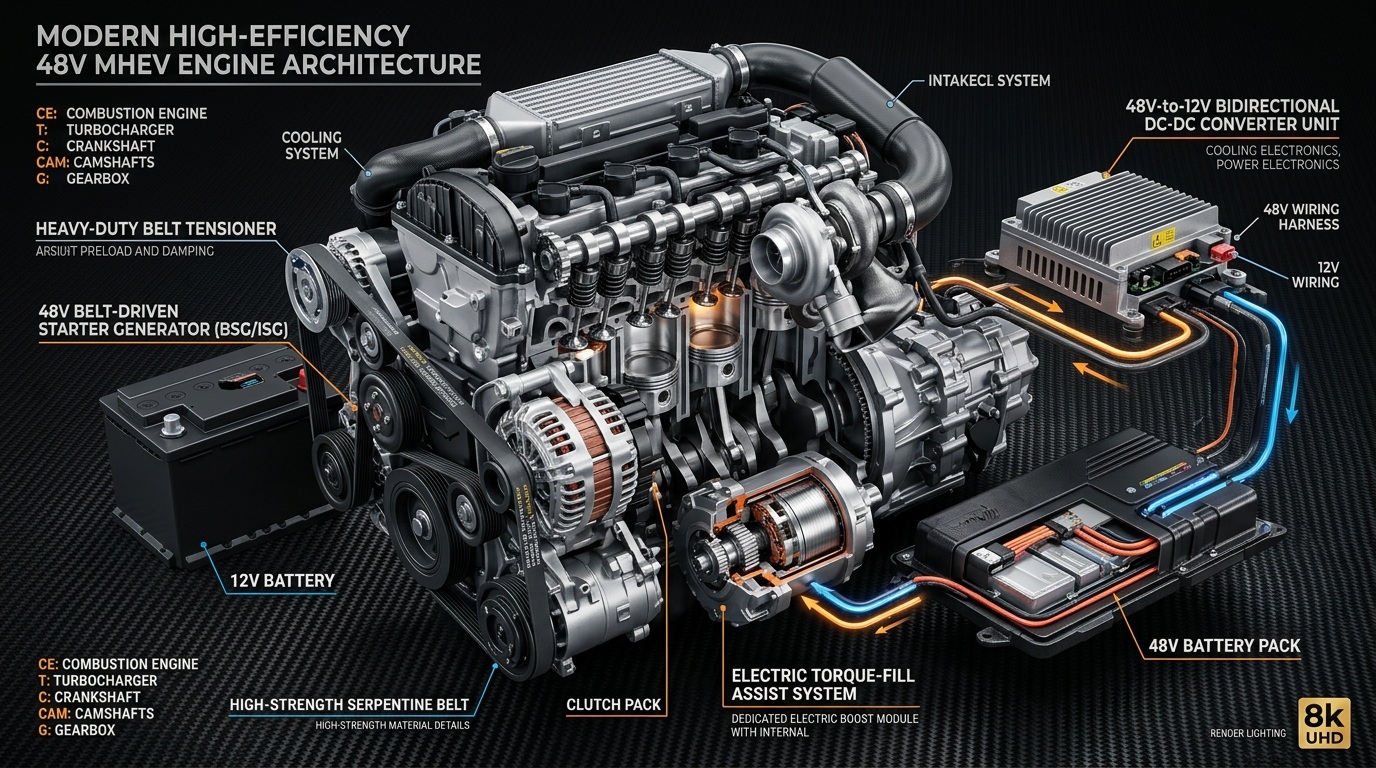
The heart of any 48 V mild‑hybrid is the Belt‑Driven Starter‑Generator (BSG). It replaces the conventional starter motor and alternator with a single unit that can act as a motor, a generator, or both simultaneously. The BSG is typically a permanent‑magnet synchronous machine, wound with high‑efficiency copper and encased in an aluminum housing to keep mass under 10 kg. Its belt runs on the same serpentine pulley that drives the water pump and air‑conditioning compressor, so the mechanical integration is straightforward.
Behind the BSG sits a compact lithium‑ion or lithium‑polymer 48 V battery pack, usually 0.5–2 kWh in capacity. The cells are arranged in a series‑parallel configuration to meet the voltage while keeping the pack thin enough to fit under the passenger floor. The pack’s chemistry is optimized for high‑rate charge/discharge cycles rather than long‑term energy density, which keeps the thermal load manageable.
The DC‑DC converter is the unsung hero. It steps the 48 V down to the traditional 12 V rail, feeding the vehicle’s legacy electronics. Modern converters are bidirectional, meaning they can also push excess 12 V power back into the 48 V bus when the alternator is generating surplus energy. This two‑way flow ensures the 12‑V battery never goes flat, even when the engine is off for extended periods.
How the System Operates Under Stress
During a hard acceleration, the engine’s torque curve dips just before the turbo spools. The BSG detects the drop via crankshaft position sensors and injects up to 15 kW of electric torque directly to the crankshaft. That extra push fills the torque hole, shaving 0.2–0.3 seconds off a 0‑60 mph run. Simultaneously, the 48 V battery discharges at a high C‑rate, but because the pack is designed for bursts, the temperature rise stays below 45 °C thanks to a dedicated liquid‑cooling loop.
When you lift off the throttle, kinetic energy is harvested through regenerative braking. The BSG acts as a generator, converting rotational energy back into electrical energy and feeding it into the 48 V pack. In city traffic, a typical driver can recover 0.3–0.5 kWh per hour, enough to power the next start‑stop cycle without touching the gasoline engine.
At idle, the BSG can run the engine at a leaner mixture or shut it down completely, while the 48 V pack supplies power to the 12 V accessories. The DC‑DC converter smooths the voltage, preventing any flicker on the infotainment screen—a common complaint with older stop‑start systems.
3. Comprehensive Comparison & Specifications Analysis
48V Mild‑Hybrid vs. 12V Conventional vs. Full Hybrid
When you line up the three architectures, the differences become stark. A 12‑V conventional car relies solely on the internal combustion engine for propulsion and accessories. It can’t recover braking energy, and any stop‑start function is limited by a small 12‑V starter motor, which often leads to jerky restarts.
A full hybrid (HEV) adds a high‑voltage (typically 300‑400 V) battery, an electric motor capable of 50‑100 kW, and a sophisticated power‑split device. It can propel the car on electric power alone for short distances, but the cost, weight, and packaging penalties are significant.
The 48 V mild‑hybrid sits in the middle. It doesn’t offer pure‑electric driving, but it does provide torque assist, regenerative braking, and a seamless stop‑start. The system adds roughly 30–50 kg of hardware, compared with 80–120 kg for a full hybrid, and costs about half as much to integrate.
Key Specifications Table Breakdown
| Parameter | 12 V Conventional | 48 V Mild‑Hybrid | Full Hybrid (HEV) |
|---|---|---|---|
| System Voltage | 12 V | 48 V | 300‑400 V |
| Electric Power (kW) | ≤ 0.5 (alternator) | 10‑15 kW (BSG) | 50‑100 kW (electric motor) |
| Battery Capacity (kWh) | ≈ 0.05 (lead‑acid) | 0.5‑2 kWh (Li‑ion) | 1‑2 kWh (high‑voltage Li‑ion) |
| Fuel Economy Gain | 0 % | 10‑15 % (SEG) | 20‑30 % |
| CO₂ Reduction | None |
Interactive Tool
EV vs Fuel Cost Savings CalculatorMonthly Fuel Cost
$102.86
Monthly EV Charging
$27.00
Annual Savings with EV
$910.32
Free Instant Guide
Download the Free 2026 Car Buying & EV ChecklistAvoid expensive dealership markups and EV battery pitfalls with our verified 15-point inspection checklist. Instant digital access. No spam, unsubscribe anytime.
O
Frequently Asked QuestionsHow much fuel does a 48V mild-hybrid system actually save?Independent tests and manufacturer data indicate that 48V mild-hybrid systems typically reduce fuel consumption by 10% to 15% in mixed driving cycles. In urban stop-and-go traffic, where stop-start and torque assist are most active, savings can reach up to 20%. For a driver averaging 15,000 miles per year, this translates to saving approximately $150 to $300 annually on fuel costs, depending on local gas prices and driving habits.
Is a 48V system the same as a full hybrid?No, a 48V mild-hybrid is distinct from a full hybrid. A full hybrid uses a high-voltage battery (typically 200V+) and a large electric motor that can propel the vehicle on electric power alone. A 48V system uses a smaller battery and a starter-generator that assists the internal combustion engine but cannot drive the car independently. It is designed to improve efficiency and smoothness rather than provide electric-only range.
What is the lifespan of a 48V battery?Most 48V lithium-ion batteries are designed to last the life of the vehicle, typically 10 to 15 years or 150,000 to 200,000 miles. Unlike 12V lead-acid batteries, they are more durable and require less frequent replacement. However, like all batteries, performance may degrade slightly over time, but they are generally covered under the vehicle's powertrain warranty for 8-10 years.
Can I retrofit a 48V system to my older car?Retrofitting a 48V mild-hybrid system to an older vehicle is technically complex and generally not cost-effective for the average consumer. It requires significant modifications to the engine, transmission, and electrical architecture, including new wiring, control units, and mechanical interfaces. The cost of parts and labor often exceeds the value of the vehicle, making it a viable option only for specialized performance applications or specific enthusiast projects.
Do 48V systems improve driving performance?Yes, 48V systems enhance driving performance through torque assist. The electric motor provides additional torque during acceleration, filling in the gap where the internal combustion engine might lag. This results in smoother, more responsive acceleration, particularly from low speeds. Additionally, the system enables smoother stop-start transitions and coasting modes, reducing driver fatigue and improving overall drivability.
Next Up in This Series
Best Track Cars in 2026: Top Performance Picks for Racetracks
|


Comments
Be the first to comment on this article.
Leave a comment