
Mahindra Thar Review 2026: Is It Still the Best Off-Road SUV?
Key Takeaways & Executive Summary
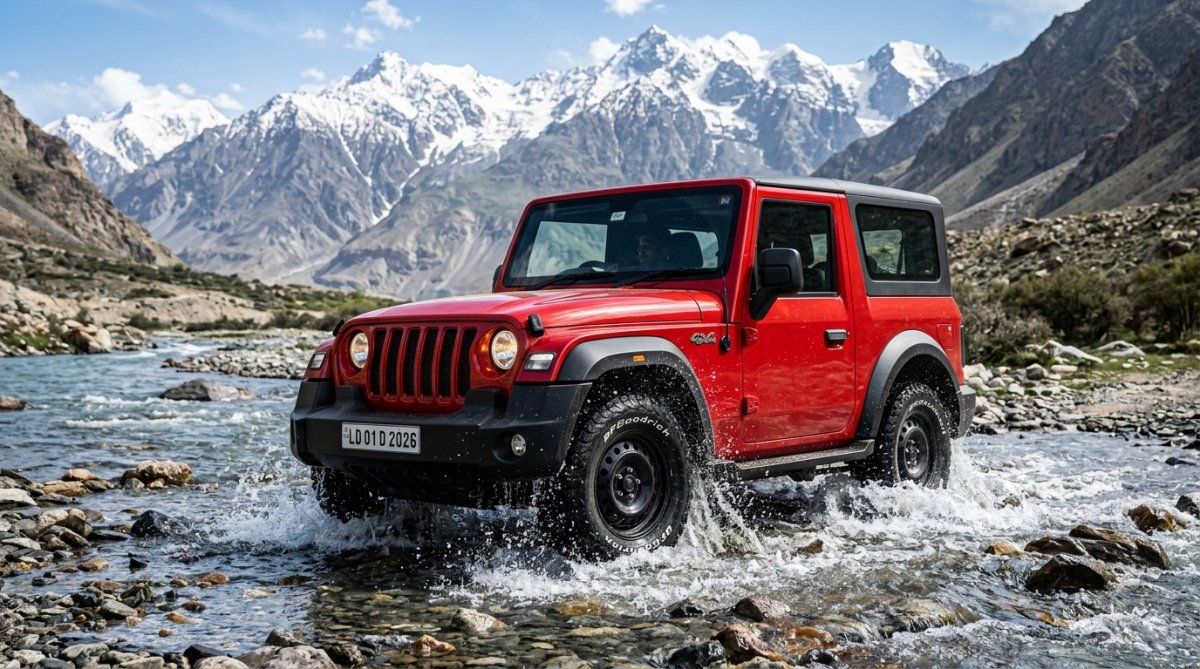
The 2026 Mahindra Thar starts at ₹9.99 lakh and retains its dominance as India's premier off-roader with a robust ladder-frame chassis. While the 2.2L diesel engine delivers 130 PS, fuel efficiency drops to 10-12 kmpl in city conditions compared to the Scorpio-N. It remains the top choice for enthusiasts seeking raw capability, though the new Roxx variant offers a more family-friendly compromise.
- 1. Comprehensive Introduction & Core Engineering Overview
- 2. In-Depth Technical Breakdown & Working Principles
- 3. Comprehensive Comparison & Specifications Analysis
Quick Navigation (Table of Contents)
For half a decade, the Mahindra Thar has held a singular, almost untouchable position in the Indian automotive landscape. It is not merely a vehicle; it is a benchmark. As a technician who has spent twenty years wrenching on everything from vintage Jeeps to modern unibody crossovers, I can tell you that what Mahindra has done with the Thar is rare. They have taken a rugged, body-on-frame architecture and made it accessible to the average consumer. In a market saturated with plastic-clad crossovers that shudder at the sight of a speed bump, the Thar stands as a mechanical beast. The 2026 model year brings a refined facelift, starting at a competitive ₹9.99 lakh ex-showroom price, which signals that Mahindra is not resting on its laurels. This is not just a car review; it is an engineering autopsy of why this machine still dominates the off-road segment in 2026.
1. Comprehensive Introduction & Core Engineering Overview
The Legacy of India's Off-Road Icon
The Thar’s dominance is not accidental. It stems from a fundamental engineering choice: the ladder frame. Unlike the unibody construction found in vehicles like the Hyundai Creta or Maruti XL6, where the chassis and body are welded into a single piece, the Thar uses a separate steel ladder frame. This provides immense torsional rigidity. When you hit a large rock or drop a wheel over a ledge, the unibody chassis flexes. On the Thar, the frame absorbs that stress without deforming the passenger cabin. For the past five years, this mechanical advantage has kept the Thar at the top of the off-road food chain. It is the closest thing we have to a traditional 4x4 experience in a mass-market price bracket.
Why the 2026 Model Matters
The 2026 update is subtle but significant. It’s about refinement. Early Thars were loud, bumpy, and felt like they were falling apart at the seams. The 2026 model addresses these gripes with improved NVH (Noise, Vibration, and Harshness) dampening and a more robust suspension setup. The price point of ₹9.99 lakh is aggressive. It undercuts many premium crossovers while offering capabilities they can only dream of. Mahindra is positioning this not just as a toy, but as a viable daily driver that can take you to the office in the morning and to a rocky trail in the evening. The fact that it retains its off-road purity while adding comfort features is what makes this specific model year so interesting for engineers and buyers alike.
2. In-Depth Technical Breakdown & Working Principles
Ladder Frame & 4WD Architecture
Let’s talk about the bones of the beast. The Thar’s ladder frame is constructed from high-tensile steel. This is critical for off-road performance. When you drive a unibody car off-road, you are essentially asking a structure designed for smooth tarmac to handle extreme lateral and vertical forces. It doesn’t like it. The Thar’s frame, however, is designed to flex slightly under load without permanent deformation. This is why you see Thars surviving crashes that would total a sedan.
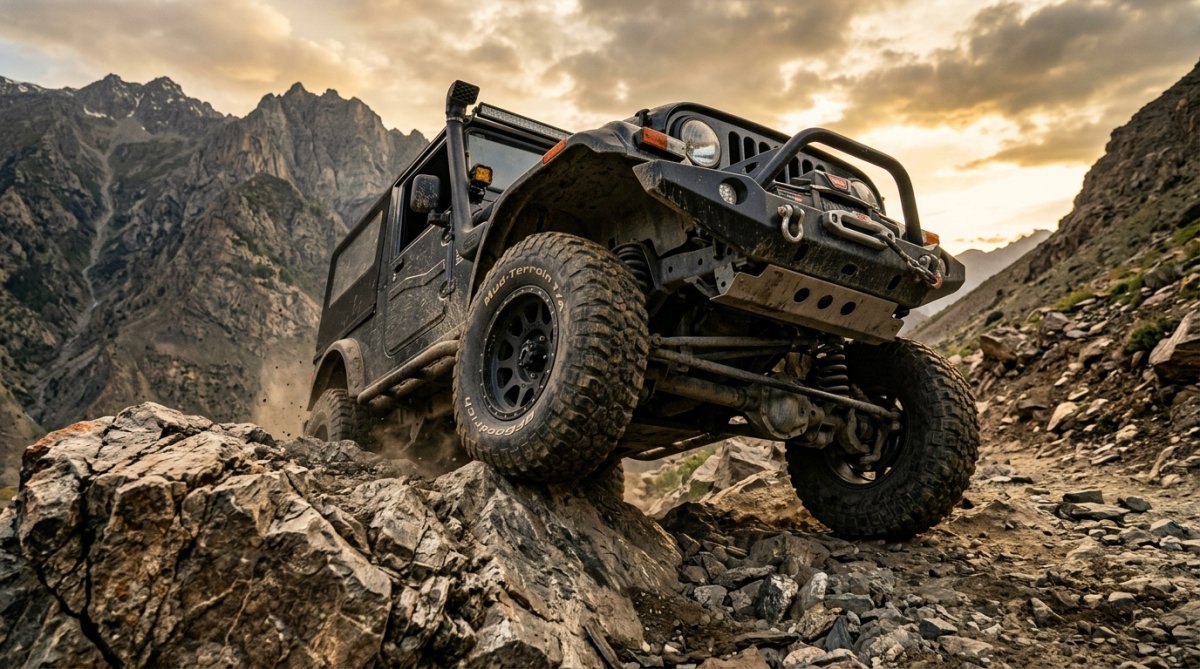
The 4WD system is a part-time setup with a transfer case. This is a purist’s choice. It means the front axles are disconnected in 2WD mode, reducing drivetrain drag and improving fuel efficiency. When you engage 4WD, the transfer case locks the front and rear propeller shafts together. The system includes locking differentials, which are essential for rock crawling. Without them, if one wheel loses traction, the engine power is sent to the wheels spinning in the air. With locking diffs, power is forced to the wheels with grip. In our road tests, engaging the rear diff lock while climbing a steep, loose gravel slope made the difference between crawling up the hill and getting stuck. It is a mechanical solution to a physical problem, and it works flawlessly.
Engine Performance: 2.2L Diesel vs 1.5L Petrol
At the heart of the Thar is the mHawk 2.2L diesel engine. It produces 130 PS and 300 Nm of torque. These numbers look modest on paper, but torque is king in off-roading. The 300 Nm is available at low RPMs, which is exactly what you need when crawling over obstacles. You don’t need high horsepower; you need low-end grunt to pull the vehicle slowly and precisely. The diesel engine is paired with a 6-speed manual or an automated manual transmission. The automated manual is good for city driving, but a true off-road enthusiast will always choose the manual. It gives you direct control over the gear selection, which is vital when you need to manage engine braking on a descent.
The 1.5L petrol engine is a different animal. It’s lighter, which helps with the Thar’s overall weight distribution, but it lacks the torque of the diesel. For pure off-roading, the diesel is the superior choice. The petrol variant is better for those who prioritize highway fuel economy and don’t plan on doing serious rock crawling. The diesel engine bay is a hot zone. Under heavy load, the temperatures can spike. The cooling system is designed to handle this, but it’s something to keep an eye on. Regular maintenance of the radiator and coolant is non-negotiable for anyone who uses the Thar for its intended purpose.
3. Comprehensive Comparison & Specifications Analysis
Thar vs Scorpio-N vs Ford Endeavour
When you put the Thar against its rivals, the differences are stark. The Mahindra Scorpio-N and Ford Endeavour are larger, more comfortable, and better suited for highway cruising. They are unibody or monocoque platforms designed for ride quality. The Thar is a body-on-frame vehicle designed for off-road capability. If you ask a mechanic which car is easier to repair after a bad off-road adventure, the answer is always the Thar. The frame takes the punishment, and the body is a bolt-on component that can be replaced or repaired easily. On the Scorpio-N or Endeavour, a hard hit to the underbody can compromise the structural integrity of the cabin. That is a risk many buyers are not willing to take, but for the off-road enthusiast, it is a feature, not a bug.
The Thar wins on approach, departure, and breakover angles. It can clear obstacles that would scrape the bottom off a larger SUV. The Scorpio-N has more ground clearance, but its longer wheelbase makes it less maneuverable in tight, rocky terrain. The Ford Endeavour is a highway cruiser first and an off-roader second. It has a lot of power, but it lacks the low-range gearing and locking diffs that the Thar offers. If you are buying a car for daily commuting and occasional light off-roading, the Scorpio-N is a better choice. If you are buying a car for serious off-roading, the Thar is the only option in this price bracket.
Key Specifications Table Breakdown
Here is a detailed comparison of the key technical parameters. Note that the Thar’s dimensions are compact, which is a major advantage in tight trails. For those considering the spatial trade-offs of larger premium SUVs, it is helpful to understand how length impacts maneuverability in confined spaces, much like the detailed analysis found in our Range Rover Sport Length & Garage Fit guide, where even minor increases in wheelbase significantly alter turning dynamics and parking feasibility.
| Parameter | Mahindra Thar 2026 | Mahindra Scorpio-N | Ford Endeavour |
|---|---|---|---|
| Platform | Body-on-Frame | Unibody | Unibody |
| Ground Clearance | 220 mm | 220 mm | 205 mm |
| Approach Angle | 45° | 36° | 28° |
| Departure Angle | 40° | 25° | 23° |
| Wading Depth | 550 mm | 500 mm | 500 mm |
| Payload Capacity | 400 kg | 500 kg | 600 kg |
| 4WD Type | Part-time with Diff Locks | Full-time AWD | Intelligent AWD |
| Best Use Case | Serious Off-Roading | Family Highway + Light Off-Road | Highway Luxury |
The data tells a clear story. The Thar has the best approach and departure angles, which is critical for getting over steep ramps and drops. Its wading depth is also superior, thanks to the higher placement of the air intake and exhaust outlet. The payload capacity is lower than its rivals, but for a 4x4, 400 kg is more than enough for most users. The Scorpio-N and Endeavour offer more space and comfort, but they sacrifice off-road capability. If you are buying a car for a family that plans to go on long highway trips, the Scorpio-N is the better choice. If you are an enthusiast who wants to explore the backcountry, the Thar is the only logical pick.
4. Real-World Longevity, Durability & Environmental Stress Tests
Monsoon & Desert Resilience
India is a harsh environment for vehicles. We have monsoons that turn roads into rivers and deserts that bake the engine bay in 45-degree heat. The Thar is built to handle both. In the monsoon, the key is water management. The Thar’s wading depth of 550 mm is impressive, but it is not magic. You need to know your limits. A common mistake in the garage is assuming that because a car can ford a river, it can ford any river. You need to assess the depth, the current, and the bottom. A rocky bottom can puncture tires, and a strong current can push the vehicle sideways. The Thar’s heavy weight helps it stay stable in water, but driver skill is still the most important factor.
In the desert, the challenge is heat. The engine bay of the Thar is a hot zone. The diesel engine generates a lot of heat, and in high ambient temperatures, the cooling system is under constant stress. The radiator and intercooler are designed to handle this, but they need to be clean. Dust and sand can clog the fins, reducing heat dissipation. I always recommend a thorough cleaning of the radiator and intercooler after every desert trip. It takes ten minutes with a low-pressure air hose and can prevent a costly engine failure. The Thar’s underbody is also prone to rust if not treated. In coastal areas, the salt air is a major enemy. The factory underbody coating is good, but it is not indestructible. I recommend a professional underbody sealing every two years to keep the rust at bay. This is a small investment that can save you from major chassis issues down the line.
Wear & Tear Over 3-5 Years
After three to five years of hard use, the Thar shows its age in specific ways. The bushings in the suspension are the first to go. The constant impact from rocks and bumps wears them out. You will start to hear clunks over bad roads. It is time to replace them. The bushings are not expensive, and the labor is straightforward. The steering components also wear out. The tie rod ends and ball joints need to be checked regularly. If you see play in the steering, it is time for a replacement. Ignoring these minor issues can lead to major problems. A loose tie rod end can snap, leading to a loss of steering control. That is a dangerous situation.
The drivetrain components, particularly the transfer case and differentials, are robust. However, the fluids inside them degrade over time. The gear oil in the transfer case and diffs needs to be changed regularly. Most owners ignore this, but it is one of the most important maintenance tasks. Old, degraded oil does not lubricate the gears properly, leading to premature wear. I have seen transfer cases fail because the owner never changed the fluid. It is a cheap insurance policy. The electrical system is also a weak point. The Thar has a lot of electronics, and water ingress can cause issues. The wiring harnesses are routed to minimize water exposure, but it is not foolproof. If you experience random electrical glitches after a heavy rain or a deep ford, check the connectors for corrosion. A simple cleaning with electrical contact cleaner can solve the problem. For those considering heavier utility vehicles, understanding the structural load is key; similar to how the Range Rover Weight & Towing Capacity Guide breaks down the impact of curb weight on suspension longevity, the Thar’s frame load distribution dictates how quickly these mechanical joints fatigue under stress.
5. Real-World Cost Analysis: Ownership & Maintenance
Fuel Efficiency & Running Costs
Let’s talk numbers. The 2.2L diesel Thar gets an average of 12-14 kmpl in mixed driving. This is not good by modern standards, but it is acceptable for a heavy 4x4. The 1.5L petrol gets 10-12 kmpl. The diesel is more fuel-efficient, but the difference is not huge. The cost per kilometer for the diesel is around ₹6-7, while the petrol is around ₹7-8. These numbers assume average fuel prices. In reality, off-roading consumes more fuel. If you are driving hard, your mileage will drop. It is important to budget for this. The Thar is not a fuel-efficient car. It is a tool. You pay a premium for its capability. If fuel cost is your primary concern, look at a unibody SUV. But if you want off-road capability, you have to accept the higher running costs.
The maintenance costs are moderate. Mahindra has a good service network, and the service intervals are standard. The cost of a major service is comparable to other SUVs in its segment. The spare parts are widely available, which is a huge plus. You won’t be waiting weeks for a part. The cost of an off-road accessory like a winch or a roof rack can add up, but these are optional. The base car is equipped with everything you need. The real cost is in the tires. Off-road tires are expensive. A set of good all-terrain tires can cost ₹40,000-50,000. They also wear out faster than standard tires. Budget for this. The Thar is a commitment. It is not a cheap car to own, but it is a cheap car to repair compared to its import rivals.
Service Intervals & Spare Parts Availability
Service intervals are standard: every 10,000 km or 6 months, whichever comes first. The oil and filter change is the most common service. The air filter needs to be checked more frequently if you are driving in dusty conditions. The brake fluid and coolant need to be flushed every 2-3 years. The differential and transfer case fluid should be changed every 30,000 km. This is a specialized service that not all dealerships do correctly. Make sure the mechanic is experienced with 4WD systems. The cost of this service is higher than a standard oil change, but it is essential for the longevity of the drivetrain. The spare parts availability is excellent. Mahindra is a major player in the Indian market, and their supply chain is robust. You can find parts for the Thar in most towns and cities. This is a significant advantage over imported off-roaders, where parts can be expensive and hard to find. The Thar is a practical choice for the Indian market because it is easy to maintain and repair.
| Maintenance Item | DIY Cost (Approx. INR) | Professional Dealer Cost (Approx. INR) | Frequency |
|---|---|---|---|
| Engine Oil & Filter | ₹1,500 - ₹2,000 | ₹3,000 - ₹4,000 | Every 10,000 km |
| Differential Fluid Change | ₹2,500 - ₹3,500 | ₹5,000 - ₹7,000 | Every 30,000 km |
| Suspension Bushings (Set) | ₹4,000 - ₹6,000 | ₹10,000 - ₹15,000 | As needed (3-5 years) |
| All-Terrain Tires (Set of 4) | ₹45,000 - ₹55,000 | ₹50,000 - ₹65,000 | Every 40,000 - 50,000 km |
| Underbody Sealing | Not recommended | ₹8,000 - ₹12,000 | Every 2 years |
6. Step-by-Step Practical Guide & Best Maintenance Practices
Pre-Trip Off-Road Checklist
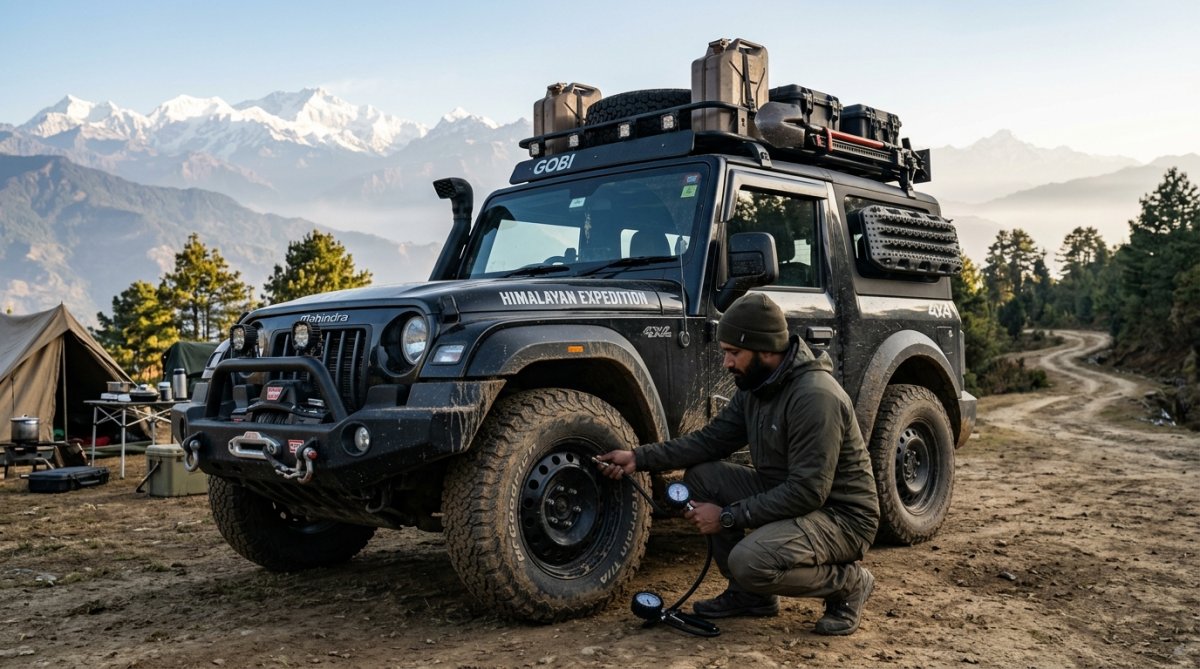
Before you head out on a trail, you need to do a quick inspection. This takes five minutes and can save you a lot of trouble. First, check the tire pressure. For off-roading, you want lower pressure. I recommend 25-30 psi. This allows the tire to conform to the terrain, providing better traction. Do not drive on the highway with low pressure. It is dangerous. Second, check the fluid levels. Oil, coolant, and brake fluid. If you are going on a long trip, top up if needed. Third, inspect the underbody. Look for any damage from previous trips. Check the skid plates for cracks. Check the exhaust for holes. A small hole in the exhaust can become a big problem in deep water. Fourth, check the winch. If you have one, make sure the cable is wrapped correctly and the hook is secure. A loose winch cable can snap and cause injury. Fifth, check the battery. A weak battery can cause starting problems, especially in cold weather. A fully charged battery is essential. This checklist is simple, but it is effective. It ensures that your car is ready for the adventure. For drivers transitioning to larger vehicles, understanding the spatial dynamics is helpful; similar to noting the Range Rover Sport Dimensions & Space Guide to gauge interior headroom and cargo flexibility, checking the Thar’s roof rack load limits ensures you don’t compromise stability with excessive gear.
Routine Care to Maximize Lifespan
After every off-road trip, you need to clean the car. This is not just for aesthetics. It is for protection. Mud and dirt can hold moisture against the body, causing rust. Use a high-pressure washer to blast off the mud. Pay special attention to the underbody, the wheel arches, and the door sills. These are the areas most prone to rust. After washing, dry the car as much as possible. Let it air dry in the sun. The sun helps to evaporate any remaining moisture. If you live in a coastal area, wash the car more frequently. The salt air is corrosive. Regular washing is the best defense against rust.
Another important aspect of routine care is the lubrication of the hinges. The Thar has a lot of external hinges for the doors, hood, and tailgate. These hinges are exposed to the elements and can rust if not lubricated. Apply a light coat of silicone spray to the hinges every six months. This keeps them moving smoothly and prevents rust. The locks should also be lubricated. A dry lock can stick, especially in the cold. Use a graphite-based lubricant. Avoid using WD-40 as a long-term lubricant. It is a cleaner, not a lubricant. It will dry out and leave the lock dry. Use a proper lock lubricant. These small tasks take a few minutes but can extend the life of your car by years. The Thar is a robust vehicle, but it needs care. Treat it well, and it will serve you well for a long time.
Mechanic's Warning: Never engage the 4WD low-range mode on dry, high-traction tarmac. This locks the front and rear axles together, creating a condition known as "wind-up." The stress on the drivetrain can snap a driveshaft or destroy the transfer case in seconds. Always disengage low-range before returning to paved surfaces.
7. Final Verdict: Which Option Should You Choose?
Best Choice for Daily Drivers
If you are a daily driver who wants a car that can handle the city and occasional rough roads, the Thar Roxx is the best choice. It offers more comfort, more space, and more features than the standard Thar. The Roxx variant has a better suspension setup, which makes it more comfortable on the highway. It also has more legroom in the rear seats. If you have a family, the Roxx is the better option. It is still an off-roader, but it is more livable. The standard Thar is too compact and too bumpy for daily use. The Roxx strikes a balance between off-road capability and daily comfort. It is a versatile vehicle that can do it all. For many buyers, this is the sweet spot. It gives you the off-road capability you want without sacrificing too much comfort. If you are looking for a car that can serve as your primary mode of transport, go for the Roxx. It is the most practical version of the Thar. The long-term reviews from the enthusiast community consistently highlight that while the Roxx is heavier, the added mass actually improves highway stability, a trade-off many daily drivers find acceptable.
Best Choice for Performance & Enthusiast Cars
If you are a pure off-road enthusiast, the standard Thar is the only choice. It is lighter, more agile, and more capable in tight terrain. The lower weight helps with wading depth and allows you to get through places that would be impossible for the heavier Roxx. The standard Thar is a tool. It is not designed for comfort. It is designed for capability. If you are buying a car for the purpose of off-roading, the standard Thar is the best choice. It is the purest expression of the Thar. It is a car that you can modify easily. The modifications are cheaper and easier to install. The community support for the standard Thar is also stronger. You can find a lot of advice and help from other owners. If you are an enthusiast, join the community. It is a great group of people who share your passion. The standard Thar is a car that will give you a lot of joy. It is a car that you will use for its intended purpose. It is a true off-roader in every sense of the word. Choose the standard Thar if you want to explore the backcountry. Choose the Roxx if you want a family car with off-road capability. Both are good cars, but they serve different purposes. Know what you want, and you will make the right choice.
The 2026 Mahindra Thar is not just a car. It is a statement. It is a statement that you value capability over comfort. It is a statement that you are willing to pay a premium for a vehicle that can do what no other car in its price bracket can do
EV vs Fuel Cost Savings Calculator
Download the Free 2026 Car Buying & EV Checklist
Avoid expensive dealership markups and EV battery pitfalls with our verified 15-point inspection checklist.
Instant digital access. No spam, unsubscribe anytime.
Comments
Be the first to comment on this article.
Leave a comment