
Audi 5000: History, Specifications & Legacy of the 1977-1988 Classic
Key Takeaways & Executive Summary
Complete history of the Audi 5000 (Type 43 and C3): production years 1977-1988, engine options, the 1986 unintended acceleration controversy, and why this cl...
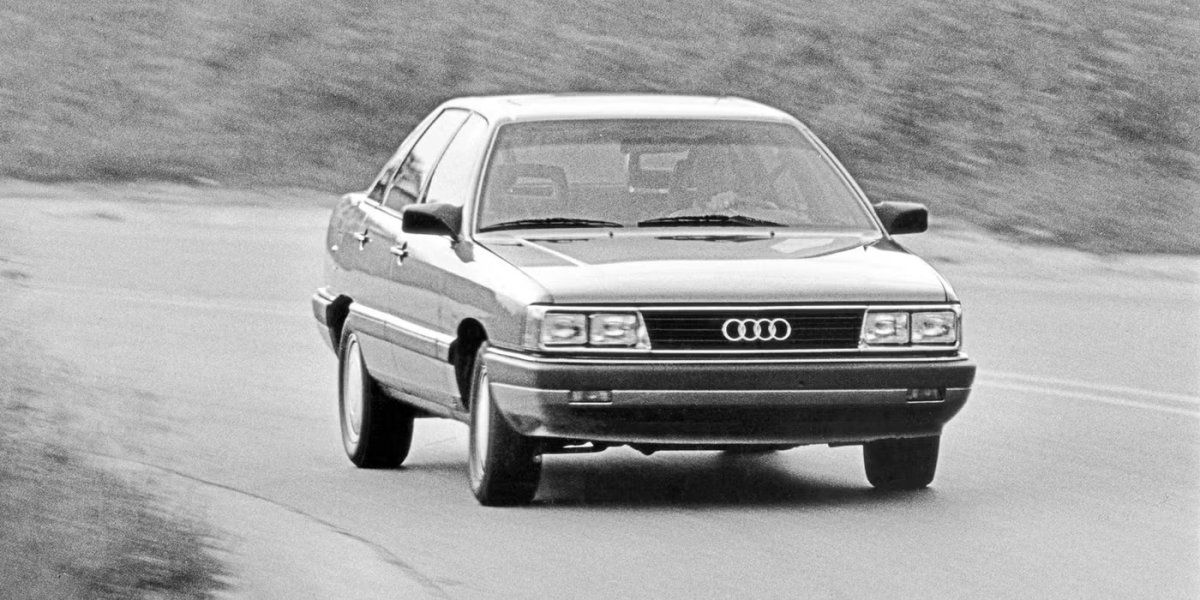
The Audi 5000 occupies a pivotal position in automotive history as the model that simultaneously established Audi's reputation for aerodynamic innovation and nearly destroyed the brand's American market position through one of the most significant product liability controversies of the 1980s. Produced from 1977 to 1988 in two distinct generations — the Type 43 and the C3 platform — the Audi 5000 represented Germany's most ambitious attempt to challenge Mercedes-Benz and BMW in the upper-medium sedan segment during an era when Japanese manufacturers were beginning to threaten European market dominance. According to period road tests published in Car and Driver, the turbocharged 5000 achieved a drag coefficient of 0.30, a figure that led aerodynamic development for production sedans worldwide and directly influenced the styling language that Audi maintains today. Understanding the Audi 5000's technical achievements alongside its regulatory controversies provides essential context for appreciating how this single model shaped both Audi's engineering philosophy and the automotive industry's approach to electronic safety systems.
First Generation: Type 43 (1977-1983)
The Type 43 Audi 5000 launched in 1977 as Audi's flagship sedan, positioned above the Audi 100 in the brand's lineup and designed to compete directly with the Mercedes-Benz E-Class and BMW 5 Series in European markets. The initial engine lineup comprised naturally aspirated five-cylinder units displacing 1,984cc and 2,144cc, producing 115 horsepower and 136 horsepower respectively through Bosch K-Jetronic mechanical fuel injection that provided superior reliability compared to the carburetor systems still common among competitors. A turbocharged 2,144cc variant producing 170 horsepower arrived in 1979, making the 5000 Turbo one of the fastest European sedans available to consumers at that price point, with a measured 0-100 km/h time of 9.1 seconds that outperformed the equivalent Mercedes-Benz 280E. The four-wheel disc brake system was standard equipment from launch, a specification that remained optional on several competitors well into the following decade and directly improved emergency stopping distances compared to period drum-in-hat rear brake configurations.
Second Generation: C3 Platform (1983-1988)
The C3 generation Audi 5000, introduced for the 1984 model year, represented a complete redesign that established the aerodynamic visual language Audi would refine through subsequent decades. The Cd of 0.30 achieved through carefully developed bodywork eliminated the vestigial chrome details common in German sedan design of that era, replacing them with flush window glass, a smoothed underbody, and integrated spoilers that reduced lift at high speed. A turbocharged and intercooled version designated the 5000 CS Turbo produced 182 horsepower, while the quattro all-wheel-drive system became available as an option in 1986, predating the widespread industry adoption of all-wheel drive in passenger cars by nearly a decade. The interior incorporated Audi's Procon-Ten passive safety system, which mechanically retracted the steering column away from the driver in a frontal collision through cables attached to the engine block, representing a genuine engineering innovation in passive safety before airbags became mandatory equipment.
The 1986 Unintended Acceleration Controversy
A November 1986 episode of CBS's 60 Minutes broadcast a segment alleging that Audi 5000 vehicles were prone to sudden unintended acceleration, claiming the transmission could shift from Park to Drive without driver input and accelerate without throttle application. The broadcast resulted in approximately 250,000 Audi 5000 owners in the United States experiencing immediate and significant depreciation of their vehicles, with new sales collapsing by over 80 percent in the following year according to industry registration data. Subsequent investigation by the National Highway Traffic Safety Administration and Transport Canada found no mechanical defect in the Audi 5000's throttle or transmission systems. The NHTSA concluded in 1989 that incidents attributed to unintended acceleration were caused by driver error, specifically pedal misapplication where drivers confused the brake and accelerator pedals. The controversy directly accelerated industry-wide adoption of brake-transmission shift interlock systems, which require the brake pedal to be depressed before shifting from Park, a requirement that became federally mandated for all new vehicles sold in the United States from September 1994.
Technical Legacy and Historical Significance
The Audi 5000's engineering contributions outlasted the controversy that defined its American market reputation. The aerodynamic research conducted for the C3 platform directly informed the development of the Audi 100 C4 that succeeded it, which achieved a Cd of 0.28 and won numerous design awards in the early 1990s. The turbocharged five-cylinder engine refined in the 5000 CS Turbo continued powering Audi's quattro rally cars through the Group B era, directly contributing to the four consecutive manufacturers' championships Audi won in the World Rally Championship between 1982 and 1985. Collector interest in well-preserved Audi 5000 examples has grown steadily since 2015, with C3 generation CS Turbo quattro models achieving auction results of $15,000-$25,000 for low-mileage examples according to Hagerty valuation data. The 5000's story illustrates how a single televised segment can reshape consumer perception of technically competent vehicles through narrative rather than engineering evidence, a lesson that remains relevant for automotive manufacturers navigating contemporary social media environments.
Further Reading
- Hagerty: Audi 5000 Buyer Guide and Values
- Car and Driver: Audi 5000 History
- Audi Club of North America: Classic Model Resources
EV vs Fuel Cost Savings Calculator
Download the Free 2026 Car Buying & EV Checklist
Avoid expensive dealership markups and EV battery pitfalls with our verified 15-point inspection checklist.
Instant digital access. No spam, unsubscribe anytime.
Comments
Be the first to comment on this article.
Leave a comment