
Automotive Industry Competitive Analysis & Market Trends (2026): EV Growth, AI, Global Market Outlook & Supply Chain Insights
Key Takeaways & Executive Summary
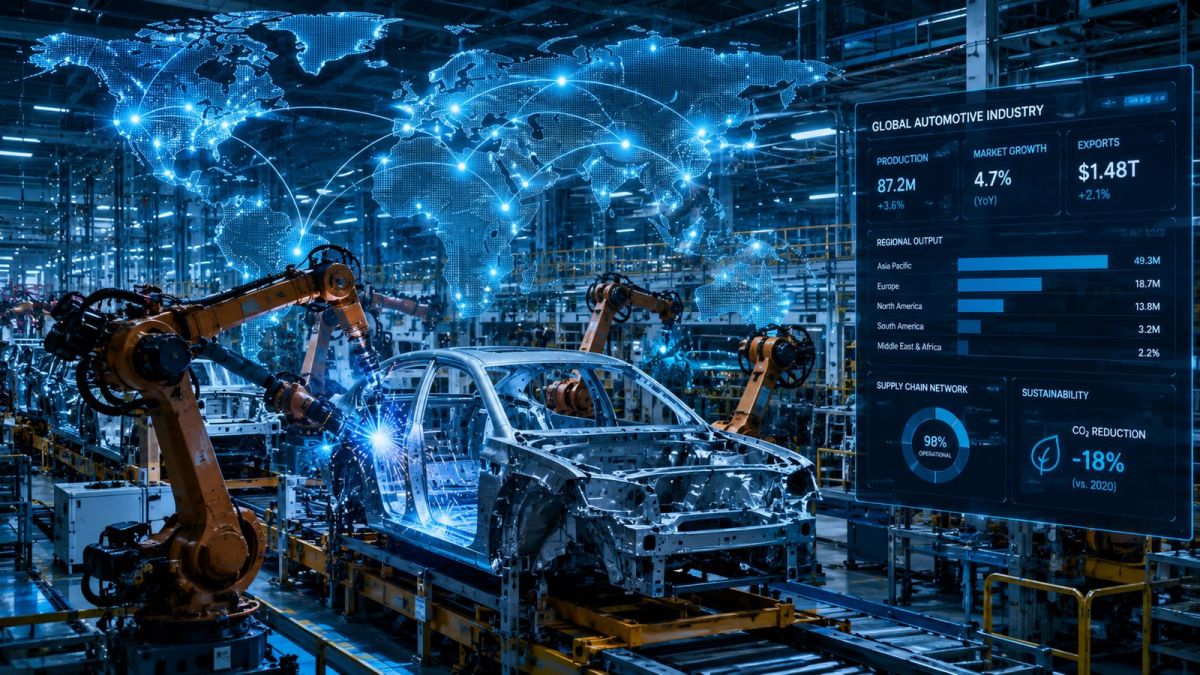
The global automotive industry is evolving rapidly as electric vehicles, artificial intelligence, connected cars, software-defined vehicles, and supply chain innovation reshape the competitive landscape. This comprehensive 2026 automotive industry competitive analysis explores the latest market trends, EV adoption, autonomous driving, battery technology, automotive data analytics, emerging markets, global manufacturers, and future growth opportunities. Whether you're an investor, automotive professional, business analyst, or industry enthusiast, this guide provides valuable insights into the companies, technologies, and market forces driving the future of mobility.
The global automotive industry is going through its biggest transformation in a century. Understanding the competitive landscape — who's winning, who's struggling, and which markets are growing — matters for investors, industry professionals, and curious enthusiasts alike. This 2026 competitive analysis breaks down the forces reshaping the auto industry.
The Electric Shift Is Redrawing the Competitive Map
The transition to electric vehicles is the defining competitive battle of the decade. Legacy automakers, with a century of combustion-engine expertise, are racing to reinvent themselves while newer, EV-native companies move faster and set the pace on software and battery technology. The result is a fundamentally reshuffled competitive order: reputation and heritage matter less than the ability to execute on electrification, software, and manufacturing scale.
Companies that invested early in EV platforms and battery supply chains have built durable advantages, while those that hesitated are now spending heavily to catch up. This creates a clear divide between the leaders and the laggards that traditional market-share figures don't fully capture.
How Competitive Analysis Works in the Auto Industry
A useful automotive competitive analysis looks beyond raw sales numbers. Key dimensions include:
- Product portfolio: How complete and modern is the lineup, especially in growing segments like EVs and SUVs?
- Technology and software: Advanced driver assistance, over-the-air updates, and in-car software increasingly differentiate brands.
- Manufacturing and supply chain: Control over batteries, chips, and raw materials determines who can scale profitably.
- Financial health: Margins and R&D spending reveal who can sustain the transition.
- Brand and pricing power: The ability to command premium prices without losing volume.
The Rise of Automotive Data Analytics
Data has become one of the industry's most valuable assets. Modern connected cars generate enormous streams of information about how vehicles are used, how components perform, and what drivers want. Automotive data analytics companies help manufacturers turn this into a competitive edge — improving reliability, personalizing features, informing design decisions, and even creating new revenue streams through software and services. The companies best at harnessing vehicle data are increasingly the ones setting the pace.
Emerging Markets: Where Growth Is Happening
While mature markets in North America and Europe are relatively saturated, growth is concentrated in emerging regions.
Latin America
Latin America has become a notable growth story in the auto industry, with rising vehicle demand and expanding manufacturing investment. As incomes grow and infrastructure improves, the region is attracting attention from global automakers looking for their next wave of expansion. Local production, evolving trade agreements, and gradually growing EV interest make it a market to watch closely.
Asia and Beyond
Asia remains both the largest manufacturing base and a fierce competitive arena, with domestic champions in several countries exporting aggressively and challenging established global brands on price and technology.
Supply Chain: The Hidden Battleground
The competitive story of the 2020s is increasingly written in the supply chain. Access to battery cells, semiconductors, and critical minerals like lithium determines which automakers can actually deliver on their ambitions. Companies that secured long-term supply deals and built regional resilience weathered recent disruptions far better than those dependent on fragile, single-source pipelines.
What to Watch Going Forward
The competitive landscape will keep shifting around a few key questions: which automakers can make EVs profitably, who wins the software and autonomy race, how quickly emerging markets mature, and how trade policy and tariffs redraw manufacturing footprints. For anyone tracking the industry, these are the storylines that will separate the winners from the also-rans through the rest of the decade.
EV vs Fuel Cost Savings Calculator
Download the Free 2026 Car Buying & EV Checklist
Avoid expensive dealership markups and EV battery pitfalls with our verified 15-point inspection checklist.
Instant digital access. No spam, unsubscribe anytime.
Comments
Be the first to comment on this article.
Leave a comment