
Turbo vs Naturally Aspirated Engine: Pros, Cons & Which Is Better?
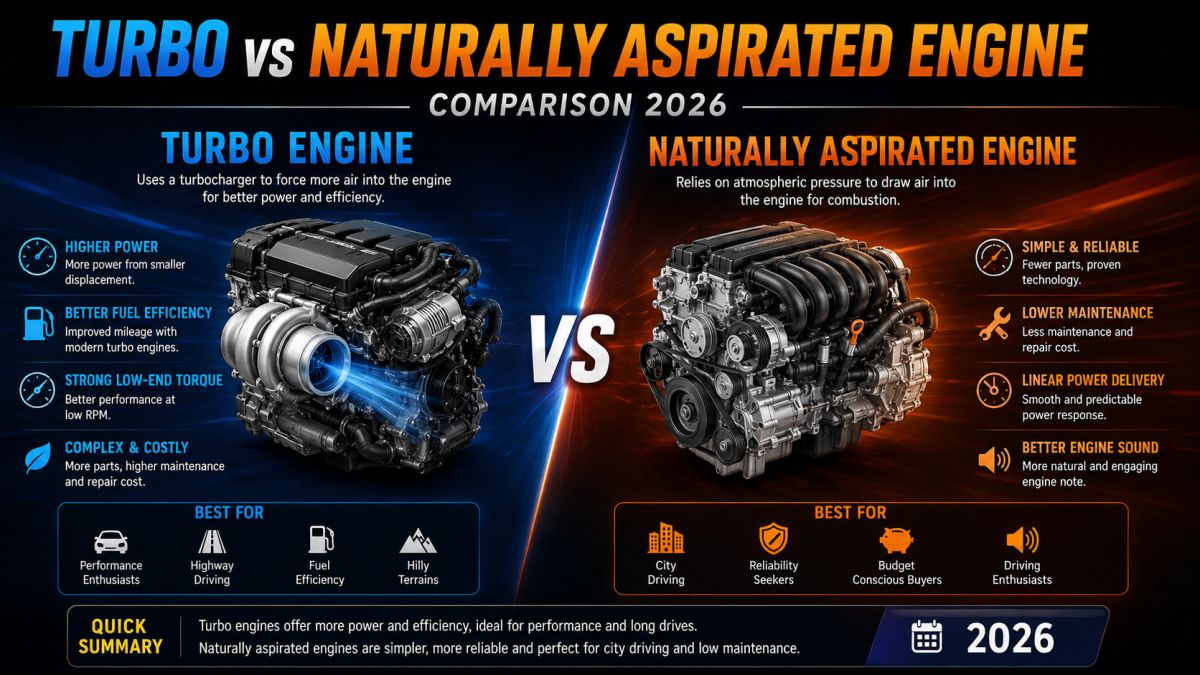
Key Takeaways & Executive Summary
Turbo vs naturally aspirated engine explained in this complete 2026 guide. Learn the differences, advantages, disadvantages, fuel efficiency, performance, reliability, maintenance cost, and which engine type is better for your driving needs.
- What Is a Naturally Aspirated Engine?
- What Is a Turbocharged Engine?
- Turbo vs Naturally Aspirated Engine: Quick Comparison
Quick Navigation (Table of Contents)
When buying a new car, engine type is one of the most important factors affecting performance, fuel efficiency, reliability, and driving experience.
The debate between turbo vs naturally aspirated engines has become common as manufacturers increasingly use turbocharged engines to achieve higher power and better efficiency from smaller engines.
This guide explains the difference between naturally aspirated engine vs turbo, their advantages, disadvantages, and which engine is better for different driving conditions.
What Is a Naturally Aspirated Engine?
A naturally aspirated engine, commonly called an NA engine, uses natural atmospheric pressure to pull air into the combustion chamber without any forced induction system.
The engine depends on normal air pressure and engine displacement to generate power.
How Does a Naturally Aspirated Engine Work?
- Uses atmospheric air pressure
- No turbocharger or supercharger
- Simple air intake system
- Power delivery increases naturally with engine RPM
What Is a Turbocharged Engine?
A turbocharged engine uses a turbocharger to force more air into the combustion chamber. More air allows the engine to burn more fuel and produce additional power.
Turbo technology helps smaller engines produce power similar to larger naturally aspirated engines.
How Does a Turbo Engine Work?
- Uses exhaust gases to spin a turbine
- Compresses incoming air
- Creates higher combustion efficiency
- Produces more power from smaller engine size
Turbo vs Naturally Aspirated Engine: Quick Comparison
| Feature | Turbo Engine | Naturally Aspirated Engine |
|---|---|---|
| Power Output | Higher power from smaller engines | Depends mainly on engine size |
| Performance | Strong low-end torque | Smooth linear power delivery |
| Fuel Efficiency | Can be better when driven efficiently | Predictable efficiency |
| Maintenance | More complex | Simpler design |
| Reliability | Depends on design and maintenance | Generally very reliable |
| Driving Feel | Powerful acceleration | Natural throttle response |
Difference Between Turbo and Naturally Aspirated Engine
The main difference between turbo and naturally aspirated engines is how air enters the engine. A naturally aspirated engine relies on atmospheric pressure, while a turbo engine uses forced induction to push more air into the combustion chamber.
Turbo Engine
- Uses turbocharger technology
- Produces more horsepower and torque
- Better power-to-size ratio
- More complex components
Naturally Aspirated Engine
- Uses simple air intake system
- Provides predictable power delivery
- Lower mechanical complexity
- Often easier to maintain
Advantages of Turbocharged Engines
- More Power: Turbo engines produce higher output from smaller engine sizes.
- Better Torque: Turbochargers provide strong acceleration, especially at lower RPM.
- Improved Efficiency: Smaller turbo engines can deliver good fuel economy.
- Better Performance at High Altitude: Turbo engines maintain performance better where air density is lower.
Disadvantages of Turbo Engines
- More complex engine components
- Higher maintenance requirements
- Turbo lag in some engines
- Requires quality engine oil and proper servicing
- Repair costs can be higher
Advantages of Naturally Aspirated Engines
- Simple and reliable design
- Smooth power delivery
- Immediate throttle response
- Lower maintenance complexity
- Long engine lifespan when maintained properly
Disadvantages of Naturally Aspirated Engines
- Less power compared to turbo engines of similar size
- Lower torque output
- Reduced performance at high altitudes
- Requires larger engine size for higher power
Turbo vs Non Turbo Engine: Which Is Better?
The choice between turbo and non turbo engines depends on driving requirements, location, maintenance preference, and performance expectations.
Choose a Turbo Engine If:
- You want stronger acceleration
- You prefer higher performance from a smaller engine
- You frequently drive on highways
- You drive in high-altitude areas
Choose a Naturally Aspirated Engine If:
- You want simple reliability
- You prefer smooth predictable power
- You want lower maintenance costs
- You mainly drive in cities
Are Turbo Engines More Reliable?
Modern turbo engines can be highly reliable when properly maintained. Regular oil changes, correct fuel quality, and proper servicing are important for turbocharger durability.
Naturally aspirated engines generally have fewer components, which can make maintenance simpler and potentially lower cost.
Turbo vs Naturally Aspirated Engine at High Altitude
Altitude affects engine performance because air becomes thinner at higher elevations. Naturally aspirated engines may lose more power because they depend on atmospheric pressure.
Turbo engines can compensate for reduced air density by compressing incoming air, making them better suited for mountainous regions.
Does Fuel Quality Affect Turbo Engines?
Fuel quality can affect turbocharged engines because they often operate under higher pressure and temperature conditions. Using recommended fuel and following manufacturer guidelines helps maintain performance and reliability.
Turbo vs Naturally Aspirated Engine: Final Verdict
Turbo engines are better for drivers who want more power, efficiency, and strong acceleration from a smaller engine. Naturally aspirated engines remain a great choice for simplicity, reliability, and smooth driving experience.
The best engine choice depends on your driving style, maintenance expectations, climate, altitude, and performance requirements.
Frequently Asked Questions
Is a turbo engine better than a naturally aspirated one?
A turbo engine is better for higher performance and efficiency, while a naturally aspirated engine is better for simplicity, reliability, and predictable power delivery.
What is the difference between turbo and naturally aspirated engines?
Turbo engines use forced air induction through a turbocharger, while naturally aspirated engines rely on normal atmospheric pressure.
Are turbo engines expensive to maintain?
Turbo engines may require more careful maintenance because of additional components, but modern turbo engines are reliable with proper servicing.
Which engine lasts longer, turbo or naturally aspirated?
Both engines can last a long time when maintained properly. Naturally aspirated engines generally have simpler designs, while modern turbo engines are engineered for durability.
Do turbo engines save fuel?
Turbo engines can improve fuel efficiency by producing more power from smaller engines, but driving style and vehicle design greatly affect fuel consumption.
Why are turbo engines popular now?
Turbo engines are popular because manufacturers can achieve higher power and efficiency while meeting modern fuel economy and emission standards.
EV vs Fuel Cost Savings Calculator
Download the Free 2026 Car Buying & EV Checklist
Avoid expensive dealership markups and EV battery pitfalls with our verified 15-point inspection checklist.
Instant digital access. No spam, unsubscribe anytime.



Comments
Be the first to comment on this article.
Leave a comment