
Volvo EX90 AI Core Computer Explained: NVIDIA DRIVE Architecture & 250+ TOPS Processing
Key Takeaways & Executive Summary
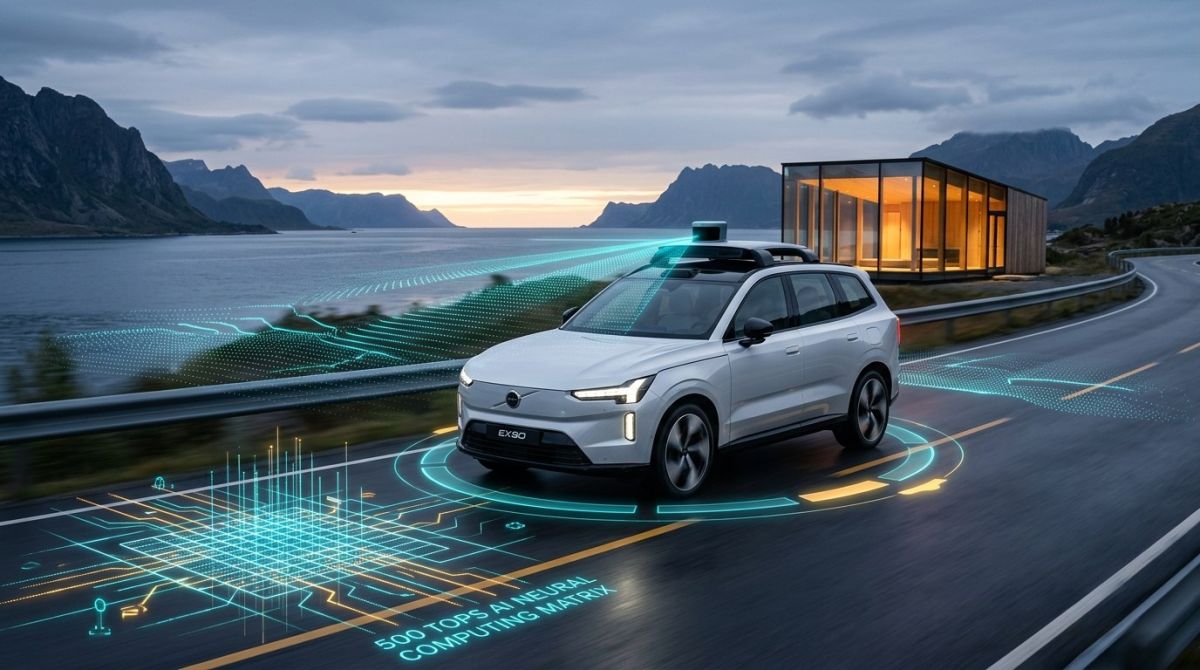
The Volvo EX90 transitions to a centralized core computing architecture powered by the NVIDIA DRIVE Orin system-on-a-chip, delivering more than 250 trillion operations per second (TOPS). Running NVIDIA DriveOS, this centralized system handles 360-degree sensor fusion across lidar, radar, cameras, and ultrasonic sensors to manage active safety and driver assistance, with a verified migration roadmap to the 1,000 TOPS NVIDIA DRIVE Thor platform.
- Centralized Core Computing in the Software-Defined Volvo EX90
- NVIDIA DRIVE Orin Architecture and 360-Degree Sensor Fusion
- Architectural Specifications and the Roadmap to NVIDIA DRIVE Thor
Quick Navigation (Table of Contents)
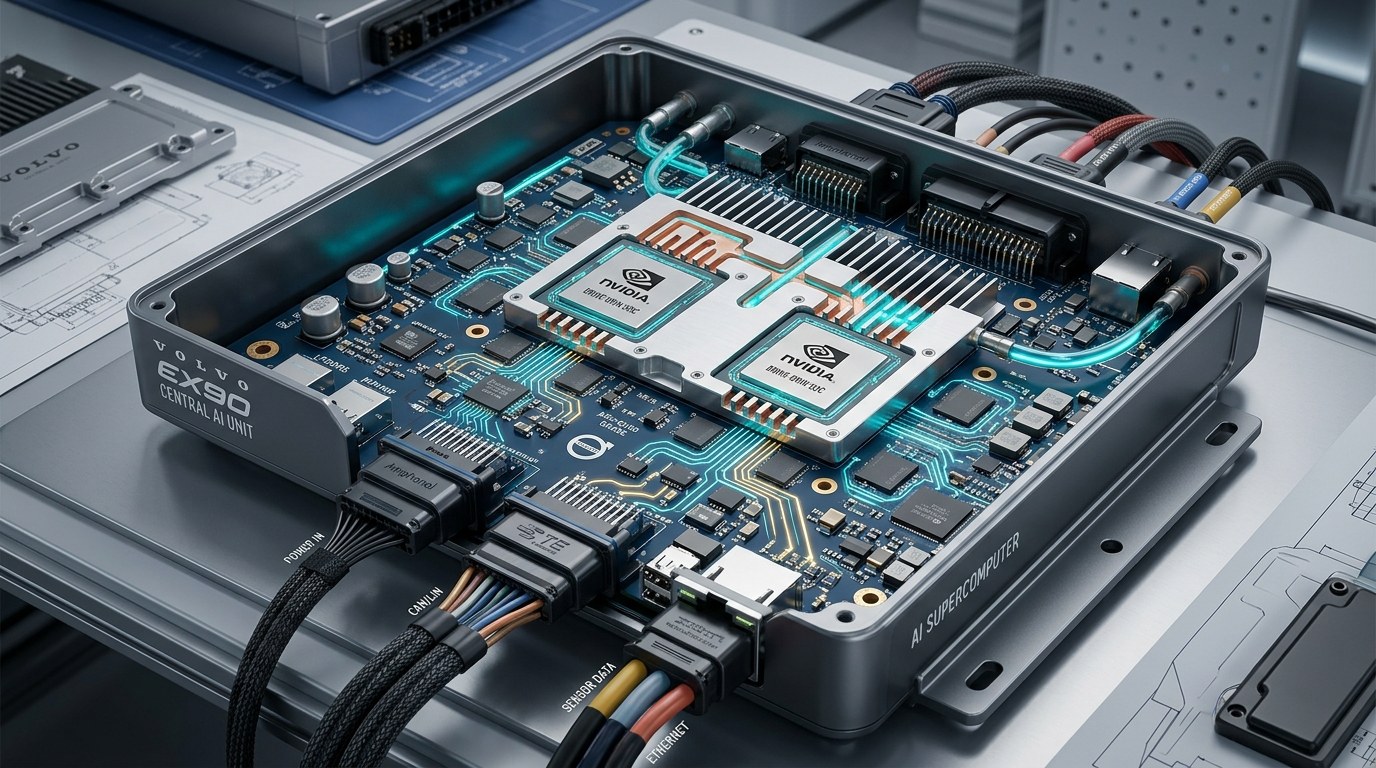
The fully electric Volvo EX90 represents a fundamental transition in automotive systems engineering: migrating away from dozens of fragmented electronic control units (ECUs) toward a centralized, software-defined core computing architecture. Powered by the NVIDIA DRIVE platform, the EX90 consolidates real-time sensor processing, battery management, and active safety systems into a unified computational core.
Centralized Core Computing in the Software-Defined Volvo EX90
Traditional vehicle electronics rely on distributed control architectures, where individual microcontroller modules handle isolated functions such as window regulators, braking subroutines, and driver aids independently. As active safety systems and driver-assistance features expanded, this distributed paradigm faced severe bandwidth bottlenecks, wiring complexity, and latency overhead.
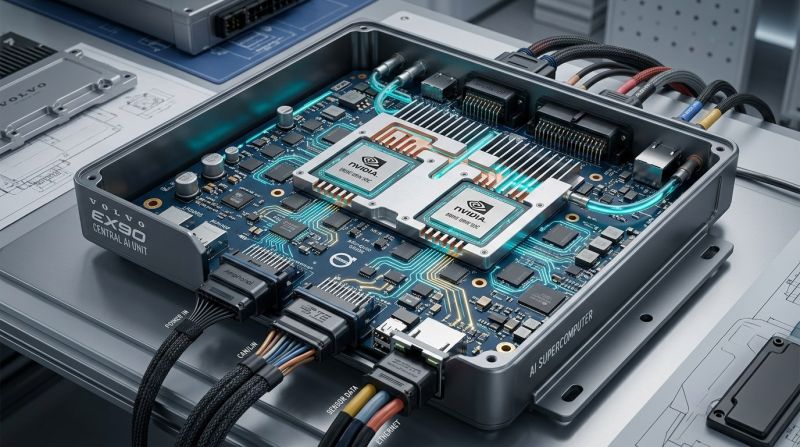
With the EX90, Volvo Cars implemented a centralized core computing model. According to NVIDIA's official announcement, the vehicle's core computing system is built on the NVIDIA DRIVE Orin system-on-a-chip (SoC), which is capable of executing more than 250 trillion operations per second (TOPS). Running the automotive-grade NVIDIA DriveOS operating system, this centralized core handles vehicle functions ranging from active safety and driver assistance to battery management.
As documented in NVIDIA's 2022 announcement, Volvo Cars’ proprietary in-house software runs directly on NVIDIA DRIVE platforms, with DRIVE Orin and DRIVE Xavier delivering a combined 280 TOPS of compute headroom. Reflecting on the vehicle overall, Volvo Cars CEO Jim Rowan stated: "We used technology to reimagine the entire car. The Volvo EX90 is the safest that Volvo has ever produced." NVIDIA also notes that the EX90 is the first Volvo car that is "hardware-ready" to deliver unsupervised autonomous driving.
NVIDIA DRIVE Orin Architecture and 360-Degree Sensor Fusion
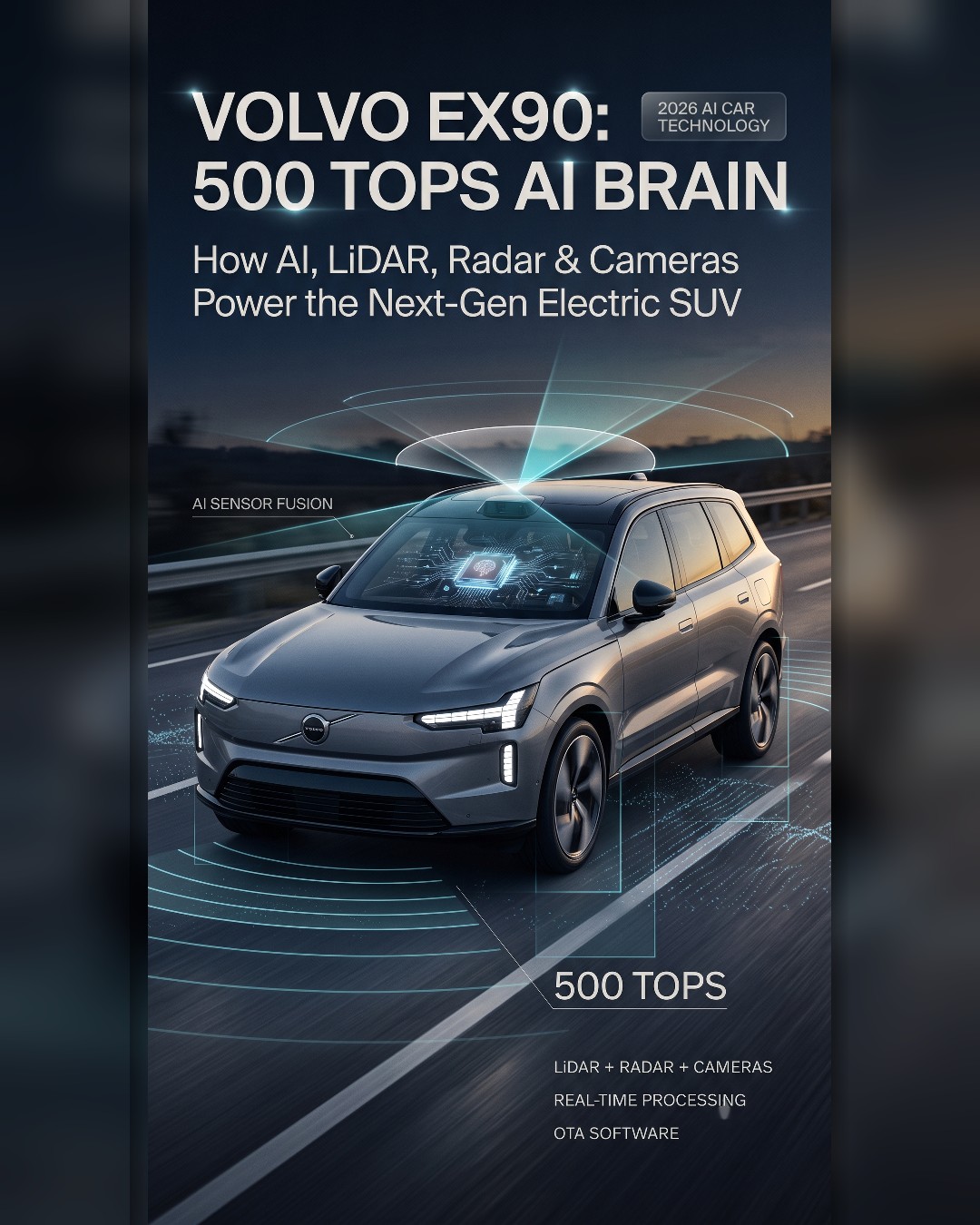
To protect occupants and anticipate roadway conditions, the EX90 operates an advanced surround-sensing suite. According to NVIDIA, the SUV is equipped with the automaker’s most comprehensive sensor suite to date—integrating radar, lidar, cameras, ultrasonic sensors and more.
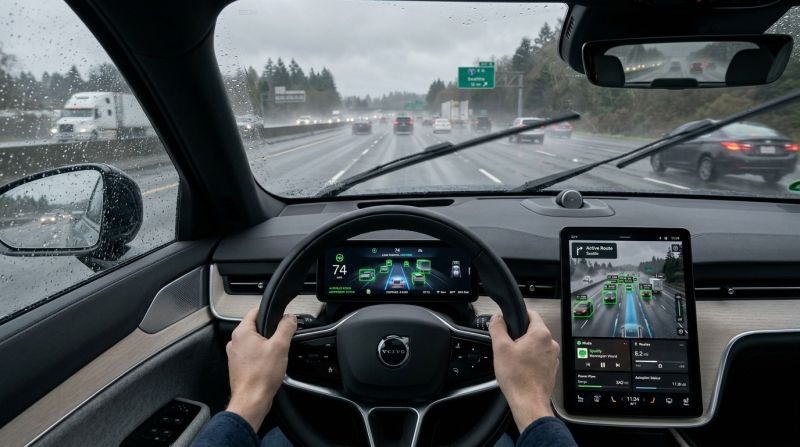
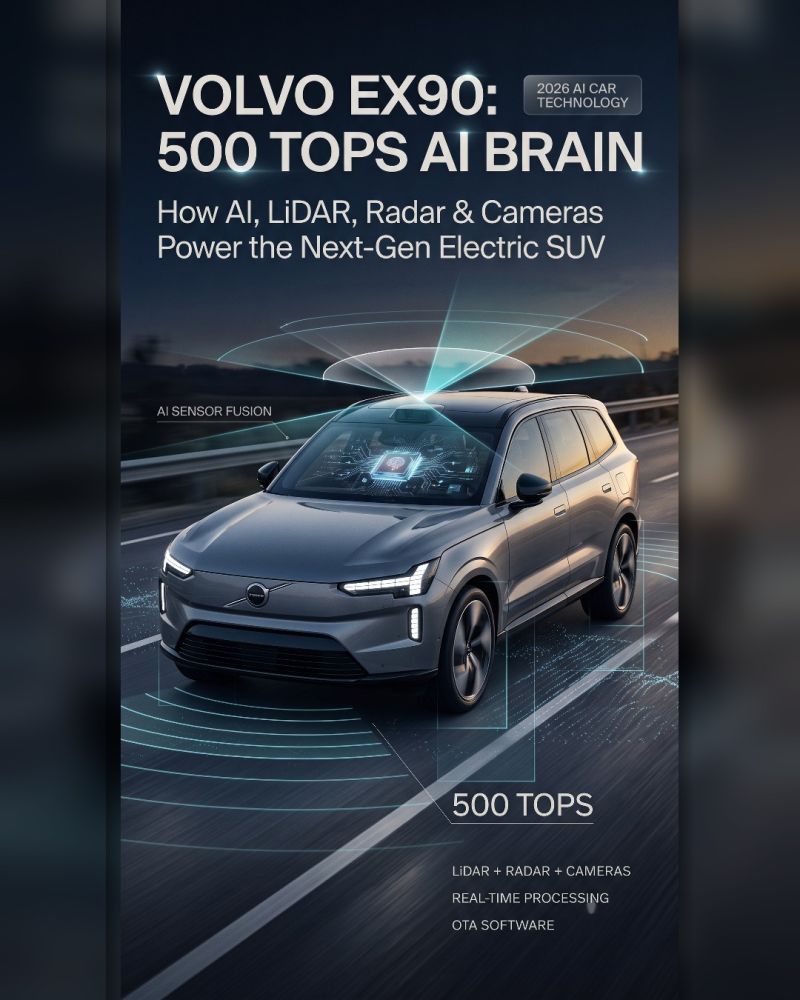
Rather than processing these sensor signals in isolation, the NVIDIA DRIVE Orin core computer enables real-time, redundant and advanced 360-degree surround-sensor data processing. Multi-modal sensor fusion combines disparate data streams to maintain a continuous, comprehensive understanding of the vehicle's surrounding environment.
Per NVIDIA DRIVE AGX technical documentation, the DRIVE Orin SoC pairs high-performance Ampere-generation GPU compute with dedicated Deep Learning Accelerators (DLA) delivering up to 87 INT8 TOPS of deterministic neural network inference, supported by a 12-core ARM Cortex-A78AE CPU complex and high-bandwidth LPDDR5 memory delivering up to 200 GB/s bandwidth.
Architectural Specifications and the Roadmap to NVIDIA DRIVE Thor
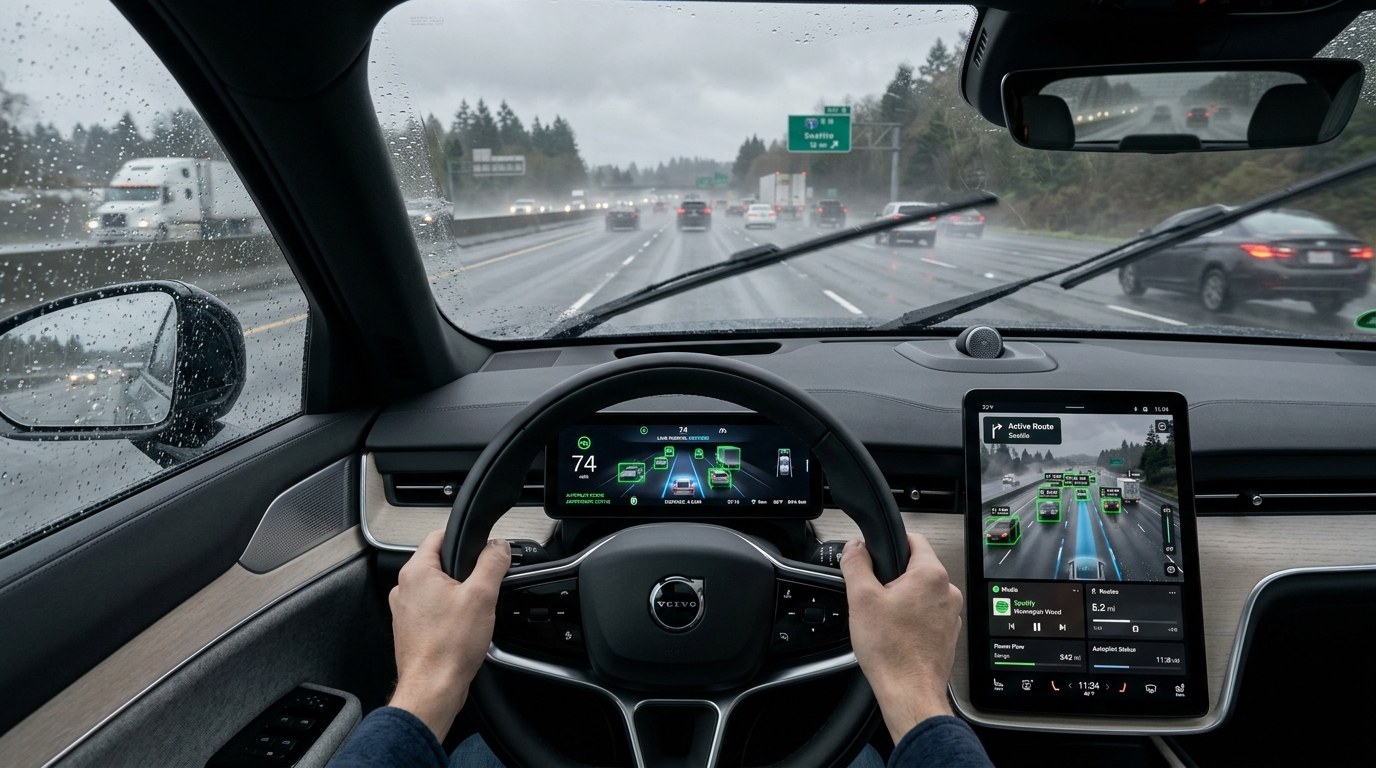
A key advantage of centralized, software-defined computing is hardware lifecycle scalability. Volvo Cars has officially announced plans to migrate its future fleet to the next-generation NVIDIA DRIVE Thor computing platform before the end of the decade (NVIDIA Blog).
DRIVE Thor incorporates NVIDIA's latest Blackwell GPU architecture, delivering 1,000 TOPS of compute performance. This quadruples the processing capability of a single DRIVE Orin SoC while improving energy efficiency by sevenfold, creating the computational headroom required for advanced active safety, next-generation driver assistance, and in-vehicle generative AI capabilities.
Highlighting the architectural significance of this roadmap, Volvo Cars CEO Jim Rowan noted: "With NVIDIA DRIVE Thor in our future cars, our in-house developed software becomes more scalable across our product lineup, and it helps us to continue to improve the safety in our cars, deliver best-in-class customer experiences — and increase our margins."
| Specification Metric | Current EX90: NVIDIA DRIVE Orin | Next-Gen Roadmap: NVIDIA DRIVE Thor |
|---|---|---|
| System-on-a-Chip Platform | NVIDIA DRIVE Orin SoC (NVIDIA 2024) | NVIDIA DRIVE Thor SoC (NVIDIA 2024) |
| Compute Throughput (TOPS) | Single Orin SoC capable of >250 TOPS; Orin plus Xavier combine for 280 TOPS platform (NVIDIA 2024, NVIDIA 2022) | 1,000 TOPS (quadrupling single Orin SoC compute, with 7x energy efficiency improvement) (NVIDIA 2024) |
| GPU Architecture Generation | NVIDIA Ampere Architecture (NVIDIA Docs) | NVIDIA Blackwell Architecture (NVIDIA 2024) |
| CPU Subsystem | 12-core ARM Cortex-A78AE (NVIDIA Docs) | Next-generation automotive CPU complex (NVIDIA Docs) |
| System Operating Software | NVIDIA DriveOS (NVIDIA 2024) | NVIDIA DriveOS (NVIDIA 2024) |
| Functional Safety Target | Designed to handle applications and neural networks needed to achieve safety standards such as ISO 26262 ASIL-D (NVIDIA 2022) | Designed for safety standards such as ISO 26262 ASIL-D (NVIDIA Docs) |
| Primary Operational Focus | 360° surround sensor data processing, active safety, and battery management | Next-generation ADAS, self-driving features, and in-vehicle generative AI experiences |
Automotive Functional Safety and Cloud AI Model Training
To support safety-critical automotive workloads, the system is designed to handle the large number of applications and deep neural networks needed to achieve safety standards such as ISO 26262 ASIL-D (NVIDIA Blog, 2022).
However, the lifecycle of a modern AI-defined vehicle extends far beyond the compute module inside the car. To support continuous safety enhancements, Volvo Cars and its software subsidiary, Zenseact, have invested in cloud-based AI training infrastructure powered by NVIDIA DGX systems in the Nordics (NVIDIA Blog, 2024).
This dedicated data-center cluster accelerates the annotation of massive real-world sensor datasets, facilitates deep neural network model training, and enables extensive virtual validation before safety software updates are deployed. Anders Bell, Chief Engineering and Technology Officer at Volvo Cars, affirmed: "By leveraging NVIDIA technology and setting up the data center, we pave a quick path to high-performing AI, ultimately helping make our products safer and better."
Gallery
Download the Free 2026 Car Buying & EV Checklist
Avoid expensive dealership markups and EV battery pitfalls with our verified 15-point inspection checklist.
Instant digital access. No spam, unsubscribe anytime.
Comments
Be the first to comment on this article.
Leave a comment