
Car Ground Clearance Compared: Sedan, SUV & Popular Cars Ground Clearance Guide
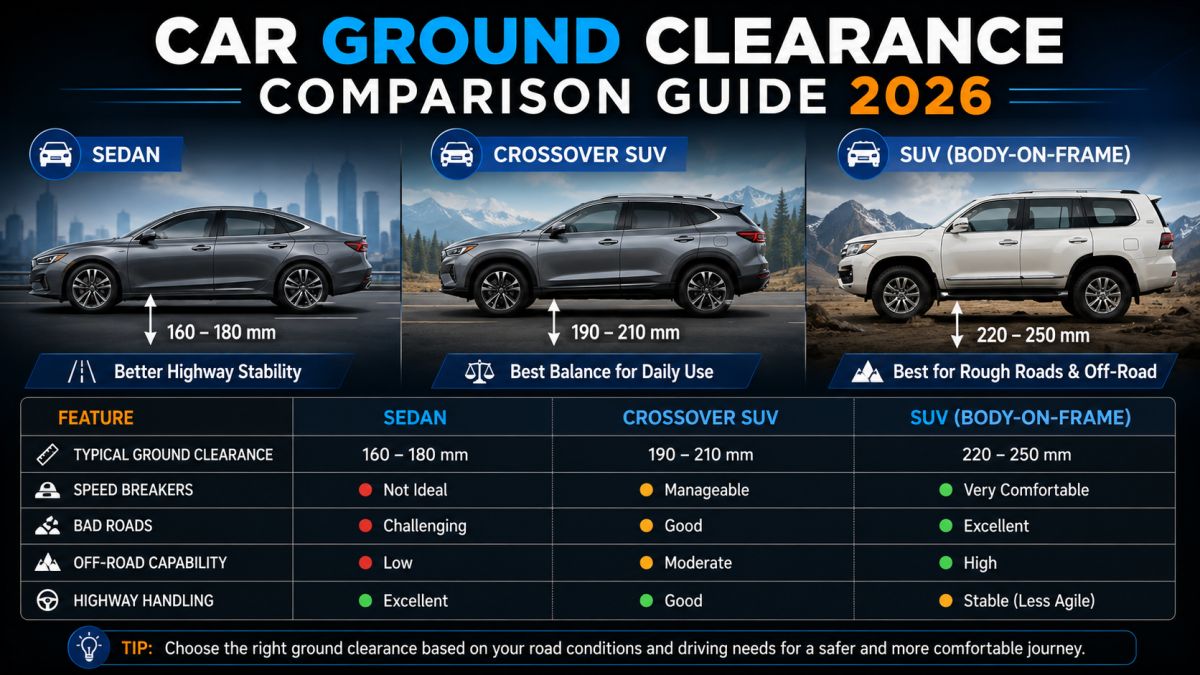
Learn car ground clearance meaning and compare popular sedans, SUVs, and models like Ford EcoSport, Hyundai Venue, BMW 3 Series, Audi A6, and BMW M5. Understand ideal ground clearance in mm and inches for different road conditions.
Ground clearance is one of the most important factors when choosing a car, especially for drivers dealing with speed breakers, uneven roads, potholes, and rough driving conditions.
A vehicle's ground clearance determines the distance between the lowest point of the car and the road surface. Higher ground clearance helps prevent the underside of the vehicle from touching the road.
This guide explains what is good ground clearance for a car and compares popular models including SUVs, sedans, and luxury vehicles.
What Is Ground Clearance in a Car?
Ground clearance is the vertical distance between the lowest part of a vehicle and the ground when the vehicle is fully loaded.
It is usually measured in millimetres (mm). For international comparison:
- 100 mm = 3.9 inches
- 150 mm = 5.9 inches
- 200 mm = 7.8 inches
Why Is Ground Clearance Important?
Ground clearance affects vehicle usability, comfort, and safety in different driving environments.
- Speed Breakers: Higher clearance reduces the chance of scraping.
- Bad Roads: Helps protect suspension and underbody components.
- Off-Road Driving: Higher clearance improves obstacle handling.
- City Driving: Makes driving easier on uneven roads.
What Is a Good Ground Clearance for a Car?
The ideal ground clearance depends on road conditions, vehicle type, and driving requirements.
| Vehicle Type | Average Ground Clearance |
|---|---|
| Sports Cars | 100-130 mm (3.9-5.1 inches) |
| Sedans | 140-170 mm (5.5-6.7 inches) |
| Hatchbacks | 160-180 mm (6.3-7 inches) |
| SUVs | 180-230 mm (7-9 inches) |
SUV vs Sedan Ground Clearance Difference
SUVs generally have higher ground clearance compared to sedans because they are designed for versatility, rough roads, and higher seating positions.
| Feature | Sedan | SUV |
|---|---|---|
| Ground Clearance | Lower | Higher |
| Road Comfort | Excellent on highways | Better on uneven roads |
| Driving Position | Lower seating | Higher seating |
| Off-Road Ability | Limited | Better |
Popular Car Ground Clearance Comparison
| Car Model | Ground Clearance |
|---|---|
| Ford EcoSport | 200 mm (7.9 inches) |
| Hyundai Venue | 190 mm (7.5 inches) |
| BMW 3 Series | 140 mm (5.5 inches) |
| Audi A6 | 165 mm (6.5 inches) |
| BMW M5 | 128 mm (5 inches) |
Ford EcoSport Ground Clearance
The Ford EcoSport is known for its SUV-style design and practical ground clearance.
Ford EcoSport Ground Clearance: Approximately 200 mm (7.9 inches)
This clearance makes it suitable for city roads, speed breakers, and uneven surfaces.
Hyundai Venue Ground Clearance 2022
The Hyundai Venue is a compact SUV designed for urban driving with practical road clearance.
Hyundai Venue Ground Clearance 2022: Approximately 190 mm (7.5 inches)
BMW 3 Series Ground Clearance
The BMW 3 Series is a luxury sports sedan focused on handling and driving performance rather than high ground clearance.
BMW 3 Series Ground Clearance: Approximately 140 mm (5.5 inches)
Audi A6 Ground Clearance
The Audi A6 is a premium executive sedan offering comfort and performance with moderate ground clearance.
Audi A6 Ground Clearance: Approximately 165 mm (6.5 inches)
BMW M5 Ground Clearance
The BMW M5 is a high-performance sports sedan designed for speed and handling.
BMW M5 Ground Clearance: Approximately 128 mm (5 inches)
High Ground Clearance vs Low Ground Clearance Cars
| High Ground Clearance | Low Ground Clearance |
|---|---|
| Better for rough roads | Better handling |
| Suitable for SUVs | Common in sports cars |
| Less chance of scraping | Lower centre of gravity |
| Better visibility | Better cornering stability |
Does Higher Ground Clearance Mean Better Car?
Higher ground clearance is not always better. SUVs benefit from extra height, but lower cars often provide better handling, stability, and aerodynamics.
The best ground clearance depends on your roads, driving style, and vehicle requirements.
How Much Ground Clearance Is Needed for Indian Roads?
For roads with frequent speed breakers, potholes, and uneven surfaces, a ground clearance of around 170-200 mm is generally considered practical.
However, road conditions vary worldwide. Drivers in areas with smooth highways may prefer lower vehicles, while rough-road regions benefit from higher clearance.
Conclusion
Ground clearance plays an important role in vehicle practicality and comfort. SUVs like Ford EcoSport and Hyundai Venue provide higher clearance for challenging roads, while sedans like BMW 3 Series and BMW M5 prioritize performance and handling.
Choosing the right ground clearance depends on your driving environment, road conditions, and personal preferences.
Frequently Asked Questions
What is a good ground clearance for a car?
A ground clearance between 170 mm and 200 mm (6.7 to 7.9 inches) is considered practical for many everyday driving conditions, especially on uneven roads.
Which cars have the highest ground clearance?
SUVs and off-road vehicles generally have the highest ground clearance because they are designed for rough terrain.
Is higher ground clearance better?
Higher ground clearance improves road capability, but lower vehicles can provide better handling and stability.
What is Ford EcoSport ground clearance?
Ford EcoSport has approximately 200 mm (7.9 inches) of ground clearance.
What is BMW 3 Series ground clearance?
BMW 3 Series has approximately 140 mm (5.5 inches) of ground clearance.
Are SUVs better than sedans for bad roads?
Yes, SUVs generally perform better on rough roads because they offer higher ground clearance and stronger road capability.


Comments
Be the first to comment on this article.
Leave a comment