
Car Warning Lights Explained: Dashboard Symbols, Meanings & Solutions
Key Takeaways & Executive Summary
- Why Dashboard Warning Lights Matter
- How Modern Vehicles Monitor System Health
- Understanding Dashboard Warning Light Colors
Quick Navigation (Table of Contents)
Modern vehicles are equipped with advanced monitoring systems that continuously check engine performance, safety systems, electrical components, and other important functions. Dashboard warning lights act as an early warning system that helps drivers identify possible problems before they become expensive repairs.
Ignoring warning lights can lead to serious mechanical failures, safety risks, and costly repairs. Understanding what each dashboard symbol means helps drivers make better decisions and maintain their vehicles properly.
Why Dashboard Warning Lights Matter
Dashboard warning lights are connected to different sensors installed throughout the vehicle. These sensors monitor everything from engine temperature and oil pressure to braking systems and tire pressure.
- Prevent major mechanical damage
- Improve vehicle safety
- Reduce unexpected repair costs
- Help identify problems early
How Modern Vehicles Monitor System Health
Modern cars use an Electronic Control Unit (ECU) that collects information from hundreds of sensors. When the system detects abnormal behavior, it activates a warning symbol on the dashboard.
Understanding Dashboard Warning Light Colors
Green Lights
Green indicators usually provide information and confirm that a feature is working.
Blue Lights
Blue indicators commonly represent high beam headlights or temperature-related information.
Yellow or Amber Lights
Yellow warning lights indicate that attention is required but immediate stopping may not always be necessary.
Red Warning Lights
Red warning lights indicate serious problems and may require immediate action.
Major Engine Warning Lights
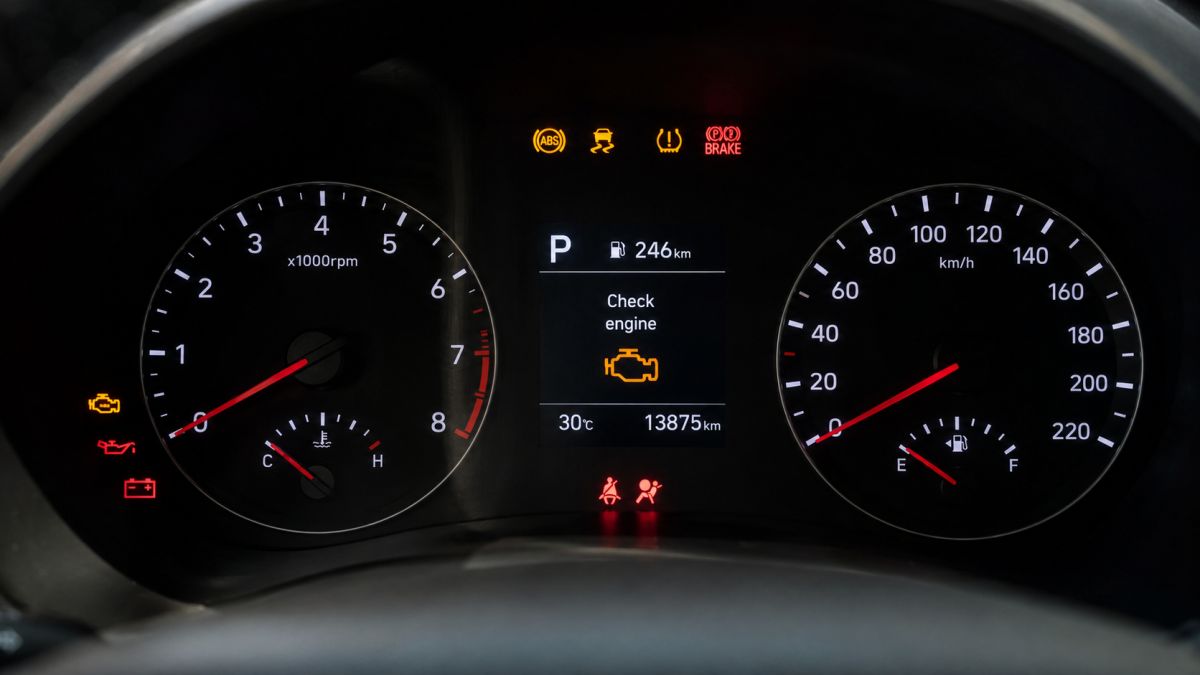
Check Engine Light
The check engine light is one of the most common warning indicators. It can appear due to problems with sensors, fuel systems, emissions components, or engine performance.
Common causes:
- Faulty oxygen sensor
- Loose fuel cap
- Spark plug issues
- Engine sensor failure
Oil Pressure Warning Light
The oil pressure warning indicates that the engine may not be receiving enough lubrication. Driving with low oil pressure can cause severe engine damage.
Engine Temperature Warning
This warning appears when engine temperature becomes too high. Possible causes include coolant leakage, radiator problems, or thermostat failure. For more detailed measurements and vehicle specifications, explore our comprehensive complete car maintenance checklist.
Brake System Warning Lights
Brake Warning Light
This can indicate low brake fluid, worn brake pads, or a braking system issue.
ABS Warning Light
The ABS warning means the anti-lock braking system may not work correctly during emergency braking situations.
Electronic Stability Control (ESC)
ESC helps maintain vehicle stability during slippery conditions. A warning light may indicate system malfunction.
Battery and Electrical Warning Lights
Battery Charging Warning
This usually indicates charging system problems such as alternator failure or battery issues.
Hybrid and EV Warning Lights
Electric vehicles may display high voltage system warnings requiring professional inspection.
Tire Related Warning Lights
TPMS Warning
The Tire Pressure Monitoring System alerts drivers when tire pressure drops below recommended levels.
Safety System Warning Lights
Airbag Warning Light
An airbag warning may indicate a problem with airbags or safety sensors.
ADAS Sensor Warning
Modern vehicles equipped with driver assistance features may show warnings when cameras or sensors are blocked or malfunctioning.
Transmission and Drivetrain Warning Lights
- Transmission temperature warning
- AWD/4WD system warning
- Differential warning
Common Reasons Dashboard Warning Lights Appear
- Low engine oil
- Weak battery
- Loose fuel cap
- Faulty sensors
- Brake fluid leakage
- Electrical problems
Can You Continue Driving?
| Warning Light | Severity | Driving Advice |
|---|---|---|
| Oil Pressure | Critical | Stop driving immediately |
| Check Engine | Medium | Drive carefully and diagnose |
| Battery | High | Visit service center |
| TPMS | Medium | Check tire pressure |
Repair Costs for Common Warning Lights
- Sensor replacement: $50-$300
- Battery replacement: $100-$300
- Brake repairs: $150-$1000
- Engine repairs: Can exceed thousands depending on issue
How To Diagnose Dashboard Warning Lights
Using OBD2 Scanner
An OBD2 scanner can read diagnostic trouble codes and help identify vehicle problems.
Professional Diagnosis
For serious warnings, professional inspection is recommended.
Prevention Tips
- Follow regular servicing schedules
- Check engine oil regularly
- Maintain correct tire pressure
- Replace battery when required
Conclusion
Dashboard warning lights are your vehicle's communication system. Understanding these symbols helps prevent expensive repairs and keeps you safer on the road.
EV vs Fuel Cost Savings Calculator
Download the Free 2026 Car Buying & EV Checklist
Avoid expensive dealership markups and EV battery pitfalls with our verified 15-point inspection checklist.
Instant digital access. No spam, unsubscribe anytime.


Comments
Be the first to comment on this article.
Leave a comment