
Complete Car Maintenance Checklist (2026): Service Schedule, DIY Tips & Essential Maintenance Guide
Key Takeaways & Executive Summary
- Why a Maintenance Schedule Matters
- Every Month: Quick Checks
- Every 5,000 to 7,500 Miles: Routine Service
Quick Navigation (Table of Contents)
Regular maintenance is the single best way to keep your car reliable, safe, and worth more when you sell it. But how often do you really need to service your car, and what needs doing when? This practical car maintenance checklist breaks down exactly what to check and when — so you can avoid breakdowns and expensive surprise repairs.
Why a Maintenance Schedule Matters
Most major car failures don't happen suddenly — they build up from small, ignored problems. A worn belt, low fluid, or overdue oil change can cascade into a repair costing thousands. Following a maintenance schedule catches these issues while they're cheap to fix. It also protects your warranty and your car's resale value, since a documented service history reassures future buyers.
Every Month: Quick Checks
These take five minutes and prevent the most common roadside problems:
- Check tire pressure and inspect tread for uneven wear
- Check engine oil level with the dipstick
- Test all exterior lights — headlights, brake lights, turn signals
- Look for any warning lights on the dashboard
- Listen for new noises when braking or turning
Every 5,000 to 7,500 Miles: Routine Service
This is the backbone of car maintenance and covers the wear items that need regular attention:
- Oil and filter change: Modern engines typically need fresh oil every 5,000-7,500 miles, though synthetic oils can stretch longer. Always follow your owner's manual.
- Tire rotation: Rotating tires promotes even wear and extends their life.
- Fluid top-ups: Check and top off coolant, brake fluid, power steering, and washer fluid.
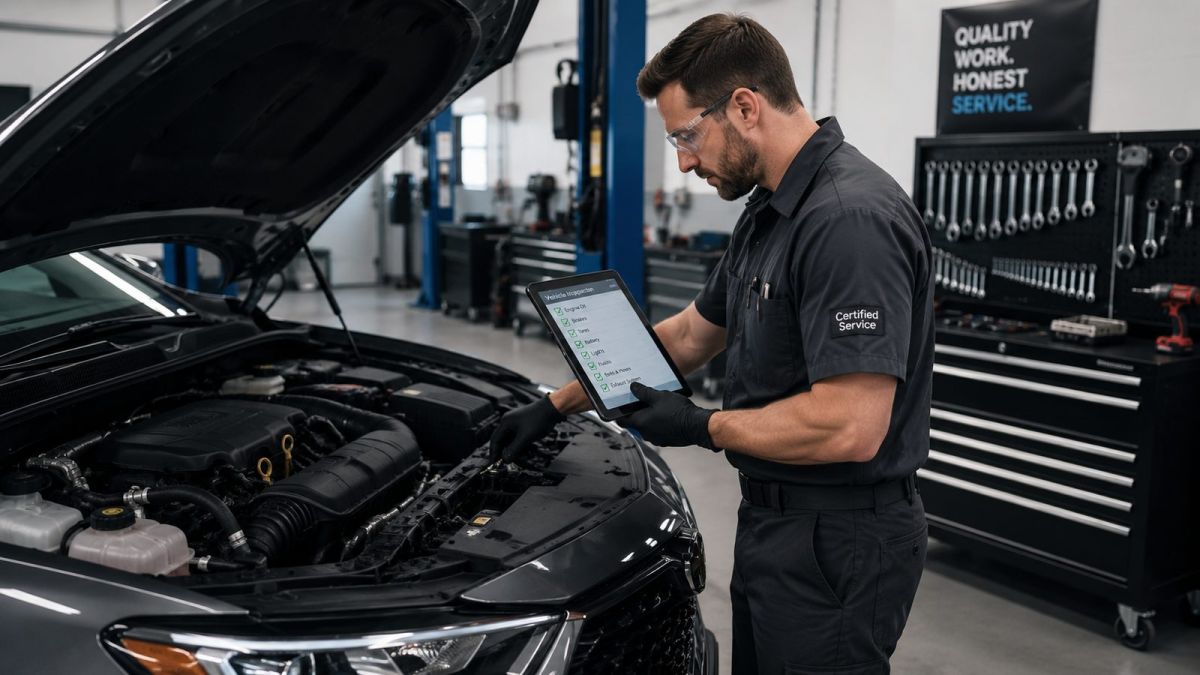
- Visual inspection: A technician should check belts, hoses, and brakes for wear.
Every 15,000 to 30,000 Miles: Intermediate Service
- Replace the engine air filter and cabin air filter
- Inspect brake pads and rotors; replace pads if worn
- Check battery health and clean terminals
- Inspect suspension and steering components
Every 30,000 to 60,000 Miles: Major Service Intervals
These bigger jobs prevent the most expensive failures: For more detailed measurements and vehicle specifications, explore our comprehensive dashboard warning lights guide.
- Transmission fluid: Fresh fluid protects one of the priciest components in your car.
- Spark plugs: Worn plugs hurt fuel economy and performance.
- Timing belt (if equipped): A snapped timing belt can destroy an engine. Replace it on schedule — usually between 60,000 and 100,000 miles.
- Coolant flush: Old coolant loses its protective properties and can cause overheating.
How Often Should You Service Your Car?
As a general rule, get a professional inspection at least once a year even if you drive very little, and follow the mileage-based schedule above for everything else. Time matters as much as mileage: oil, coolant, and rubber components degrade with age, so a low-mileage car still needs periodic service. Your owner's manual has the exact intervals for your specific vehicle — treat it as the final word.
Common Car Faults to Watch For
Catch these early warning signs before they leave you stranded:
- Squealing brakes (worn pads) or grinding (worn rotors)
- A battery that struggles to start the car, especially in cold weather
- Vibration at speed (tire balance or worn suspension)
- Fluid puddles under the car (leaking oil, coolant, or transmission fluid)
- A check-engine light — never ignore it; get the code read promptly
Basic Troubleshooting for Every Driver
You don't need to be a mechanic, but knowing the basics helps. If a warning light appears, check your manual to understand its urgency. If the car overheats, pull over safely and let it cool before checking coolant. If it won't start, the battery is the most common culprit. When in doubt, don't guess with safety systems — get it checked. Staying ahead of maintenance is always cheaper than repairing a breakdown.
EV vs Fuel Cost Savings Calculator
Download the Free 2026 Car Buying & EV Checklist
Avoid expensive dealership markups and EV battery pitfalls with our verified 15-point inspection checklist.
Instant digital access. No spam, unsubscribe anytime.

Comments
Be the first to comment on this article.
Leave a comment