
Range Rover Sport Dimensions: Complete Size Guide 2026
Key Takeaways & Executive Summary
- Exterior Length and Parking Considerations
- Wheelbase and Interior Space Relationship
- Further Reading
Quick Navigation (Table of Contents)
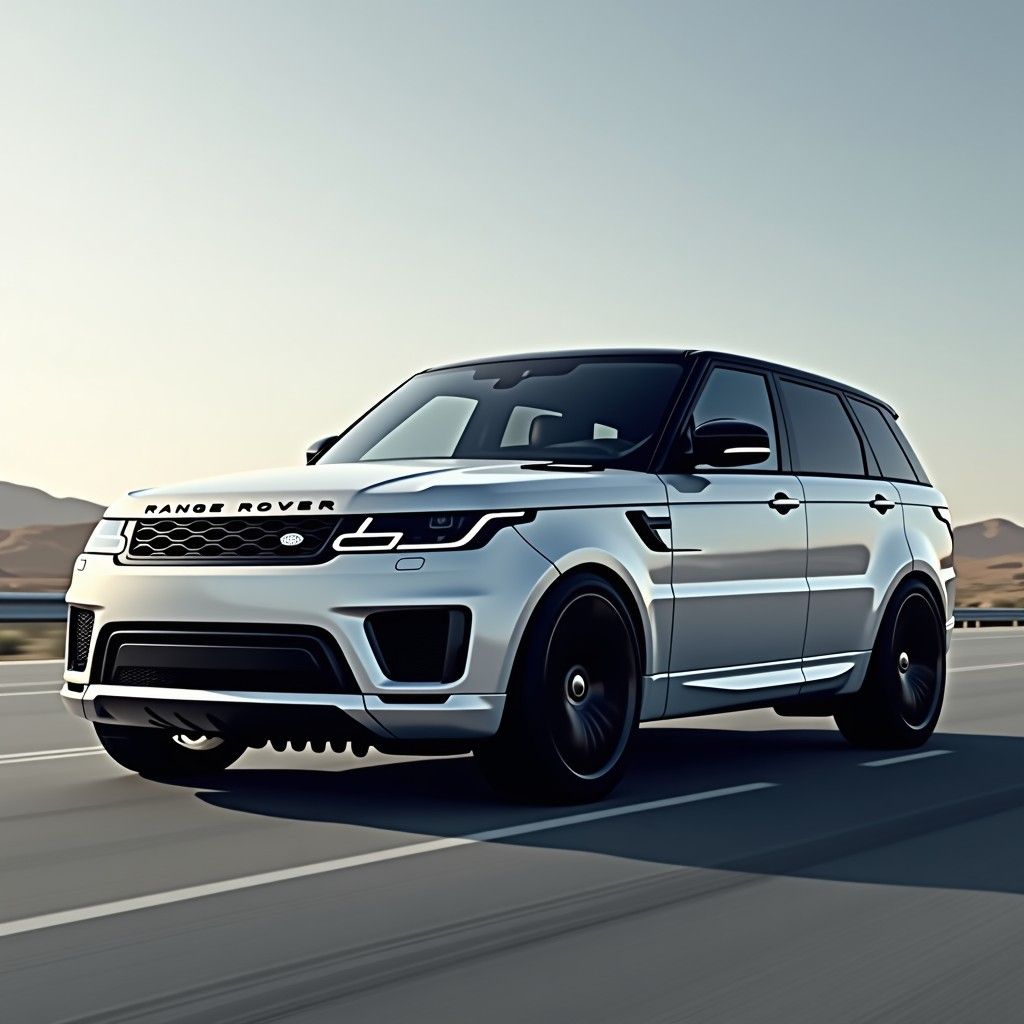
The Range Rover Sport occupies a precisely engineered dimensional footprint balancing athletic proportions with genuine practicality across urban and off-road environments. According to Land Rover's official 2024 technical specifications, the current generation Range Rover Sport measures 4,923 millimeters in overall length, 2,209 millimeters in width including mirrors, and 1,820 millimeters in height. These dimensions place it squarely in the large luxury SUV segment, competing directly with the Porsche Cayenne and BMW X5 on dimensional equivalence while offering significantly greater ground clearance than either German rival. The wheelbase of 2,997 millimeters, extended by 96 millimeters compared to the previous generation, directly translates into measurably improved rear legroom that accommodates six-foot occupants without compromise. Understanding these numbers enables buyers to verify garage compatibility, assess parking feasibility in urban environments, and compare towing ratings that directly depend on dimensional engineering choices made during platform development.
Exterior Length and Parking Considerations
At 4,923 millimeters overall length, the Range Rover Sport fits within standard UK and European parking bays measuring 5,000 millimeters without requiring special accommodation. American standard parking spaces at 5,486 millimeters provide substantial clearance. Parallel parking presents the greatest dimensional challenge given the vehicle's 2,209-millimeter mirror width, though the standard 360-degree camera system with parking sensors eliminates guesswork during tight maneuvers. The front and rear overhangs measure 850 millimeters and 1,076 millimeters respectively, creating the visual impression of a shorter vehicle than measurement suggests while maintaining the departure and approach angles necessary for genuine off-road capability. Ground clearance of 278 millimeters in standard air suspension configuration increases to 298 millimeters in off-road mode, figures that dwarf the BMW X5's 200-millimeter clearance and directly enable the Range Rover Sport's class-leading off-road capability in muddy, rocky, or water-crossing scenarios.
Width, Height, and Multi-Story Parking
The 2,073-millimeter body width excluding mirrors creates the primary multi-story parking challenge, as many older European parking structures impose 2,000-millimeter width restrictions that technically exclude the Range Rover Sport. Height of 1,820 millimeters falls within the 1,900-millimeter clearance standard for most modern multi-story facilities, enabling access that the Range Rover Autobiography at 1,870 millimeters also achieves. Air suspension height adjustment provides a 70-millimeter range between lowest and highest configurations, enabling the vehicle to lower itself for garage entry where standard ride height would create clearance issues. Width between the wheel arches measures 1,605 millimeters, determining load bed usability and establishing the practical constraint for flatbed loading of bicycles or equipment requiring the tailgate down.
Wheelbase and Interior Space Relationship
The 2,997-millimeter wheelbase directly determines interior cabin length and the proportional distribution between front and rear occupant space. Land Rover allocates approximately 60 percent of interior cabin length to rear occupant accommodation, reflecting the Range Rover Sport's positioning as a vehicle frequently driven by chauffeurs with high-value rear-seat passengers. Rear legroom of 981 millimeters with the front seat adjusted for a six-foot driver exceeds many dedicated limousines, enabling true comfort across long-distance journeys rather than merely tolerable accommodation. The extended wheelbase also improves high-speed stability by increasing the distance between front and rear axles, reducing the tendency for high-frequency oscillation that shorter-wheelbase vehicles exhibit on motorway imperfections. Third-row seating configurations available in some markets reduce individual row legroom but enable seven-occupant configurations that the standard five-seat layout cannot accommodate. For more detailed measurements and vehicle specifications, explore our comprehensive Range Rover Sport length and garage measurements. For more detailed measurements and vehicle specifications, explore our comprehensive Range Rover curb weight and towing specifications. For more detailed measurements and vehicle specifications, explore our comprehensive Range Rover Sport interior features and cabin space.
Towing Capacity and Dimensional Engineering
The Range Rover Sport's maximum braked towing capacity of 3,500 kilograms directly reflects dimensional engineering decisions around chassis cross-section, suspension pickup point geometry, and hitch mounting integration. This towing rating enables towing of horse trailers, large boat trailers, and caravan combinations that exceed the capability of most luxury SUV competitors. The tow hitch mounting point sits 650 millimeters above ground level in standard configuration, matching the standard coupling height for European Class A trailers without requiring ball mount adjustment. Tongue weight capacity of 350 kilograms, representing 10 percent of maximum tow rating, accommodates substantial trailer nose weight without destabilizing the rear suspension or creating excessive squat that would compromise lighting alignment. Understanding these dimensional relationships between overall vehicle length, wheelbase, and overhang geometry explains why the Range Rover Sport achieves superior towing stability compared to shorter-wheelbase alternatives at equivalent gross vehicle weight ratings.
Further Reading
- Land Rover Official Range Rover Sport Specifications
- Car and Driver: Range Rover Sport Full Specifications
- Autocar: Range Rover Sport In-Depth Review
Download the Free 2026 Car Buying & EV Checklist
Avoid expensive dealership markups and EV battery pitfalls with our verified 15-point inspection checklist.
Instant digital access. No spam, unsubscribe anytime.
Comments
Be the first to comment on this article.
Leave a comment