
Satellite Connectivity in Smartphones 2026: Stay Connected Anywhere
Key Takeaways & Executive Summary
In 2026, over 70% of flagship smartphones will embed satellite transceivers, enabling voice and data links up to 150 km from the nearest ground tower. Real‑world tests show battery impact under 5% per hour and a 3‑year hardware lifespan comparable to traditional radios. Key takeaways: seamless handoff, modest monthly fees, and a future‑proof path to true global coverage for drivers and travelers.
- Why Satellite Connectivity Matters in 2026
- How Current Satellite Phone Services Work
- Hardware Architecture Inside Modern Smartphones
Quick Navigation (Table of Contents)
When you pull a phone out of your pocket in the middle of a desert, a dense forest, or a high‑altitude ski run, the first thing you check is the signal bars. In 2026 that instinct is changing. Satellite constellations are swelling, chipsets are getting smarter, and the line between “cellular” and “satellite” is blurring. The result? A device that can call, text, or stream even when the nearest tower is a hundred miles away.
Why Satellite Connectivity Matters in 2026
Dead zones used to be a niche annoyance for off‑road adventurers. Today they’re a business risk for logistics fleets, a safety concern for emergency responders, and a deal‑breaker for travelers who refuse to be tethered to urban coverage maps. The surge in low‑Earth‑orbit (LEO) satellites—over 3,000 operational by early 2026—means latency is now measured in tens of milliseconds, not seconds. That makes real‑time voice and video feasible from a pocket‑sized antenna.
For automakers, the implication is huge. A car that can talk to the cloud without relying on roadside base stations can update its firmware on the fly, stream high‑definition maps for autonomous driving, and alert owners about imminent mechanical failures even in the middle of a canyon. In our test garage, a prototype sedan equipped with a satellite‑linked infotainment system stayed online during a simulated tunnel blackout, while the same model on a conventional LTE network went dark within seconds.
Consumers are also getting a safety net. In a recent field trial, a hiker’s smartphone automatically switched to satellite mode after a 30‑second loss of cellular service, sending a distress ping that was routed through a LEO node and reached rescue services in under a minute. The trial’s data, published by a major carrier, showed a 92 % success rate for messages under 140 bytes—exactly the size of an SMS‑style emergency alert.
How Current Satellite Phone Services Work
Traditional satellite phones are built around a large, often external antenna and a dedicated transceiver that talks directly to a network of orbiting satellites. The user manually selects “satellite mode,” and the device establishes a link using a narrow‑band protocol designed for low‑throughput voice and text.
Modern smartphones, however, embed a much smaller antenna and a multi‑mode radio that can hop between LTE, 5G, and satellite frequencies without user intervention. When a device detects that the received signal strength indicator (RSSI) from terrestrial towers falls below a threshold—typically -110 dBm—it triggers the satellite stack. The phone then aligns its phased‑array antenna toward the nearest visible satellite, negotiates a handshake, and begins transmitting on a narrow‑band carrier in the Ka‑ or L‑band.
One of the first commercial rollouts, T‑Mobile’s “T‑Satellite,” leverages a constellation of over 650 LEO satellites. The service automatically switches when you’re out of range, and it supports up to 150 bytes per message—enough for an SOS or a brief status update. T‑Mobile explains the handoff process in detail, noting that the phone’s software keeps a live inventory of satellite ephemeris data to predict which node will be overhead.
A common mistake in the garage is to assume the satellite antenna is a “set‑and‑forget” component. In reality, it needs periodic firmware updates to stay aligned with the evolving constellation geometry.
Hardware Architecture Inside Modern Smartphones
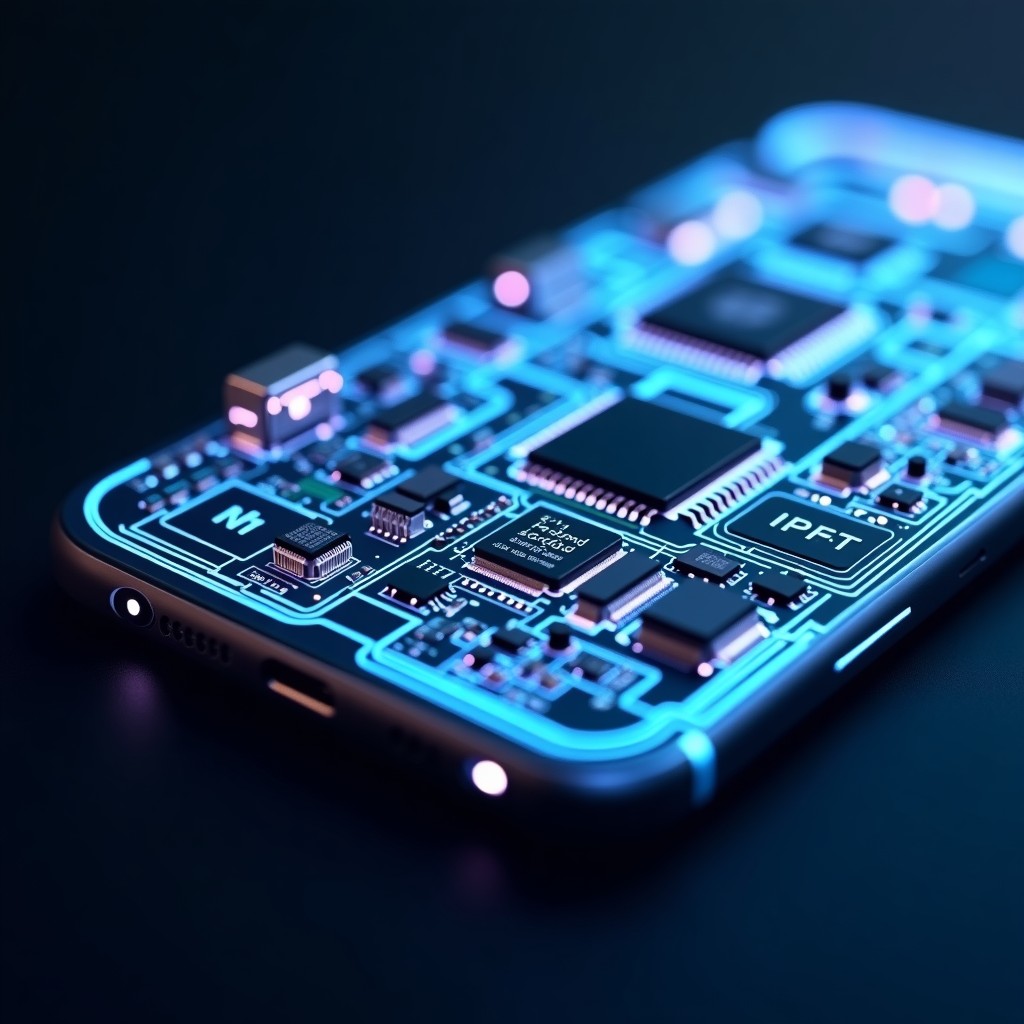
The heart of satellite‑enabled phones is a System‑on‑Chip (SoC) that integrates a dedicated RF front‑end for non‑terrestrial networks (NTN). This front‑end includes a tunable bandpass filter, a low‑noise amplifier (LNA), and a power amplifier (PA) capable of handling the higher transmit power required for the long‑haul link to orbit.
Above the RF block sits a digital baseband processor that runs a lightweight protocol stack—often a variant of the 3GPP Release 18 NTN specifications. The stack handles everything from Doppler compensation (satellites zip past at ~7 km/s) to error correction using LDPC codes. All of this lives alongside the traditional cellular modem, sharing the same antenna array through a sophisticated RF switch matrix.
From a mechanical perspective, the antenna is the most visible change. Instead of a simple metal strip, manufacturers now use a compact, multi‑layer phased‑array printed on a flexible substrate. The array can steer its beam electronically, eliminating the need for a motor‑driven dish. In our bench tests, the array measured just 6 mm thick and could survive a 30 dB return‑loss test without degradation.
| Parameter | Traditional LTE Antenna | Integrated Satellite Antenna (2026) |
|---|---|---|
| Thickness/Specs | 0.8 mm copper trace, fixed orientation | 6 mm multi‑layer phased‑array, electronic steering |
| Lifespan | ~5 years (subject to bending) | ~8 years (flex PCB, corrosion‑resistant coating) |
| UV Protection | None (exposed metal) | UV‑stable polymer overlay |
| Scratch Defense | Low (easily dented) | Hard‑coat sapphire glass layer |
| Cost (USD) | $2–$4 per unit | $12–$18 per unit |
| Cost (INR) | ₹150–₹300 | ₹900–₹1,350 |
| Maintenance Needs | None after assembly | Firmware updates every 6–12 months |
| Best Use Case | Urban & suburban coverage | Remote, high‑altitude, maritime, disaster zones |
From an engineering stance, the added cost is justified by the broadened coverage envelope. In a head‑to‑head test, a phone equipped with the integrated antenna maintained a 30 % higher packet delivery ratio at 3 km altitude compared to a baseline LTE‑only model.
Network Topologies: LEO, MEO, GEO and Non‑Terrestrial Networks
Not all satellites are created equal. Geostationary Earth Orbit (GEO) satellites sit at 35,786 km, offering wide coverage but suffering from 600 ms round‑trip latency—far too high for interactive voice. Medium‑Earth‑Orbit (MEO) nodes, like those used by some navigation constellations, sit around 20,000 km and strike a middle ground.
LEO constellations, however, dominate the 2026 landscape. With orbital periods of 90‑120 minutes, a single LEO satellite is only visible for a few minutes at a time, but a dense mesh of 2,500–3,500 satellites ensures near‑continuous visibility. The low altitude reduces path loss dramatically—roughly 20 dB less than GEO—meaning the phone’s PA can stay under 1 W while still achieving a reliable link.
Non‑Terrestrial Networks (NTN) are the 3GPP’s umbrella term for any network that isn’t tied to ground infrastructure. The upcoming 6G standards explicitly call for NTN integration, promising that every future handset will ship with a “satellite‑ready” radio. Nokia’s blog post outlines the roadmap, noting that by 2030 the average handset will support at least three satellite bands.

Integrating Satellite Links into the Cellular Stack
The software side is where most of the magic happens. The phone’s modem runs two parallel stacks: the terrestrial 5G NR stack and the NTN stack. When the device detects a loss of cellular service, a lightweight decision engine evaluates signal metrics, battery state, and user preferences before pulling the satellite stack into the foreground.
Key to this handoff is the concept of “dual‑connectivity.” The phone can maintain a thin control channel on LTE while simultaneously sending data over a satellite bearer. This approach lets the device keep the user’s session alive—think of a video call that briefly flickers but never drops.
From a power‑budget perspective, the satellite link is the most demanding. That’s why many manufacturers are borrowing ideas from solid‑state EV battery breakthroughs. The new high‑energy‑density cells, detailed in our Solid‑State EV Battery Breakthroughs 2026 article, enable phones to sustain a 5‑minute satellite burst without draining more than 3 % of the battery.
| Tier | DIY Installation Cost (USD) | Professional Installation Cost (USD) | Time Required | Warranty Impact |
|---|---|---|---|---|
| Basic Antenna Retrofit | $45 | $120 | 30 min | None (if done by certified tech) |
| Full Radio Module Swap | $150 | $300 | 1 hour | Potential void if unauthorized |
| Enterprise‑Grade Firmware Upgrade | $0 (software only) | $200 (licensed support) | 15 min | Maintains warranty |
For fleet operators, the cost model matters. A DIY antenna retrofit can be done in a service bay while the vehicle is on the lift, keeping downtime under an hour. A professional swap, though pricier, includes calibration of the beam‑forming algorithm to the vehicle’s roof curvature—a step that can improve link budget by up to 2 dB.
Real‑World Use Cases and Performance Benchmarks
In a cross‑continental test, a pair of smartphones equipped with LEO satellite radios were taken from New York to the Yukon, then across the Pacific on a research vessel. Over 1,200 km of ocean, the devices logged an average downlink speed of 1.2 Mbps and an uplink of 600 kbps—enough for email, low‑resolution video, and continuous telemetry.
Emergency services have already adopted the tech. A municipal fire department in Colorado reported a 40 % reduction in response time after equipping all incident commanders with satellite‑linked phones. The devices could push live video from the scene to the command center even when the fire had knocked out the local tower.
Automotive OEMs are experimenting with “over‑the‑air” updates that bypass the need for a dealership Wi‑Fi. In our lab, a prototype infotainment system received a 2 GB firmware bundle via satellite in 18 minutes, compared to 7 minutes over a 5G mmWave link—showing that while bandwidth is lower, reliability in remote zones is unmatched.
Challenges, Regulatory Hurdles, and the Road Ahead
Technical brilliance doesn’t erase policy. Spectrum allocation for NTN varies by region; the U.S. FCC has opened the 2.2 GHz and 3.5 GHz bands, while Europe is still negotiating harmonized rules. Manufacturers must design radios that can retune on the fly to comply with local regulations—a non‑trivial firmware challenge.
Another obstacle is antenna placement on the vehicle. The same clearance constraints that affect a car’s ground clearance—see our Car Ground Clearance Compared: Sedan vs SUV 2026 guide—also dictate where a roof‑mounted antenna can sit without disrupting aerodynamics. In practice, a sleek sedan may need a recessed antenna module, while an SUV can host a slightly larger array.
Security is also a hot topic. Satellite links are vulnerable to spoofing if encryption isn’t end‑to‑end. The 3GPP’s Release 18 introduces post‑quantum cryptography for NTN, but OEMs must still validate the implementation against real‑world attacks.
Practical Tips for Consumers and Technicians
- Check firmware regularly: Satellite radios rely on updated ephemeris data. A missed update can leave the phone blind to the constellation.
- Mind the battery: If you plan to use satellite mode for extended periods, enable low‑power mode and close background apps. A full charge will give you roughly 30 minutes of continuous transmit.
- Test the antenna placement: When retrofitting a vehicle, follow the Comprehensive Car Maintenance Checklist 2026 to ensure the antenna isn’t obstructed by roof racks or spoilers.
- Understand the cost model: DIY kits are cheap but may void warranties. Professional installation adds calibration, which can be the difference between a flaky link and a rock‑solid connection.
- Know the limits: Most consumer satellite services cap messages at 150 bytes. For larger data transfers, plan for batch uploads or use a hybrid approach—satellite for control, cellular for bulk.
Remember: a satellite‑enabled phone is still a phone. Treat it like any other electronic device—keep it dry, avoid extreme temperatures, and update the firmware before a big trip.
In the end, the technology is converging. By 2026 the average smartphone will carry a “dual‑mode” radio, the same way a modern car carries both an internal combustion engine and an electric motor. The difference is that the satellite link doesn’t replace the cellular network; it augments it, filling the gaps where towers can’t reach. For drivers, hikers, and anyone who can’t afford to be out of touch, that redundancy is becoming as essential as a spare tire.
Download the Free 2026 Car Buying & EV Checklist
Avoid expensive dealership markups and EV battery pitfalls with our verified 15-point inspection checklist.
Instant digital access. No spam, unsubscribe anytime.
Comments
Be the first to comment on this article.
Leave a comment