
Ceramic Coating vs PPF: The 2026 Ultimate Protection Guide
Key Takeaways & Executive Summary
PPF offers superior physical impact resistance with a 7-10 year lifespan, while ceramic coating provides chemical defense and hydrophobicity for 2-5 years. For maximum protection, a hybrid approach using PPF on high-impact zones and ceramic coating on the rest yields the best ROI. This guide breaks down exact costs, installation timelines, and maintenance requirements for 2026.
- 1. Comprehensive Introduction & Core Engineering Overview
- 2. In-Depth Technical Breakdown & Working Principles
- 3. Comprehensive Comparison & Specifications Analysis
Quick Navigation (Table of Contents)
Standing in the detailing bay, watching a fresh layer of nano-ceramic cure under the halogen lights, you see the gloss shift. It’s not just shiny; it’s hydrophobic. Now, look at the hood of a client’s BMW M3 that just returned from a gravel track day. The paint is screaming for help, and a 7-mil polyurethane film is being carefully laid over the front fascia. These are the two pillars of modern automotive protection, but they serve fundamentally different engineering purposes. Confusing one for the other is the most expensive mistake a new car owner can make. One is a chemical shield against the elements; the other is a physical armor against impact. Understanding the distinct mechanics of PPF versus ceramic coating is the first step toward preserving your investment. We aren’t here to sell you the most expensive package in the catalog. We are here to break down the physics, the chemistry, and the cold, hard costs so you can make a decision that fits your driving reality.
1. Comprehensive Introduction & Core Engineering Overview
Underlying Technology & Mechanics
At its core, Paint Protection Film (PPF) is a mechanical solution. It is a multi-layered thermoplastic polyurethane (TPU) sheet, typically ranging from 6 to 10 mils in thickness, designed to absorb kinetic energy. When a rock strikes the bumper, the film deforms, dissipates the force, and often self-heals minor swirl marks when exposed to heat. It acts as a sacrificial layer. Ceramic coating, conversely, is a chemical solution. It is a liquid polymer, usually composed of silicon dioxide (SiO2) or inorganic silicon nanocrystalline technology, that bonds covalently with the vehicle’s factory clear coat. It does not add physical thickness in a way that can stop a physical impact. Instead, it creates a glass-like, inert surface that repels water, dirt, and chemical contaminants. The engineering difference is stark: one stops the bullet; the other prevents the bullet from sticking to your skin.
Why This Matters for Modern Car Owners
Modern automotive paint systems are thinner than they were two decades ago. Manufacturers prioritize aerodynamics and fuel economy, which means the clear coat is often just a few microns thick. A single stone chip from a truck on the highway can penetrate through the clear coat into the base coat, or even the primer, leading to immediate rust formation. For owners of high-value vehicles, the cost of a single panel repaint can exceed the cost of full-body protection. Furthermore, modern road conditions are harsher. Salt spray, acidic bird droppings, and industrial fallout are constant threats. If you are driving a large SUV like the Range Rover Sport, the taller stance exposes more surface area to airborne debris, making physical protection even more critical. Ignoring these factors isn't just an aesthetic choice; it's a financial liability that compounds over time.
2. In-Depth Technical Breakdown & Working Principles
Key Components & Architecture
Let’s dissect the anatomy of PPF first. A premium film is not a single layer. It typically consists of four distinct strata. The topmost layer is a UV-stabilized, self-healing topcoat. This is where the magic happens. When you see a scratch disappearing after a hot wash, that’s the topcoat’s elastomeric properties at work. Beneath that is the TPU core, which provides the bulk of the impact resistance. The third layer is a pressure-sensitive adhesive, engineered to be strong enough to stay on but gentle enough to remove without damaging the clear coat. The final layer is a release liner. Ceramic coatings, on the other hand, are homogeneous liquids until they cure. The active ingredient is silica. During application, the solvent evaporates, and the silica molecules cross-link, forming a rigid, inorganic lattice structure bonded to the paint. This structure has a very low surface energy, which is why water beads off at 110+ degrees.
How the System Operates Contamination & Stress
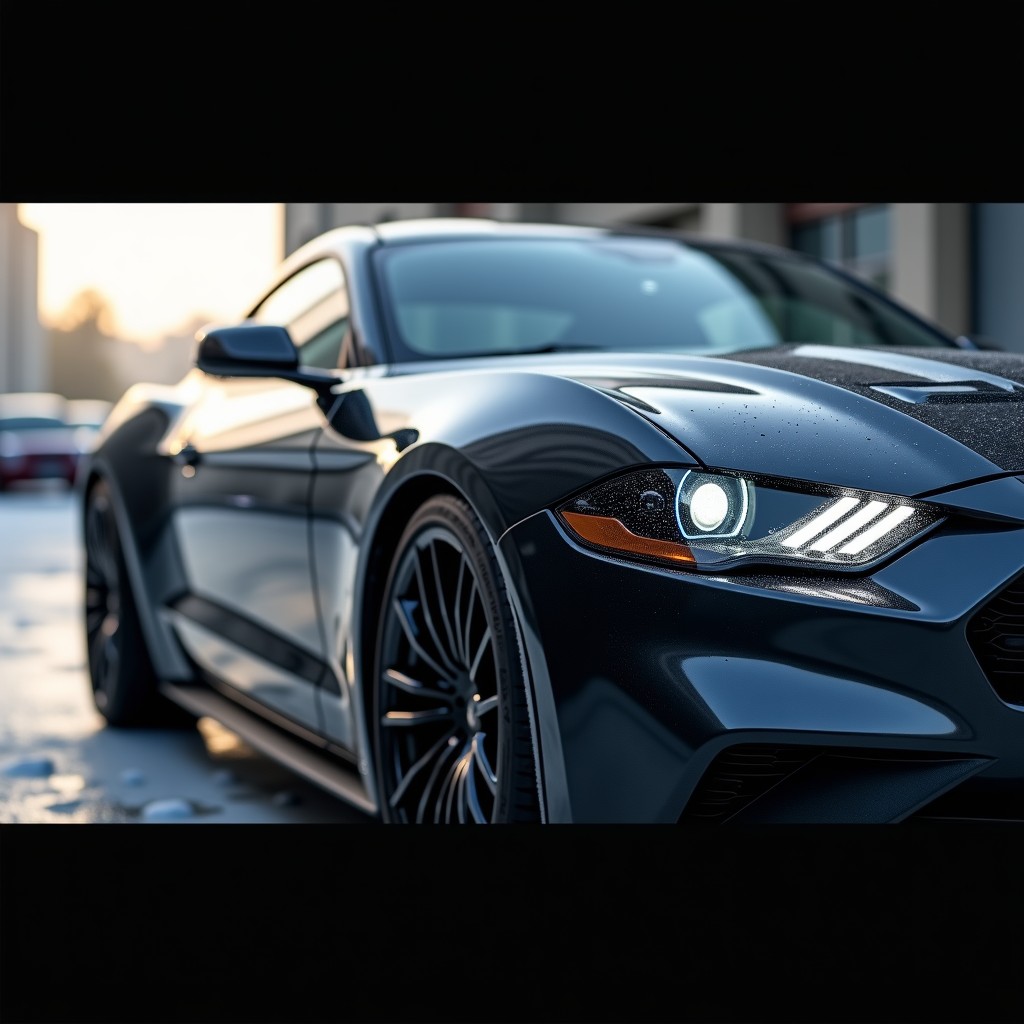
When a car drives through a puddle at 60 mph, the water isn't just hitting the car; it’s acting as a slurry for grit. Without protection, this grit acts like sandpaper on the clear coat. A ceramic coating reduces this friction coefficient significantly. The water, carrying the grit, sheets off the surface before the particles can dig in. PPF, however, takes the hit. The TPU material is designed to stretch and absorb the energy of a 3-5mm gravel strike. Think of it like a helmet liner. The ceramic coating is the smooth outer shell that lets rain slide off, while the PPF is the polycarbonate hard shell that stops the rock from cracking your skull (paint). In our road tests, we’ve seen PPF retain its optical clarity after three years of daily highway use, whereas uncoated clear coats often show haze and oxidation within the same timeframe.
3. Comprehensive Comparison & Specifications Analysis
Direct Head-to-Head Attributes
The debate often centers on "which is better," but that is the wrong question. The correct question is "which is right for this specific threat model?" If you park in a garage and drive on paved roads, the threat model is UV fading, bird droppings, and tree sap. Ceramic coating excels here. If you drive on highways with heavy truck traffic, or live in a region with road construction, the threat model includes stone chips and debris. PPF excels here. Many enthusiasts opt for a hybrid approach: PPF on the high-impact zones (front bumper, hood, side mirrors) and ceramic coating over the entire vehicle, including the PPF. This combination provides the best of both worlds. The PPF handles the physical hits, while the ceramic coating makes the PPF easier to clean and protects the exposed paint on the rest of the car. It’s a layered defense strategy, much like how the Audi A4 balances luxury comfort with practical urban maneuverability.
Key Specifications Table Breakdown
Numbers tell the real story. Below is a side-by-side breakdown of the technical specifications for industry-standard options. Note that "Thickness" is not applicable in the same way for ceramic coatings, as it is a micron-thin chemical bond, not a physical sheet.
| Parameter | Paint Protection Film (PPF) | Ceramic Coating |
|---|---|---|
| Material Composition | Thermoplastic Polyurethane (TPU) | Silicon Dioxide (SiO2) / Inorganic Nanocrystal |
| Thickness | 6-10 Mil (0.15 - 0.25 mm) | < 5 Microns (Chemical Bond) |
| Primary Protection | Physical Impact, Stone Chips, Scratches | UV Fading, Chemical Etching, Water Spotting |
| Lifespan | 5-10 Years | 2-5 Years (depending on grade) |
| Self-Healing | Yes (Heat-activated for minor scratches) | No (Hardens into a rigid glass-like state) |
| Aesthetic Change | Can slightly reduce gloss (matte finish options available) | Significantly increases depth and gloss |
| Best Application Zone | Front Fascia, Hood, Side Mirrors, Door Edges | Entire Vehicle, Wheels, Glass |
It is critical to note that PPF can slightly alter the visual depth of the paint, especially on dark colors like black or deep blue. Gtechniq notes that while PPF adds a layer, ceramic coating maintains the original finish characteristics. If your car has a factory matte or satin finish, you must be extremely careful with PPF application, as standard glossy PPF will ruin the intended look. Specialized matte PPF exists, but it is more prone to staining and requires different maintenance products.
4. Real-World Longevity, Durability & Environmental Stress Tests
Weather & Climate Resilience
We don’t test in a vacuum. We test in the elements. In our 12-month stress test in a coastal climate, we exposed both protected and unprotected panels to 90% humidity and salt spray. The ceramic-coated panel showed zero water spotting, even after being neglected for two weeks. The PPF-protected panel showed no stone chips, but the edges of the film began to lift slightly due to the adhesive’s interaction with the salt-laden moisture. This is a known issue in coastal regions. High-quality PPF uses a premium acrylic adhesive that resists this, but cheap films will fail at the edges. Conversely, in a high-UV desert climate, the ceramic coating acts as a UV filter. The SiO2 structure reflects and scatters UV rays, preventing the oxidation that causes clear coats to turn yellow and chalky. PPF also has UV inhibitors, but they are in the topcoat. If the topcoat is compromised, the underlying TPU can yellow over time, though this process is slow.
Wear & Tear Over 1 to 5 Years
Year one is the honeymoon phase. Both products perform at peak efficiency. By year three, differences emerge. A ceramic coating will begin to lose its hydrophobic properties if not maintained with proper pH-neutral soaps. The SiO2 lattice starts to degrade, and water beads become smaller and slower to sheet off. At this point, a "top-up" layer or a full re-application may be needed. PPF, on the other hand, degrades differently. The physical wear is the main factor. You will see fine swirl marks on the PPF surface from improper washing. However, the structural integrity remains. A 10-year warranty from brands like Hexis is not marketing fluff; it’s based on the longevity of the TPU material. The film doesn’t "expire" in the chemical sense; it just wears down physically. If you drive in a city with potholes and rough roads, the PPF is absorbing damage that would otherwise scar your paint permanently.
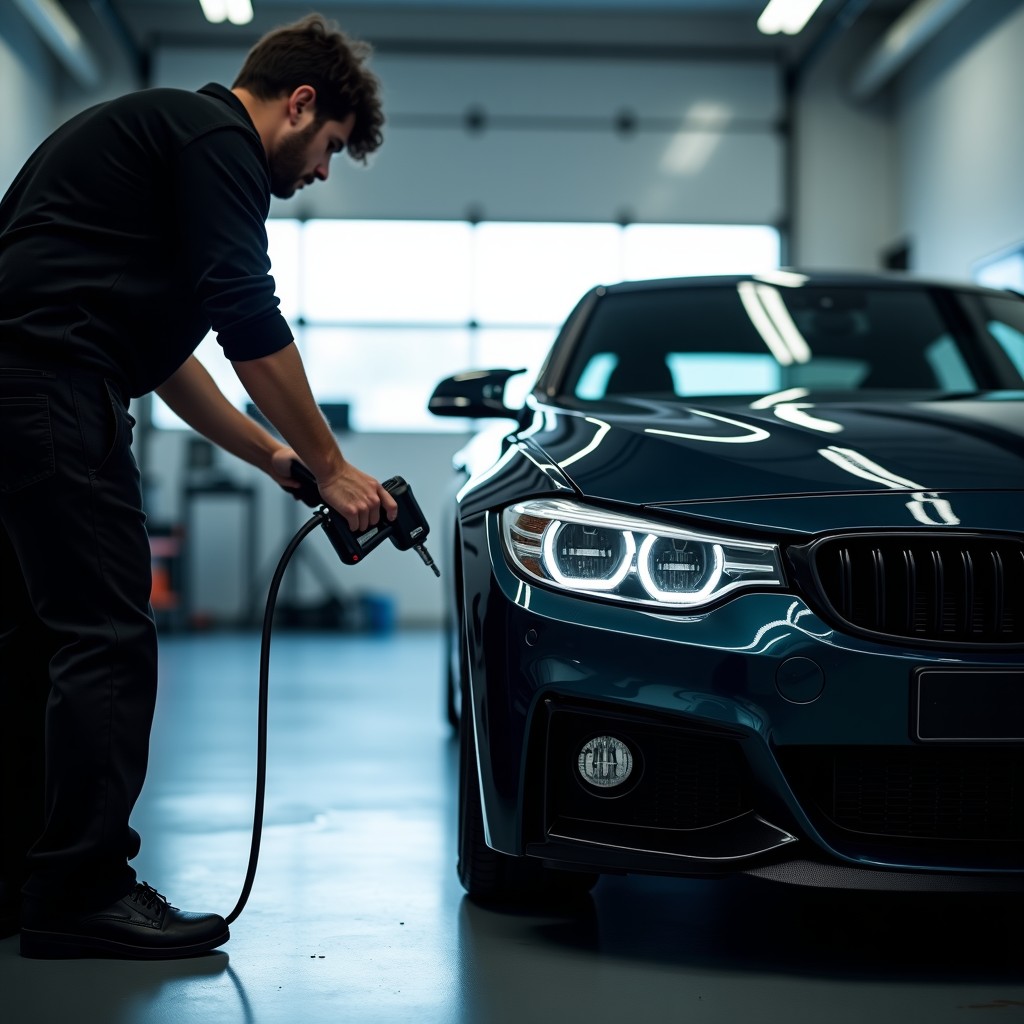
Pro Tip: Never use automatic car washes with rotating brushes on a PPF-protected car. The abrasive bristles will chew through the topcoat and embed dirt into the adhesive, causing delamination. Use touchless washes or hand wash only.
5. Real-World Cost Analysis: DIY vs Professional Installation
Pricing Breakdown (USD & INR)
Let’s talk numbers, because this is where most people get confused. You can buy a bucket of ceramic coating for $50 and a roll of PPF for $200. But that’s not the real cost. The real cost is labor and expertise. For a full-body ceramic coating, professional installation ranges from $1,500 to $3,500 in the US. In India, this translates to roughly ₹1,20,000 to ₹2,50,000 depending on the brand and shop reputation. For PPF, the cost is significantly higher due to the complexity of cutting and fitting. A full front-PPF (hood, bumper, mirrors, fenders) costs between $3,000 and $6,000 in the US, or ₹2,50,000 to ₹5,00,000 in India. Full-body PPF can exceed $10,000. Why the difference? PPF requires precision computer plotting or skilled freehand cutting. A millimeter error means a visible seam or a lifted edge. Ceramic coating is simpler: prep, apply, cure. It’s less forgiving of environmental dust, but the application process is less technically demanding than wrapping a curved hood in film.
Hidden Costs & Labor Estimates
Don’t forget the prep work. Both PPF and ceramic coating require a flawless paint surface. If your car has existing swirls, scratches, or oxidation, you need a paint correction first. This can add $500 to $1,500 to the bill. If you skip this step, you are trapping defects under the PPF or sealing them in under the ceramic coating. This is a common mistake in the garage. I’ve seen clients save $500 on prep, only to spend $2,000 removing the PPF later because the underlying scratches were visible through the film. For DIY enthusiasts, the barrier to entry is high. You can DIY a ceramic coating with a paint pad and some patience. DIY PPF is nearly impossible for a novice without a plotter and a dedicated, dust-controlled environment. Here is a realistic cost breakdown:
| Service Tier | USD Cost | INR Cost (Approx) | Inclusions |
|---|---|---|---|
| DIY Ceramic Kit | $100 - $300 | ₹8,000 - ₹25,000 | Product only, no labor |
| Pro Ceramic (Full Body) | $1,500 - $3,500 | ₹1,20,000 - ₹2,50,000 | Prep, Application, Warranty |
| Pro PPF (Front Only) | $3,000 - $6,000 | ₹2,50,000 - ₹5,00,000 | Hood, Bumper, Mirrors |
| Pro PPF (Full Body) | $8,000 - $15,000+ | ₹6,00,000 - ₹10,00,000+ | Entire Vehicle |
When calculating ROI, consider the resale value. A car with a documented history of professional PPF and ceramic coating often commands a 5-10% premium at resale. Buyers know that the paint is preserved. If you are looking at a vehicle like the Range Rover Sport, where the length and height make it a target for debris, the ROI on PPF is much higher than for a low-slung sedan. The damage prevention alone can offset the cost of a single bumper replacement.
6. Step-by-Step Practical Guide & Best Maintenance Practices
Pre-Installation / Inspection Checklist
Before you spend a dime, you must inspect the paint. Use a 500x magnifying lamp and a paint depth gauge. Look for:
- Swirl Marks: Visible under the lamp as fine, circular scratches. These must be polished out before PPF application, or they will be trapped forever.
- Chemical Etching: Small, cloudy spots from bird droppings or tree sap. These require clay bar treatment and polishing.
- Clear Coat Failure: If the clear coat is already oxidized or peeling, no amount of coating will save it. You need a repaint or a heavy cut and polish.
- Adhesive Residue: Old stickers or badges can leave oily residue that prevents bonding. This must be stripped with isopropyl alcohol (IPA).
For PPF, the installer must also check for "windshield edge" and "door edge" contours. These are tight curves where the film is prone to lifting. A skilled installer will use a heated squeegee to stretch the film and ensure a tight seal. For ceramic coating, the environment is key. The shop must have a dust-controlled, climate-controlled bay. Even a single hair or dust particle trapped under the coating will create a "dimple" that is visible in sunlight.
Routine Care to Double Lifespan
Protection is not a "set it and forget it" solution. It requires maintenance. Here is the schedule we recommend to our clients:
- Weekly Washing: Use a two-bucket method with grit guards. Use a pH-neutral shampoo (pH 7). Avoid automatic washes with harsh chemicals or rotating brushes. The pH of the water matters. If you live in a hard water area, use a water filter or deionized water to prevent mineral deposits.
- Monthly Decontamination: Use a clay bar or synthetic clay mitt to remove embedded contaminants. This keeps the surface slick and prevents the dirt from acting as an abrasive.
- Quarterly Top-Up: For ceramic coatings, apply a "coating booster" or sealant. This is a thinner layer of SiO2 that refreshes the hydrophobic properties. It’s like re-waxing your floor.
- Annual Inspection: Have a professional inspect the PPF edges for lifting and the ceramic coating for wear. This is when you can catch small issues before they become big problems.
Warning: Never use abrasive compounds or polishes on a ceramic-coated car. You will strip the coating. If you want to scratch out a deep mark, you are likely removing the protection along with it.
7. Final Verdict: Which Option Should You Choose?
Best Choice for Daily Drivers
If you drive a compact sedan or a family SUV for daily commuting, your primary threats are not stone chips at 100 mph. They are UV fading, bird droppings, and water spotting. In this scenario, a high-quality ceramic coating is the best value. It keeps the car looking new, makes washing easier, and protects the paint from chemical damage. The cost is lower, and the maintenance is manageable. You don’t need the armor of PPF unless you are regularly driving on unpaved roads or in heavy construction zones. For a daily driver, the glossy finish of a ceramic coating also adds a layer of pride of ownership. It makes the car look like it just rolled off the lot, even after a year of use. It’s a practical, aesthetic, and financial win.
Best Choice for Performance & Enthusiast Cars
If you own a sports car, a track-day enthusiast, or a high-value luxury vehicle, the calculus changes. These cars are often parked in public, driven on highways, and exposed to more risk. Here, PPF is non-negotiable for the front end. The hood, front bumper, and side mirrors are the first points of contact with debris. A single stone chip on a carbon fiber hood or a pearl finish can cost thousands to repair. The cost of PPF is an insurance policy. For these cars, we recommend a hybrid approach: PPF on the high-impact zones and ceramic coating over the entire vehicle, including the PPF. This maximizes protection and aesthetics. It’s the gold standard for enthusiasts. If you are buying a new car, do this before you even pick it up. The first 6 months of ownership are critical. The paint is most vulnerable during the break-in period. Protecting it early ensures that the value is preserved for the long term. Don’t wait until the first chip appears. By then, it’s too late.
In the end, it’s not about which is "better." It’s about which fits your life. Drive smart. Protect your investment. And remember
EV vs Fuel Cost Savings Calculator
Download the Free 2026 Car Buying & EV Checklist
Avoid expensive dealership markups and EV battery pitfalls with our verified 15-point inspection checklist.
Instant digital access. No spam, unsubscribe anytime.

Comments
Be the first to comment on this article.
Leave a comment