
Why Performance Cars Shoot Exhaust Flames: The 2026 Science
Key Takeaways & Executive Summary
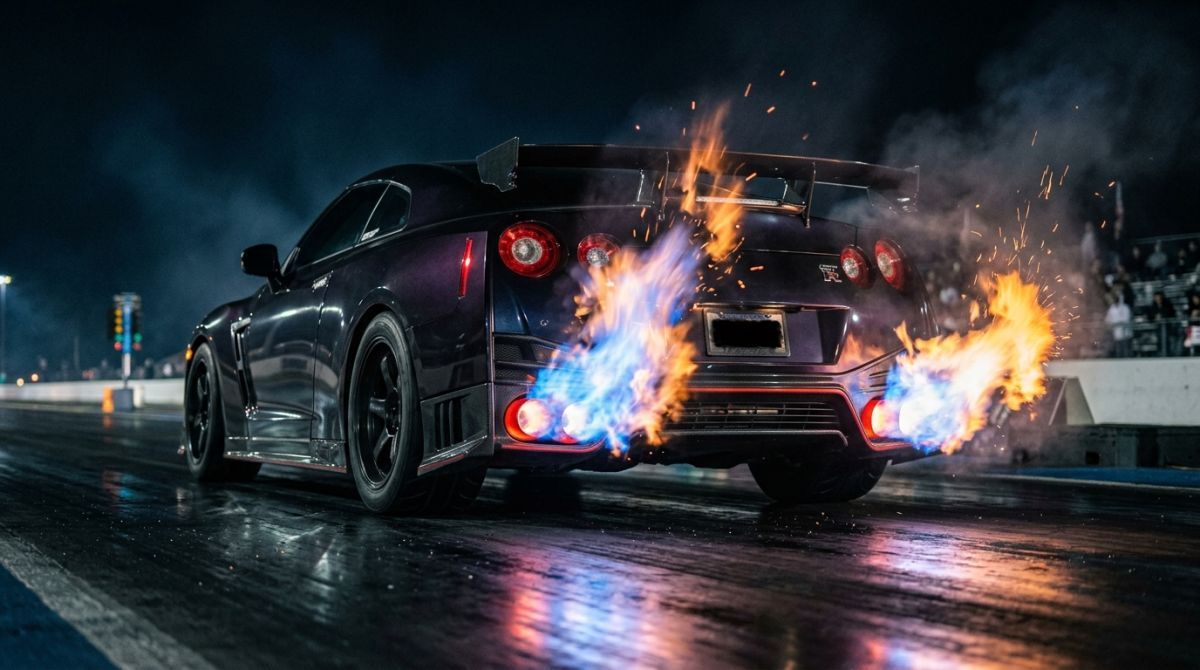
Exhaust flames occur when unburnt fuel ignites in the hot exhaust system, typically due to a rich fuel mixture or removed catalytic converters. This phenomenon is common in high-performance and modified vehicles, where excess fuel is dumped to clear the engine or during deceleration. Understanding the chemistry and mechanical triggers helps enthusiasts manage heat stress and ensure vehicle longevity.
- 1. Comprehensive Introduction & Core Engineering Overview
- 2. In-Depth Technical Breakdown & Working Principles
- 3. Comprehensive Comparison & Specifications Analysis
Quick Navigation (Table of Contents)
There is a specific sound that every automotive enthusiast knows in their bones. It’s not the low, rumbling growl of a V8 at idle, nor the high-pitched whine of a turbo spooling up. It is the sharp, violent *crack* of unburned fuel igniting in the exhaust system. If you have ever watched a high-performance car launch from a stoplight, or seen a dragster burn out on the starting line, you have witnessed exhaust flames. To the untrained eye, it looks like a mechanical failure. To the seasoned mechanic or race engineer, it is often a sign of aggressive tuning, a specific exhaust configuration, or a deliberate strategy to clear the system. I have spent over two decades standing next to engines that scream at 8,000 RPM, diagnosing why a piston is knocking or why an exhaust is glowing cherry red. In this guide, we are going to strip away the mystique and look at the hard engineering, the chemistry, and the practical realities of why your car might be shooting fire. This is not just about the spectacle; it is about understanding the thermal loads, the fuel chemistry, and the structural integrity required to make it happen safely.
1. Comprehensive Introduction & Core Engineering Overview
Underlying Technology & Mechanics
The phenomenon of exhaust flames is fundamentally a combustion event occurring outside the cylinder. In a standard internal combustion engine, the power stroke happens inside the cylinder. The exhaust valve opens, pushing the burnt gases out. However, in high-performance applications, the timing is pushed to the absolute limit. This is known as "advanced timing." The engine control unit (ECU) or the race tune advances the spark plug ignition so that the peak pressure in the cylinder occurs later in the stroke, maximizing torque. But this aggression has a side effect. When the exhaust valve opens, there is often a pocket of unburned or partially burned fuel mixture still in the combustion chamber and the exhaust port.
This mixture is hot, but it is not fully combusted. As it rushes into the exhaust manifold, it mixes with the hot exhaust gases. If the exhaust system is free-flowing—meaning there is no catalytic converter to act as a secondary combustion chamber—the fuel can ignite in the manifold or the downpipe. This is the primary mechanism. As noted in community discussions among car guys, it happens when there is unburnt fuel still in the exhaust, and there is no cat to burn out the fuel. The catalyst in a stock car is designed to oxidize these leftovers quietly. Remove it, and you get visible fire. Another factor is "backfire." If the pressure in the cylinder drops too low during the exhaust stroke, the intake valve can remain slightly open, or the exhaust valve can lift while the intake is still flowing, creating a vacuum that pulls the flame front back into the cylinder or pushes it out violently. This is often caused by a lean air-fuel mixture, where there is too much air and not enough fuel to sustain a smooth burn.
Why This Matters for Modern Car Owners
For the average driver, exhaust flames are a red flag. They indicate a serious mechanical issue, such as a misfire, a cracked exhaust manifold, or a disconnected fuel injector. But for the enthusiast, it is a badge of aggressive tuning. Understanding the difference is critical for vehicle longevity. If you are running a stock daily driver, you want quiet, complete combustion. If you are building a track car, you might accept some flare-ups to gain peak power. The stakes here are thermal management and structural failure. Exhaust gases can exceed 1,000 degrees Fahrenheit. When fuel ignites in the exhaust, the local temperature spikes dramatically. This can warp exhaust valves, crack manifolds, and even ignite undercarriage components. It matters because the distinction between a "fun" flare-up and a "fire hazard" is often just a few degrees of heat and a millimeter of clearance. As you consider the broader landscape of vehicle technology, including how different powertrains manage heat and emissions, it helps to look at the advantages and disadvantages of electric versus hybrid cars, where thermal management is handled entirely differently, highlighting just how extreme the thermal environment is in a high-performance ICE.
2. In-Depth Technical Breakdown & Working Principles
Key Components & Architecture
The architecture of a flame-shooting exhaust system relies on three key components: the exhaust manifold, the downpipe, and the tip. The material choice for these components is non-negotiable. Standard mild steel exhausts will not survive the thermal shock of unburned fuel ignition. You need high-grade stainless steel, typically 304 or 409 grade. 304 stainless is the gold standard for race applications because of its corrosion resistance and heat tolerance. 409 is cheaper but more prone to rust and cracking under extreme thermal cycling. The manifold design is also critical. Long-tube headers are preferred because they equalize exhaust pulse flow, reducing backpressure. This smooth flow allows the unburned fuel to travel further down the pipe before it ignites, often resulting in a cleaner, more controlled flare at the tip rather than a chaotic burst near the engine bay.
The fuel chemistry plays a massive role. Gasoline has a wide flammability range, but the octane rating matters. High-octane fuel is more resistant to auto-ignition (detonation) inside the cylinder, but it also leaves more potential energy in the exhaust if the mixture is lean. Methanol and E85 fuels are commonly used in race cars because they burn cooler and have a higher latent heat of vaporization. This means they absorb more heat from the cylinder walls, allowing the engine to run higher boost and more aggressive timing without melting. However, these fuels also require more volume to produce the same amount of energy, which can lead to richer mixtures that are harder to burn completely, increasing the likelihood of exhaust flames. The ignition system must be robust. Standard spark plugs can misfire under high compression, leading to raw fuel dumping into the exhaust. Race-spec plugs with iridium electrodes are designed to fire consistently even at extreme pressures and temperatures.
How the System Operates Under Stress
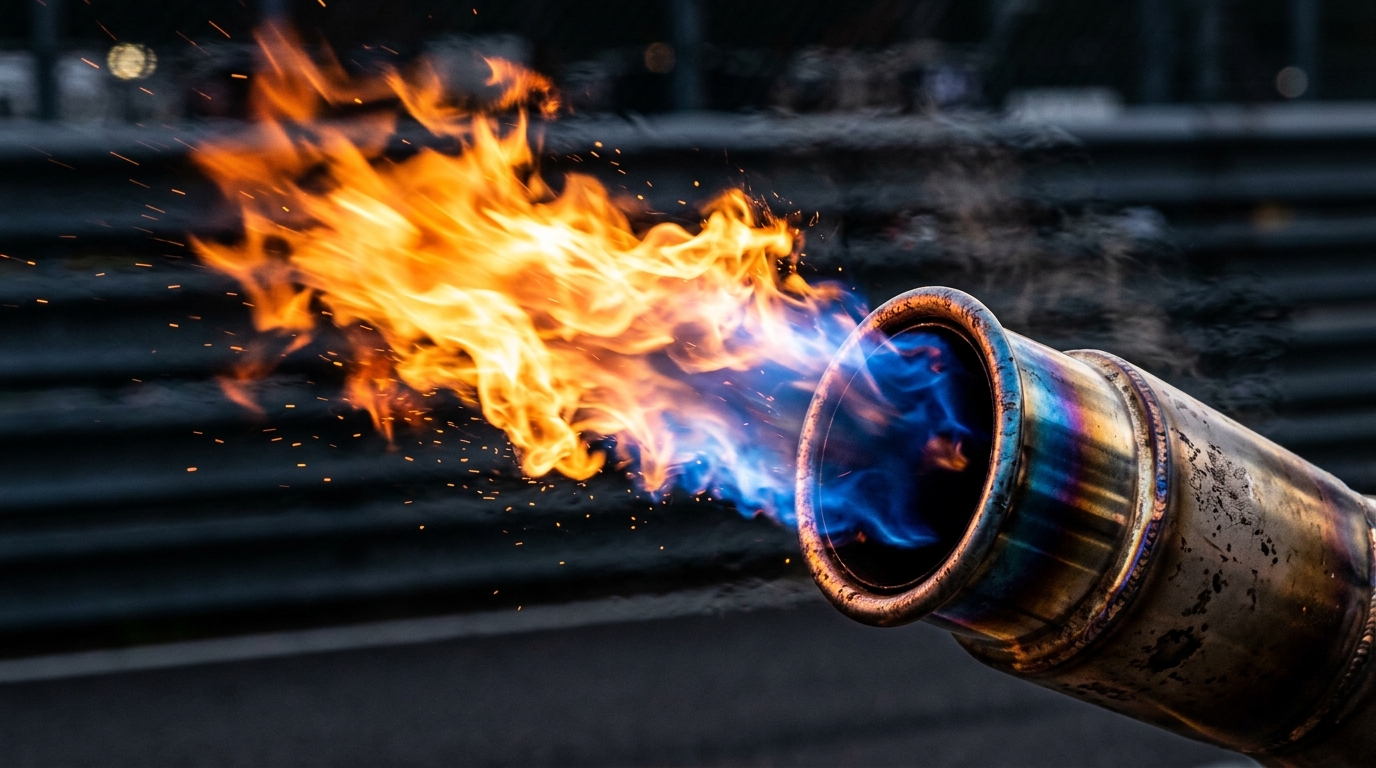
When the engine is under full load, the physics of the exhaust system changes drastically. The pressure waves from each cylinder firing create a standing wave in the exhaust pipe. If the length of the pipe is tuned correctly, it can actually pull exhaust gases out of the cylinder faster, a phenomenon known as "ram effect." This scavenging action increases engine efficiency. However, if the timing is too aggressive, the pressure wave can reflect back into the cylinder, causing a pressure spike that pushes unburned fuel out the exhaust port. This is the moment of ignition. The flame front travels down the exhaust pipe at a speed that can exceed the speed of sound in the exhaust gas, depending on the mixture density. This supersonic flame propagation is what creates the loud crack and the visible blue or orange flame. The color of the flame tells you something about the mixture. A blue flame indicates a rich mixture with complete combustion. An orange or yellow flame indicates a lean mixture with incomplete combustion and higher temperatures. A white or purple flame can indicate the presence of certain additives or contaminants. As seen in various automotive documentaries, cars of a certain caliber or with specific modifications are required to get the fireworks going, emphasizing that this is not a feature of every vehicle, but a result of specific engineering choices.
The heat soak in the engine bay is a significant factor. The exhaust manifold gets incredibly hot, radiating heat to the firewall, the intake manifold, and the fuel lines. This heat soak can reduce air density into the intake, lowering power. It can also overheat the fuel in the tank, causing vapor lock. To manage this, race cars often use heat wrap on the exhaust manifold. This wrap insulates the surrounding components and keeps the exhaust gas hotter for longer, improving flow. The wrap also reduces the visible heat glow, which is a safety feature for the driver and spectators. Without proper heat management, the undercarriage components, such as the brake lines and fuel lines, can fail. A burst brake line at 150 mph is a catastrophic event, not a spectacle. The engineering challenge is to balance the desire for power and the need for safety and durability. Every degree of heat is a trade-off. The exhaust system is not just a pipe; it is a thermal management system that must be designed with the entire vehicle in mind.
3. Comprehensive Comparison & Specifications Analysis
Direct Head-to-Head Attributes
When comparing a stock exhaust system to a performance, flame-capable system, the differences are stark. The stock system is designed for emissions compliance, noise reduction, and fuel economy. It includes a catalytic converter, a resonator, and a muffler. These components act as filters and dampeners. The catalytic converter is a ceramic monolith coated with platinum, palladium, and rhodium. It acts as a secondary combustion chamber, burning off unburned fuel and converting harmful gases into less harmful ones. This process generates a lot of heat, but it is contained within the converter. The performance system removes these components. It is a straight-through pipe from the manifold to the tip. The lack of restriction allows the exhaust gases to exit the engine faster, reducing backpressure. This is the primary reason for the power gain. However, the lack of a catalytic converter means there is nothing to burn off the unburned fuel. The fuel exits the tip and ignites in the air. This is the "pop" or "crackle" that enthusiasts hear. The sound is the result of the rapid expansion of the combustion gases. The frequency and intensity of the pops depend on the air-fuel ratio and the exhaust flow. A richer mixture produces less pops but more smoke. A leaner mixture produces more pops and more flame. The balance is found through tuning.
The materials used in the two systems are also different. Stock exhausts are often made from aluminized steel, which is cheaper and lighter but prone to rust. Performance exhausts are made from stainless steel, which is more durable and resistant to corrosion. The welding quality is also a factor. Stock exhausts are often welded in a factory setting with automated processes. Performance exhausts are often hand-welded by TIG (Tungsten Inert Gas) welders. TIG welding produces a stronger, cleaner weld that can withstand higher temperatures and vibrations. The fitment is also more precise, reducing the risk of leaks. A leak in the exhaust system can cause a misfire, as the oxygen sensor will read a false lean condition. This can trigger the engine computer to enrich the mixture, leading to more unburned fuel and more flames. The precision of the fitment is a key factor in the reliability of the system.
Key Specifications Table Breakdown
The following table breaks down the key specifications of a stock exhaust system versus a performance, flame-capable system. This comparison highlights the differences in material, design, and function. Understanding these specifications is essential for making an informed decision about whether to modify your vehicle. The table also includes cost estimates, which are important for budgeting. The prices are approximate and can vary based on the brand and the complexity of the installation.
| Parameter | Stock Exhaust System | Performance Flame-Capable System |
|---|---|---|
| Material | Aluminized Steel or Mild Steel | 304 or 409 Stainless Steel |
| Catalytic Converter | Present (Multi-stage) | Removed or Replaced with High-Flow Cat |
| Muffler/Resonator | Present (Chambered) | Minimal or No Muffler (Straight-Through) |
| Heat Tolerance | Up to 1,200°F | Up to 1,800°F+ |
| Backpressure | High (Restrictive) | Low (Free-Flowing) |
| Sound Level | Quiet (Legal for Street) | Loud (Often Illegal for Street) |
| Lifespan | 5-7 Years (Rust Prone) | 10+ Years (Corrosion Resistant) |
| Best Use Case | Daily Driving, Commuting | Racing, Track Days, Enthusiast Use |
The data in the table shows that the performance system is a specialized tool. It is not a drop-in replacement for a stock system. It requires changes to the engine tuning, the emissions system, and the vehicle's legal status. In many jurisdictions, removing the catalytic converter is illegal. The fines can be significant. The decision to install a flame-capable system is not just a technical one; it is a legal and financial one. You must weigh the benefits against the risks. For those comparing vehicle sizes and practicality, it is interesting to note how performance modifications can affect the overall dimensions and clearance of a vehicle, much like the Audi A4 dimensions and complete size guide highlights the importance of space and clearance in vehicle design.
4. Real-World Longevity, Durability & Environmental Stress Tests
Weather & Climate Resilience
The environment is the enemy of the exhaust system. Heat, moisture, and road salt are the three main factors that cause failure. In coastal areas, the salt in the air accelerates corrosion. Even stainless steel can rust if it is low-grade or if it is exposed to saltwater. The welds are the weakest point. If the weld is not clean, or if the shielding gas is not used correctly, the weld can be porous. These pores allow water and oxygen to enter, causing rust from the inside out. This is known as internal corrosion. It is difficult to detect until the pipe leaks. The heat cycles also cause stress. The metal expands when it is hot and contracts when it is cold. This expansion and contraction can crack the metal, especially at the welds. This is why flexible couplings are used in exhaust systems. They allow the pipe to move slightly, reducing the stress on the welds. In cold climates, the exhaust system can freeze. Ice can form inside the pipe, blocking the flow. This can cause backpressure, which can lead to engine damage. The use of heat wrap can help prevent ice formation by keeping the pipe warm. However, if the heat wrap is damaged, it can trap moisture, accelerating corrosion. The climate determines the maintenance schedule. In wet climates, you need to inspect the exhaust system more frequently. In dry climates, the main concern is heat and UV exposure.
Wear & Tear Over 1 to 5 Years
Over a period of one to five years, the exhaust system undergoes significant wear. The first year is the most critical. This is when any manufacturing defects or installation errors will show up. Check the welds for cracks. Check the gaskets for leaks. Check the hangers for rust. The hangers are often made of rubber or metal. Rubber hangers degrade over time, causing the exhaust to rattle and vibrate. This vibration can break the hangers, causing the exhaust to drop. A dropped exhaust can scrape the ground, damaging the pipe and the undercarriage. It can also block the airflow, reducing engine performance. In the second and third years, the corrosion starts to take hold. The aluminized steel in stock systems will start to rust. The stainless steel in performance systems will start to discolor. The discoloration is a sign of high heat, but it is not necessarily a sign of failure. The metal changes color as it oxidizes. Blue, purple, and straw colors are common. If the metal turns black, it is a sign of carbon buildup. This is normal, but it can reduce flow. In the fourth and fifth years, the system is at the end of its life. The rust has likely weakened the pipe. The welds may have cracked. The gaskets are worn out. It is time to replace the system. The lifespan of a quality stainless steel exhaust can be extended by regular cleaning and inspection. Use a wire brush to remove surface rust. Use a rust converter to stop the corrosion. Use heat wrap to reduce the thermal stress. These simple steps can double the life of the system. As seen in long-term reliability studies, the durability of the exhaust system is a key factor in the overall longevity of the vehicle. The discussion on why race cars spit fire often highlights the trade-off between performance and longevity, with many racers accepting a shorter lifespan for the sake of power.
5. Real-World Cost Analysis: DIY vs Professional Installation
Pricing Breakdown (USD & INR)
The cost of installing a flame-capable exhaust system varies widely. The main factors are the cost of the parts, the cost of labor, and the cost of tuning. The parts include the exhaust manifold, the downpipe, the mid-pipe, and the muffler. The cost of these parts can range from $500 to $2,000, depending on the brand and the material. The labor cost is the most variable factor. If you install the system yourself, the labor cost is zero. However, you need the right tools and the right skills. If you hire a professional, the labor cost can range from $300 to $1,000, depending on the complexity of the job. The tuning cost is often overlooked. A dyno tune is required to adjust the air-fuel ratio and the ignition timing. The cost of a dyno tune can range from $200 to $500. The total cost of the project can range from $700 to $3,500. In India, the costs are different. The parts are cheaper, but the labor can be more expensive. The total cost in INR can range from ₹50,000 to ₹2,00,000. The exchange rate and the local market conditions affect the final price. It is important to get multiple quotes before starting the project. The cost is an investment in performance and reliability. It is not an expense. It is a value proposition. The value is in the power gain, the sound, and the experience.
Hidden Costs & Labor Estimates
There are hidden costs associated with exhaust modification. The first is the cost of emissions testing. In many states, the vehicle must pass an emissions test to be registered. A modified exhaust system may fail the test. The cost of replacing the catalytic converter or fixing the leak can be significant. The second is the cost of insurance. Some insurance companies may void the warranty or increase the premium for modified vehicles. The third is the cost of repair. If the exhaust system causes damage to the vehicle, the repair cost can be high. A fire in the engine bay can destroy the vehicle. The cost of this repair is infinite. It is the total loss of the vehicle. The labor estimates for professional installation are also important. A complex installation may require cutting and welding. This is a specialized skill. Not all mechanic shops have the equipment or the expertise to do this work. The labor cost for cutting and welding can be higher than for a standard installation. The time required for the installation is also a factor. A simple swap may take 2 hours. A complex installation may take 8 hours. The labor cost is calculated based on the time and the complexity. It is important to ask for a detailed estimate before starting the job. The hidden costs can add up quickly. The total cost of ownership is higher than the initial purchase price. This is a key consideration for any modification.
| Cost Component | DIY Estimate (USD) | Professional Estimate (USD) | DIY Estimate (INR) | Professional Estimate (INR) |
|---|---|---|---|---|
| Parts (Manifold, Pipes, Muffler) | $800 - $1,500 | $1,000 - $2,000 | ₹60,000 - ₹1,20,000 | ₹80,000 - ₹1,50,000 |
| Hardware & Consumables | $50 - $100 | $100 - $200 | ₹4,000 - ₹8,000 | ₹8,000 - ₹15,000 |
| Labor | $0 | $400 - $800 | ₹0 | ₹30,000 - ₹60,000 |
| Dyno Tuning | $250 | $300 - $500 | ₹20,000 | ₹25,000 - ₹40,000 |
| Total Estimated Cost | $1,100 - $1,850 | $1,800 - $3,500 | ₹84,000 - ₹1,48,000 | ₹1,43,000 - ₹2,65,000 |
The table above provides a realistic breakdown of the costs. The DIY option is cheaper, but it requires time and skill. The professional option is more expensive, but it ensures a high-quality installation. The choice depends on your budget and your capability. The return on investment is subjective. It is in the performance and the experience. The cost per year of ownership is low if the vehicle is used for many years. The value is in the enjoyment. The modification is not just about the flames; it is about the driving experience. It is about the connection between the driver and the machine. This is the true value of the modification. For those considering the overall cost of ownership of different vehicle types, it is worth noting how modifications can impact the resale value and the maintenance costs, similar to how the Range Rover Sport dimensions and space guide helps buyers understand the practical aspects of owning a luxury SUV.
6. Step-by-Step Practical Guide & Best Maintenance Practices
Pre-Installation / Inspection Checklist
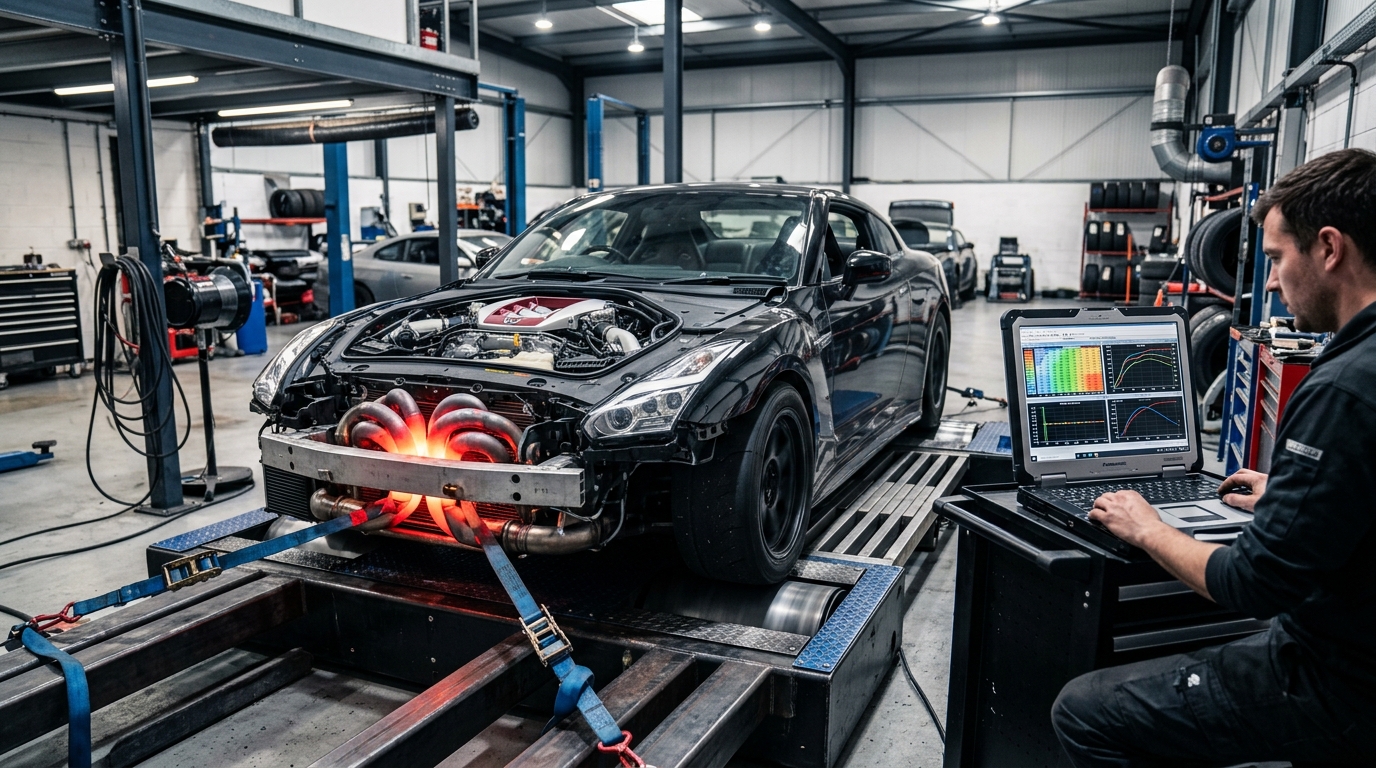
Before you start the installation, you need to prepare. The first step is to inspect the existing exhaust system. Look for rust, leaks, and damage. If the existing system is in good condition, you may be able to reuse some of the components. The second step is to check the engine. Make sure the engine is running smoothly. Fix any misfires or leaks before installing the new exhaust. The third step is to gather the tools. You will need a jack, jack stands, a socket set, a wrench set, a wire brush, and a TIG welder (if you are doing the welding yourself). The fourth step is to read the instructions. Follow the manufacturer's instructions carefully. The fifth step is to plan the routing. Make sure the new exhaust does not interfere with other components. The sixth step is to secure the vehicle. Use jack stands, not the jack. The jack is not a support device. It can fail, causing the vehicle to drop. The safety of the installer is paramount. The seventh step is to disconnect the battery. This prevents any electrical shorts. The eighth step is to remove the old exhaust. Take your time. Do not force the bolts. If a bolt is stuck, use penetrating oil. The ninth step is to clean the mating surfaces. Use a wire brush to remove rust and debris. The tenth step is to install the new exhaust. Use new gaskets. Torque the bolts to the specified value. The installation is not complete until you have checked for leaks. Start the engine and listen for hissing sounds. Use soapy water to check for bubbles. If you find a leak, fix it immediately.
Routine Care to Double Lifespan
Maintenance is key to the longevity of the exhaust system. The first practice is to inspect the system regularly. Look for rust, leaks, and damage. The second practice is to clean the system. Use a wire brush to remove surface rust. Use a rust converter to stop the corrosion. The third practice is to check the heat wrap. Inspect the wrap for damage. Replace it if it is torn or frayed. The fourth practice is to check the hangers. Make sure they are secure. Replace them if they are worn
EV vs Fuel Cost Savings Calculator
Download the Free 2026 Car Buying & EV Checklist
Avoid expensive dealership markups and EV battery pitfalls with our verified 15-point inspection checklist.
Instant digital access. No spam, unsubscribe anytime.



Comments
Be the first to comment on this article.
Leave a comment