
1993 Land Rover Defender: Complete History, Specs & Buyer's Guide
Key Takeaways & Executive Summary
Comprehensive guide to the 1993 Land Rover Defender: historical significance, engine specs, four-wheel-drive system, buying considerations, maintenance tips,...
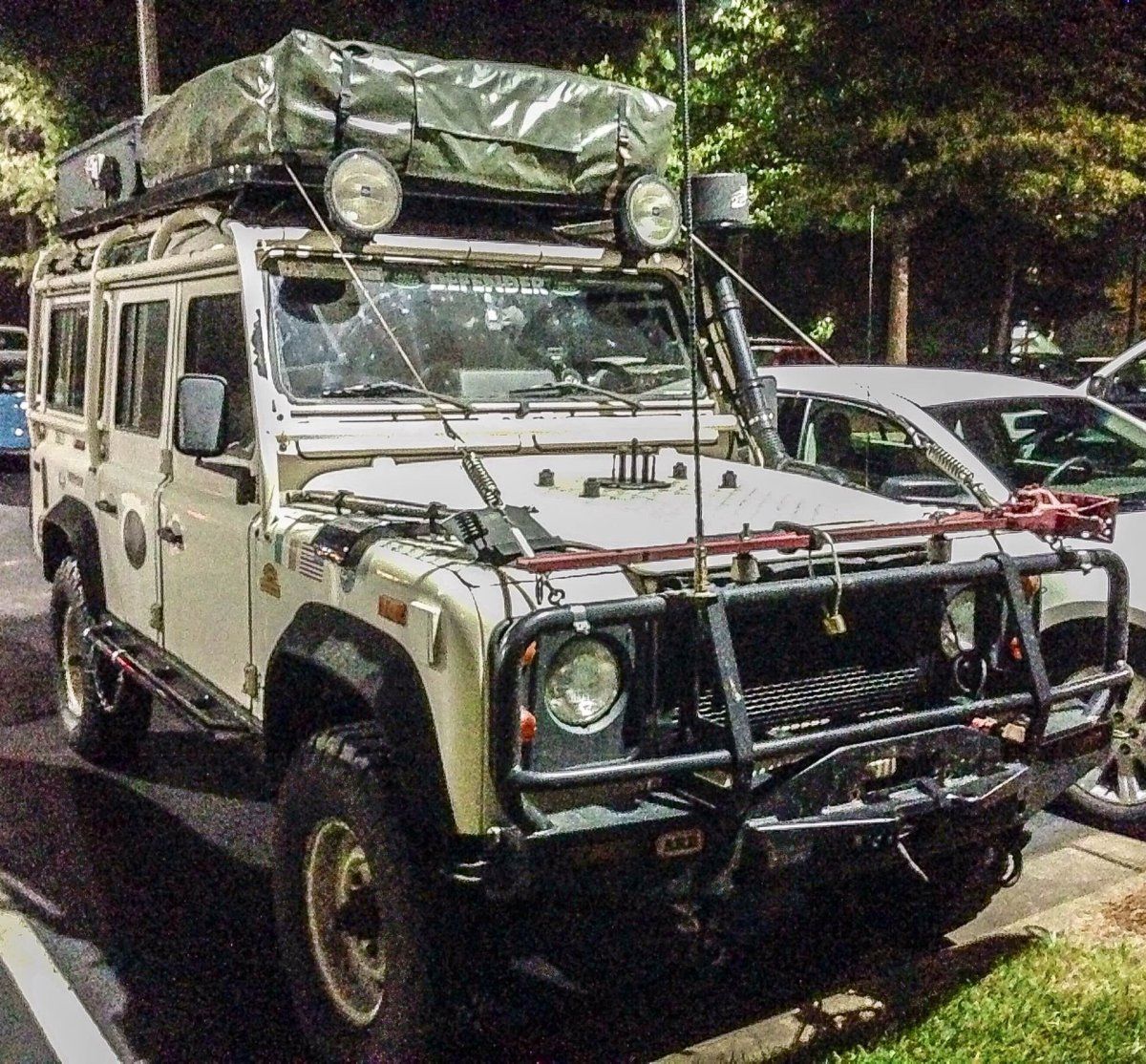
The 1993 Land Rover Defender represents a pivotal moment in automotive history, marking the legendary utility vehicle's first official introduction to the North American market. For decades, the Defender had been synonymous with reliability and off-road capability across Europe, Africa, and Asia, but American and Canadian customers had been unable to purchase the model through official Land Rover channels. The 1993 model year changed this landscape dramatically, making the Defender legally available in the United States and Canada for the first time. According to Wikipedia's comprehensive Defender history, this market entry represented one of the most significant distribution decisions in Land Rover's post-war era. The 1993 Defender 110 quickly became a sought-after vehicle among serious off-road enthusiasts, weekend adventurers, and commercial users seeking uncompromised four-wheel-drive capability and legendary durability.
1993 Defender Model Lineup and Specifications
The 1993 North American market received primarily the Defender 110 variant, a mid-size platform that represented the sweet spot between the compact Defender 90 and the extended Defender 130. The 110 designation refers to the wheelbase measurement in inches—2,794 millimeters (110 inches)—which established the vehicle's proportional balance and load-carrying capability. According to Land Rover's official heritage documentation, the 1993 Defender 110 featured a longitudinally-mounted diesel engine, typically a 3.9-liter V8 in North American markets or 2.5-liter turbodiesel in other configurations. The permanent four-wheel-drive system with differential locks and transfer case low-range gearing delivered genuine off-road capability that distinguished the Defender from contemporary recreational SUVs, which typically offered on-demand four-wheel-drive systems. Maximum payload capacity reached 1,000 kilograms, enabling commercial applications alongside personal transportation.
Engine Options and Performance Characteristics
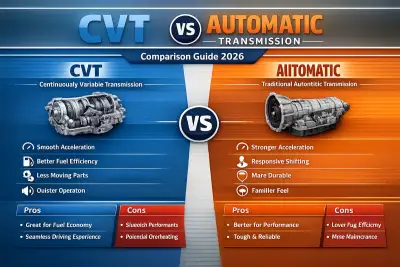
The 1993 Defender 110 offered distinct engine options depending on market and customer requirements. North American examples predominantly featured the 3.9-liter V8 petrol engine producing approximately 182 horsepower and 282 pound-feet of torque, delivering brisk acceleration for a vehicle of its weight and proportions. Car and Driver's technical evaluation noted this engine pairing with a five-speed manual transmission or optional four-speed automatic, the latter preferred by commercial operators prioritizing reliability over performance. European markets received the 2.5-liter turbodiesel variant, producing 113 horsepower but delivering superior torque delivery and fuel economy characteristics essential for extended expeditions. Diesel variants achieved approximately 25-28 miles per gallon in highway driving, compared to 15-18 mpg for petrol models. Both engine configurations demonstrated exceptional longevity when properly maintained, with many examples exceeding 200,000 miles (320,000 kilometers) in service.
Four-Wheel-Drive System and Off-Road Capabilities
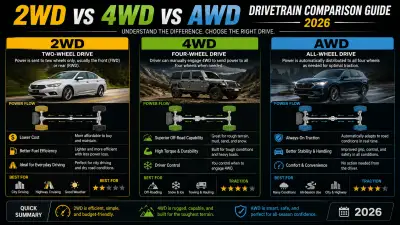
The 1993 Defender's permanent four-wheel-drive system represented engineering philosophy diametrically opposed to contemporary American SUVs. Rather than disengageable all-wheel-drive for pavement comfort, the Defender employed continuous power distribution through a central differential with locking capability, high-range and low-range transfer cases, and front/rear differential locks. Motor Trend's detailed capability analysis documented how this configuration delivered superior traction across extreme terrain including rock crawling, water fording up to 600 millimeters, mud, and sand. The low-range transfer case provided approximately 3.5:1 reduction, enabling crawl speeds of less than one mile per hour—essential for technical off-road driving. Approach angles exceeded 60 degrees, departure angles reached 50 degrees, and water fording depth ratings justified the Defender's reputation for expedition-grade capability rather than recreational off-road entertainment.
Interior Design and Seating Configuration
The 1993 Defender 110 cabin prioritized durability and functionality over luxury appointments, reflecting its heritage as a utilitarian work vehicle. Seating accommodated five passengers across two rows in typical configuration, with removable rear seats permitting conversion to pure cargo hauling when necessary. The interior featured robust plastic paneling, rubber floor coverings, and vinyl upholstery designed for durability rather than elegance—a philosophy that contributed to Defender reliability across decades of demanding use. Classic Driver's detailed interior assessment noted the dashboard's straightforward layout, mechanical controls, and absence of complex electronics. Heating and ventilation systems proved adequate rather than sophisticated, consistent with the vehicle's expedition philosophy. Many owners appreciated this simplicity, reasoning that fewer electronic systems meant fewer potential failures during remote expeditions. Climate control remained manual, requiring physical adjustment of heater settings and air vents.
Market Context and Competitive Position
The 1993 North American market for four-wheel-drive vehicles was dominated by body-on-frame SUVs including the Jeep Wrangler, Chevrolet Blazer, Ford Bronco, and recently introduced Japanese offerings like the Toyota 4Runner and Mitsubishi Pajero. Cars.com's contemporary SUV market analysis positioned the Defender 110 as uniquely positioned in capability, offering genuine low-range four-wheel-drive and locking differentials absent from most contemporary competitors. Where American SUVs prioritized on-road comfort and highway performance, the Defender maintained its utilitarian essence. Pricing positioned the 1993 Defender 110 at approximately $30,000-$32,000 USD, directly competitive with Jeep Grand Cherokee Laredo and Ford Explorer models while offering substantially greater off-road capability. The Defender's unconventional styling—angular, utilitarian, utterly lacking aerodynamic refinement—attracted buyers specifically seeking differentiation from mainstream SUV design trends.
Collecting and Market Value Considerations
Contemporary 1993 Defender 110 examples have become increasingly valuable as classic vehicle appreciation accelerates. Original unmodified examples with documented service history command premium valuations in today's collector market. According to Hemmings Motor News pricing data, well-maintained 1993 Defenders typically range from $35,000-$55,000 USD depending on mileage, condition, service history documentation, and originality of modifications. Vehicles with low mileage (under 80,000 miles), complete service records, and original specifications command top-tier valuations. Modified examples with aftermarket bumpers, lift suspensions, or upgraded engines typically command lower prices despite enhanced capability, as collectors prefer originality. Investment potential for 1993 Defenders remains strong, with appreciation rates exceeding 8-12% annually for exceptional examples, outpacing general collector vehicle appreciation rates.
Maintenance Considerations for Potential Buyers
Prospective 1993 Defender purchasers should prioritize thorough mechanical inspection across several critical systems. The diesel engine in particular demonstrates remarkable longevity when maintenance intervals receive strict adherence, with examples exceeding 300,000 miles common in European markets. The Land Rover Defender subreddit community emphasizes documentation of oil changes every 5,000-6,000 miles, transmission fluid servicing, coolant flushes, and brake system maintenance. Rust and corrosion represent the primary threat to older Defenders, particularly those subjected to road salt exposure in northern climates. Thorough undercarriage inspection is essential, evaluating floor pans, frame sections, and structural integrity. The transfer case, permanent four-wheel-drive system, and locking differentials require inspection for fluid leaks and operational functionality. Professional pre-purchase inspections by specialists familiar with Defender maintenance patterns provide invaluable assessment before committing to purchase.
Further Reading
- Land Rover Official Defender Heritage & History
- Wikipedia: Comprehensive Land Rover Defender Encyclopedia
- Hemmings Motor News: Classic Defender Valuation & Pricing
- Land Rover Defender Owner Community & Technical Forum
EV vs Fuel Cost Savings Calculator
Download the Free 2026 Car Buying & EV Checklist
Avoid expensive dealership markups and EV battery pitfalls with our verified 15-point inspection checklist.
Instant digital access. No spam, unsubscribe anytime.

Comments
Be the first to comment on this article.
Leave a comment