
TechAndCarsInfo Daily Tech & Auto News Brief – 25 Nov 2026
Key Takeaways & Executive Summary
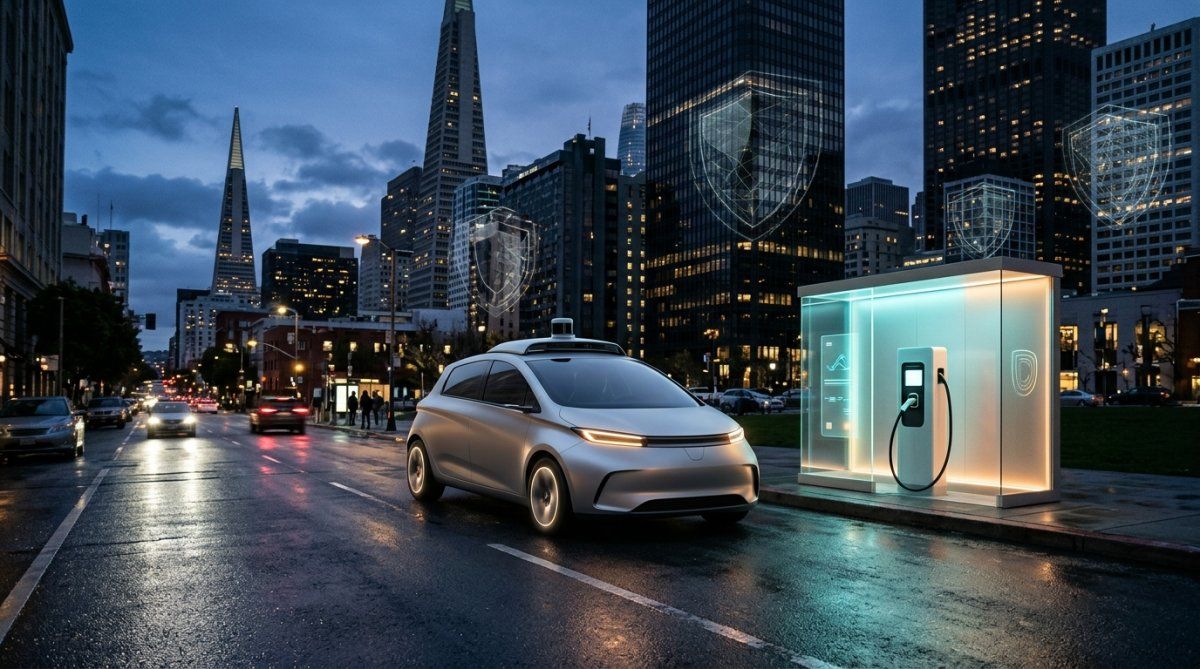
On 25 November 2026, enterprise AI security and next-generation mobility accelerated across six major stories: OpenAI and Cisco launched the open-source Shirudo Linux runtime shield, Microsoft unveiled lower-cost specialized AI models, and the UK NCSC warned of faster agentic cyberattacks. Meanwhile, Lucid, Uber, and Nuro began driverless San Francisco robotaxi testing ahead of Q1 2027, Amazon's Zoox expanded to Los Angeles and Atlanta, and GM Energy partnered with WeaveGrid on Southern California Edison V2G grid power.
- 1. Trending Technology Brief: AI Cybersecurity, Enterprise Models & Agentic Threats
- 2. Trending Automobile Brief: Driverless Robotaxis & Bidirectional EV Energy
- 3. Where AI Infrastructure & Next-Gen Mobility Converge Heading Into 2027
Quick Navigation (Table of Contents)
Most days in technology and automotive journalism split cleanly into two separate worlds: cloud software engineers worrying about servers on one side, and vehicle teams testing hardware on city streets on the other. Not on 25 November 2026. Today’s editorial brief captures six developments showing how tightly enterprise artificial intelligence, Linux infrastructure defense, driverless fleets, and bidirectional electric grids now overlap.
1. Trending Technology Brief: AI Cybersecurity, Enterprise Models & Agentic Threats
Three stories define today’s technology agenda: proactive AI runtime protection for Linux infrastructure, sharpening price-and-licensing competition in specialized enterprise models, and urgent warnings around automated offensive AI tooling.
1.1 OpenAI and Cisco Launch Shirudo: Can AI Protect Linux Systems Before Patches Land?
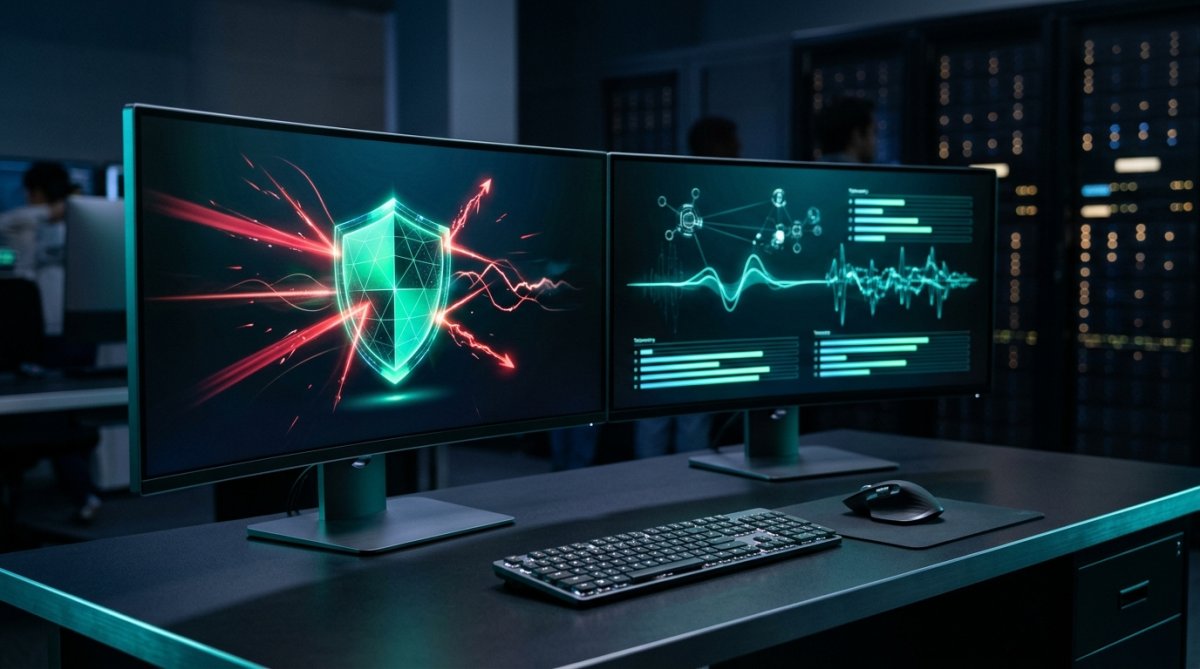
Enterprise security teams rarely lose battles because an official fix doesn’t exist—they lose in the dangerous gap between when a vulnerability drops and when critical production servers can actually be rebooted. To close that exposure window, OpenAI and Cisco introduced Shirudo, an open-source runtime engineered to deploy temporary safeguards that defend live Linux systems while security teams test and apply permanent patches.
Because Linux powers everything from cloud workloads to network gateways and connected automotive backends, shutting down mission-critical systems mid-day isn’t always practical. Shirudo addresses that operational bottleneck by acting as an automated stopgap shield in memory and runtime execution, reducing active exploit surface without waiting for scheduled maintenance windows. In a landscape where unified AI cybersecurity stacks increasingly bridge endpoints and network edges—and where connected vehicle software stacks face growing scrutiny—Shirudo immediately stands out as today’s strongest breaking infrastructure story.
1.2 Microsoft Challenges OpenAI and Anthropic With Cheaper In-House AI Models
Frontier AI competition is shifting rapidly away from one-size-fits-all general models toward targeted, cost-efficient architectures built for high-frequency enterprise jobs. Microsoft stepped squarely into that arena today with new specialized in-house AI models built specifically for coding, cybersecurity, image generation, and audio transcription.
Rather than competing solely on headline benchmark size, Microsoft is pitching a pragmatic mix of competitive performance, lower operating cost, and flexible licensing—challenging both OpenAI and Anthropic for enterprise cloud spend. For engineering teams and software-defined vehicle developers paying per-token API fees across developer copilots, SOC log summarization, voice assistants, and technical diagnostics, cheaper task-specific models open the door to running AI workloads continuously rather than sparingly.
1.3 AI-Powered Cyberattacks Are Getting Faster: UK NCSC Warns on Agentic Frameworks
Speed has always favored attackers over defenders, and automation is pushing that imbalance even further. The UK’s National Cyber Security Centre (NCSC) issued a sharp warning spotlighting a rise in cyberattacks leveraging agentic offensive frameworks capable of automating reconnaissance and exploitation steps without constant human intervention.
Traditional defense cycles assume human operators take hours or days to map a network and chain an exploit. Once offensive agents automate target discovery and vulnerability probing simultaneously, manual ticket triage simply cannot move fast enough. Understanding these autonomous AI agent security risks explains why defenders are rushing toward automated runtime containment tools like Shirudo alongside AI-assisted security models.
Technology Editorial Priority Matrix (25 November 2026)
| Rank | Trending Tech Story | Category | Editorial & Industry Opportunity |
|---|---|---|---|
| 1 | OpenAI + Cisco Shirudo Linux Runtime | AI + Cybersecurity | High-urgency breaking news on zero-downtime temporary Linux safeguards before patches ship. |
| 2 | Microsoft Cheaper Specialized AI Models | Enterprise AI | Enterprise AI cost-efficiency & licensing battle across coding, cybersecurity, image, and transcription workloads. |
| 3 | UK NCSC Agentic Cyberattack Warning | AI Agents / Security | Critical security awareness showing how automated reconnaissance forces faster defensive automation. |
Editorial Insight: Taken together, OpenAI and Cisco’s Shirudo release directly answers the UK NCSC’s warning—when offensive AI agents automate reconnaissance and exploitation in real time, waiting days for a Linux reboot is no longer viable.
2. Trending Automobile Brief: Driverless Robotaxis & Bidirectional EV Energy
While tech infrastructure focused on runtime shields and cheaper inference, the automotive sector delivered two commercial autonomy milestones alongside a practical step forward in how electric vehicles interact with regional power grids.
2.1 Lucid, Uber and Nuro Begin Fully Driverless Robotaxi Testing in the Bay Area
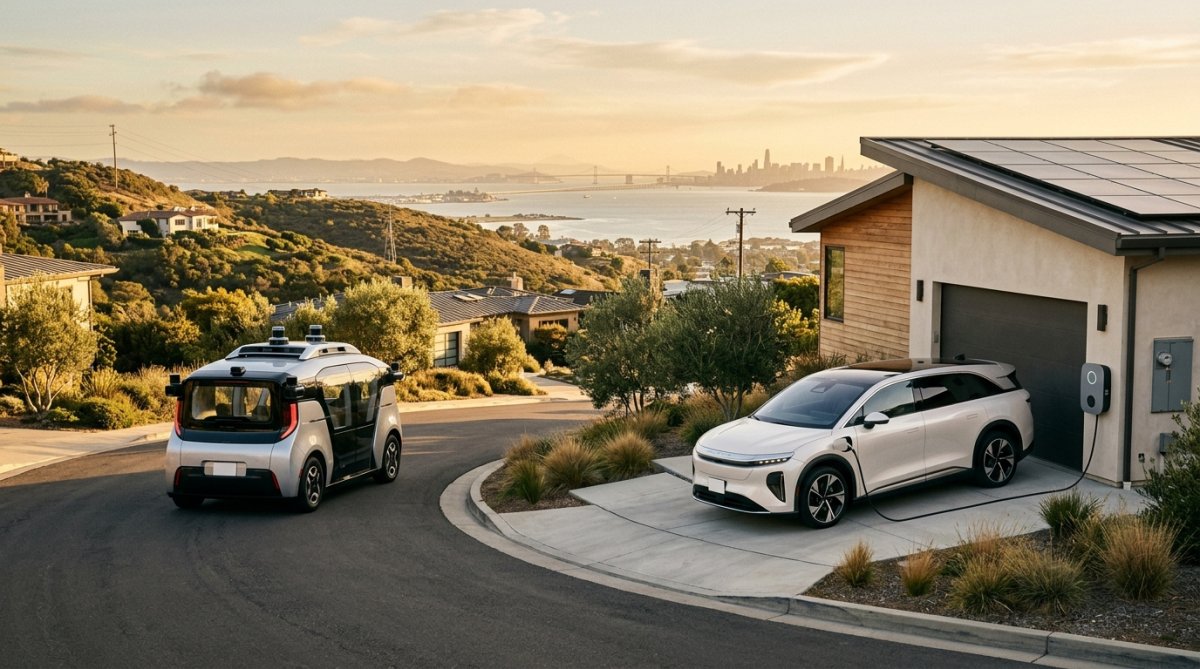
Removing the human safety driver from inside a test vehicle on public city streets remains autonomy’s ultimate proving milestone. Lucid, Uber, and Nuro crossed that threshold today, beginning fully driverless robotaxi testing on public roads in the San Francisco Bay Area with no safety operator behind the wheel, setting their sights on a Q1 2027 public launch.
What makes this three-way partnership compelling is clean specialization. Lucid supplies efficient EV hardware architecture with long range and passenger space, Nuro contributes validated driverless autonomy stack engineering, and Uber brings an immediate global dispatch network and rider liquidity. Instead of waiting years to build consumer ride-hailing demand from zero, the alliance can scale directly into Uber’s existing marketplace once Q1 2027 commercial clearance lands.
2.2 Amazon Zoox Expands Robotaxi Testing to Los Angeles and Atlanta
Amazon’s Zoox is refusing to concede metropolitan scale to Waymo alone. Zoox officially began autonomous vehicle driving in Los Angeles and Atlanta, adding two major U.S. metros beyond its earlier test footprints as it sharpens its multi-city readiness.
Expanding out of controlled corridors into Los Angeles and Atlanta gives Zoox’s perception and planning stack sharply different road geometry, dense arterial traffic patterns, and high-speed suburban intersections to learn from. With Waymo operating commercial service across key metros and the Lucid–Uber–Nuro alliance targeting Q1 2027, 2027 is shaping up as a genuine multi-fleet battle for U.S. autonomous rides.
2.3 GM Energy & WeaveGrid Advance Vehicle-to-Grid (V2G) With Southern California Edison
Electric vehicles are often discussed purely as electricity consumers that strain neighborhood transformers. GM Energy and software platform WeaveGrid are demonstrating the opposite through a collaborative program for eligible Southern California Edison (SCE) customers—allowing participating EVs not only to support home power backup, but to actively send stored electricity back to the utility grid.
Utility-grade Vehicle-to-Grid coordination solves two issues simultaneously. Smart orchestration via WeaveGrid ensures utility exports happen during high-demand peaks without leaving drivers short on morning range, turning parked EV batteries into stabilizing grid infrastructure alongside advances in modern EV charging architectures.
Automotive Editorial Priority Matrix (25 November 2026)
| Rank | Trending Auto Story | Category | Editorial & Consumer Opportunity |
|---|---|---|---|
| 1 | Lucid + Uber + Nuro Driverless Testing | Autonomous Cars / Robotaxis | Breaking commercialization milestone: uncrewed Bay Area roads targeting Q1 2027 public launch. |
| 2 | Amazon Zoox Expands to LA & Atlanta | Self-Driving Mobility | Direct geographic expansion challenging Waymo across complex U.S. metropolitan street networks. |
| 3 | GM Energy + WeaveGrid V2G Program | EVs / V2G Charging | Practical EV utility integration enabling eligible Southern California Edison drivers to feed power back to the grid. |
Mobility Takeaway: Today’s auto headlines show EV evolution moving on two tracks—autonomy without safety drivers inside the cabin, and bidirectional V2G software turning parked EVs into distributed energy reserves.
3. Where AI Infrastructure & Next-Gen Mobility Converge Heading Into 2027
Looking at these six stories together reveals why the boundary between enterprise tech and automotive hardware has essentially disappeared. Uncrewed robotaxis from Lucid, Uber, Nuro, and Zoox rely on real-time Linux-adjacent embedded compute, specialized vision and audio AI pipelines, and over-the-air updates—the exact surfaces that runtime shields like Shirudo and affordable specialized AI models are built to power and defend.
On the energy side, grid-connected EVs coordinated through software platforms like WeaveGrid depend on resilient cloud-to-charger security against automated agentic attacks. Heading into Q1 2027, the biggest winners across both industries will be teams that pair reliable autonomous hardware with disciplined cybersecurity and lower-cost, task-specific AI.
Download the Free 2026 Car Buying & EV Checklist
Avoid expensive dealership markups and EV battery pitfalls with our verified 15-point inspection checklist.
Instant digital access. No spam, unsubscribe anytime.

Comments
Be the first to comment on this article.
Leave a comment