
Electric vs Hybrid Cars 2026: Which One Should You Buy? Complete EV vs Hybrid Comparison Guide
Key Takeaways & Executive Summary
- What Is an Electric Car?
- What Is a Hybrid Car?
- Electric vs Hybrid Cars Comparison
Quick Navigation (Table of Contents)
Electric vehicles (EVs) and hybrid cars are transforming the automotive industry. Both offer lower fuel costs and reduced emissions compared to traditional gasoline vehicles, but they work differently and suit different types of drivers.
If you're wondering whether an electric car or a hybrid is right for you, this guide explains the advantages, disadvantages, ownership costs, charging infrastructure, and which option makes the most sense based on your driving habits.
What Is an Electric Car?
An electric vehicle (EV) runs entirely on electricity stored in a rechargeable battery. It has no gasoline engine and produces zero tailpipe emissions.
Popular Examples
- Tesla Model 3
- Hyundai Ioniq 5
- Kia EV6
- Nissan Leaf
What Is a Hybrid Car?
A hybrid vehicle combines a gasoline engine with an electric motor. The battery charges automatically while driving through regenerative braking and the engine itself.
Popular Examples
- Toyota Prius
- Honda Accord Hybrid
- Toyota Camry Hybrid
- Hyundai Elantra Hybrid
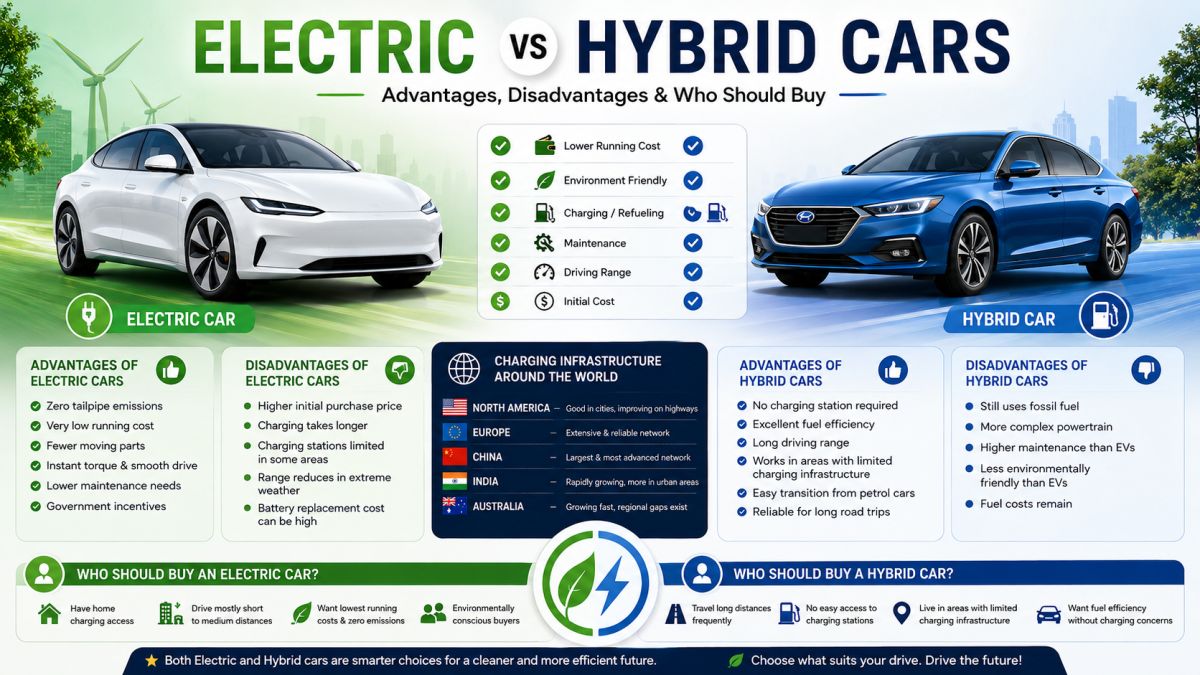
Electric vs Hybrid Cars Comparison
| Feature | Electric Car | Hybrid Car |
|---|---|---|
| Fuel | Electricity Only | Petrol + Electricity |
| Charging Required | Yes | No (Self Charging) |
| Tailpipe Emissions | Zero | Low |
| Maintenance | Lower | Moderate |
| Long Distance Travel | Depends on Charging Network | Excellent |
| Running Cost | Lowest | Lower than Petrol |
Advantages of Electric Vehicles
- Zero tailpipe emissions
- Very low running cost
- Fewer moving parts
- Lower maintenance expenses
- Instant torque and quick acceleration
- Quiet driving experience
- Government incentives in many countries
Disadvantages of Electric Cars
- Higher initial purchase price
- Charging takes longer than refueling
- Limited public charging in some regions
- Battery replacement can be expensive
- Driving range varies with weather
- Long road trips require charging stops
Advantages of Hybrid Electric Vehicles
- No charging station required
- Excellent fuel economy
- Long driving range
- Easy transition from petrol cars
- Less affected by charging infrastructure
- Suitable for city and highway driving
Disadvantages of Hybrid Cars
- Still uses fossil fuel
- More complex powertrain
- Higher maintenance than EVs
- Less environmentally friendly than full EVs
- Fuel costs remain
Charging Infrastructure Around the World
Charging availability differs significantly across regions. For more detailed measurements and vehicle specifications, explore our comprehensive 2WD vs 4WD vs AWD drivetrain comparison.
| Region | Charging Infrastructure |
|---|---|
| North America | Excellent in urban areas, improving on highways |
| Europe | Extensive fast-charging network |
| China | Largest EV charging network globally |
| India | Rapidly expanding but still developing outside major cities |
| Australia | Growing fast with regional gaps |
If you frequently drive in areas with limited charging stations, a hybrid vehicle may be more practical.
Maintenance Comparison
| Electric Car | Hybrid Car |
|---|---|
| No engine oil changes | Requires oil changes |
| Fewer mechanical parts | Engine + electric system |
| Lower brake wear | Moderate brake wear |
| Lower annual maintenance | Moderate maintenance costs |
Who Should Buy an Electric Car?
- Daily commuters
- Drivers with home charging
- People wanting lower running costs
- Environmentally conscious buyers
- Urban drivers
Who Should Buy a Hybrid Car?
- Frequent highway travelers
- People without home charging
- Drivers in areas with limited charging stations
- Buyers seeking better fuel economy without charging concerns
Electric Car vs Hybrid: Which Is Better?
Choose an electric vehicle if you have reliable charging access, mostly drive short to medium distances, and want the lowest running costs with zero emissions.
Choose a hybrid if you regularly travel long distances, don't have easy access to charging infrastructure, or want improved fuel economy without changing your driving habits.
Final Thoughts
Both electric and hybrid cars offer significant advantages over conventional gasoline vehicles. Electric cars deliver the lowest operating costs and zero emissions, while hybrids provide greater flexibility where charging infrastructure is still developing. The best choice ultimately depends on your daily driving needs, local charging availability, and budget.
EV vs Fuel Cost Savings Calculator
Download the Free 2026 Car Buying & EV Checklist
Avoid expensive dealership markups and EV battery pitfalls with our verified 15-point inspection checklist.
Instant digital access. No spam, unsubscribe anytime.

Comments
Be the first to comment on this article.
Leave a comment